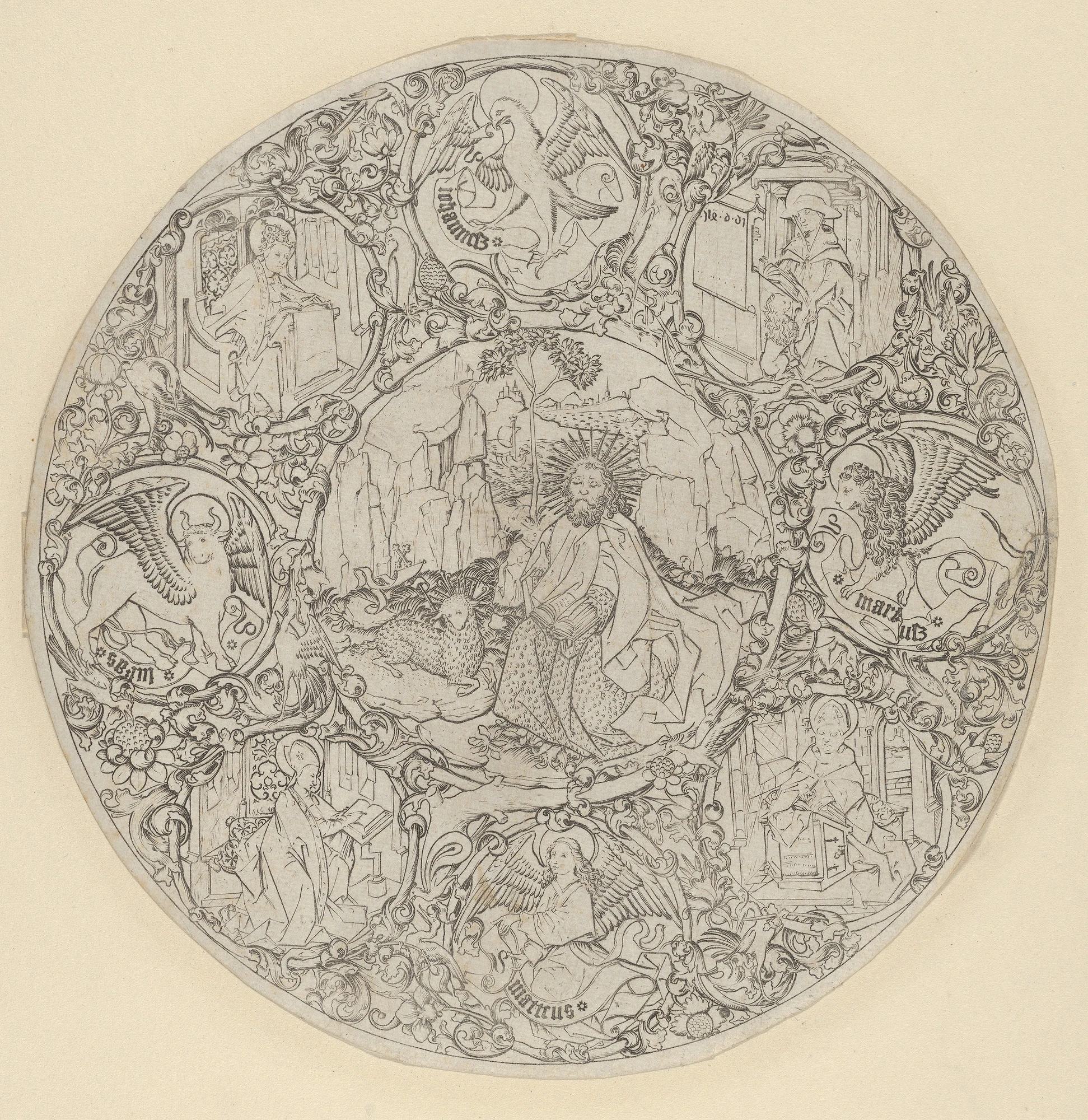

St. John the Baptist in the Desert is an engraving by Master ES, created in the 15th century between 1445 and 1467. The work exemplifies the early development of printmaking in Germany and represents one of the earliest examples of fine art engraving in Europe. The print depicts St. John the Baptist in a wilderness setting, identifiable by his traditional attributes including animal skin garment and staff. The composition demonstrates Master ES's sophisticated use of line work to create modeling, texture, and atmospheric depth. The second state of this print shows refinements to the original engraving, indicating the artist's continued work on the plate. Master ES (active ca. 1450-67) was among the first major German printmakers and the first known engraver to mark his work with identifying features, using the "ES" monogram on 18 of his approximately 320 known engravings. He worked during the late Gothic period, establishing technical and aesthetic standards that influenced subsequent generations of printmakers including Martin Schongauer and Albrecht Dürer. His prints combined religious devotion with decorative appeal, making sacred imagery accessible beyond manuscript illumination and panel painting. The engraving was created by incising lines into a copper plate with a burin, then inking the plate and pressing it onto dampened paper. This intaglio process allowed for multiple impressions of consistent quality. The sheet measures 7 1/4 × 7 7/16 inches. Master ES's technical innovations in the engraving medium established printmaking as a significant art form in Northern Europe.