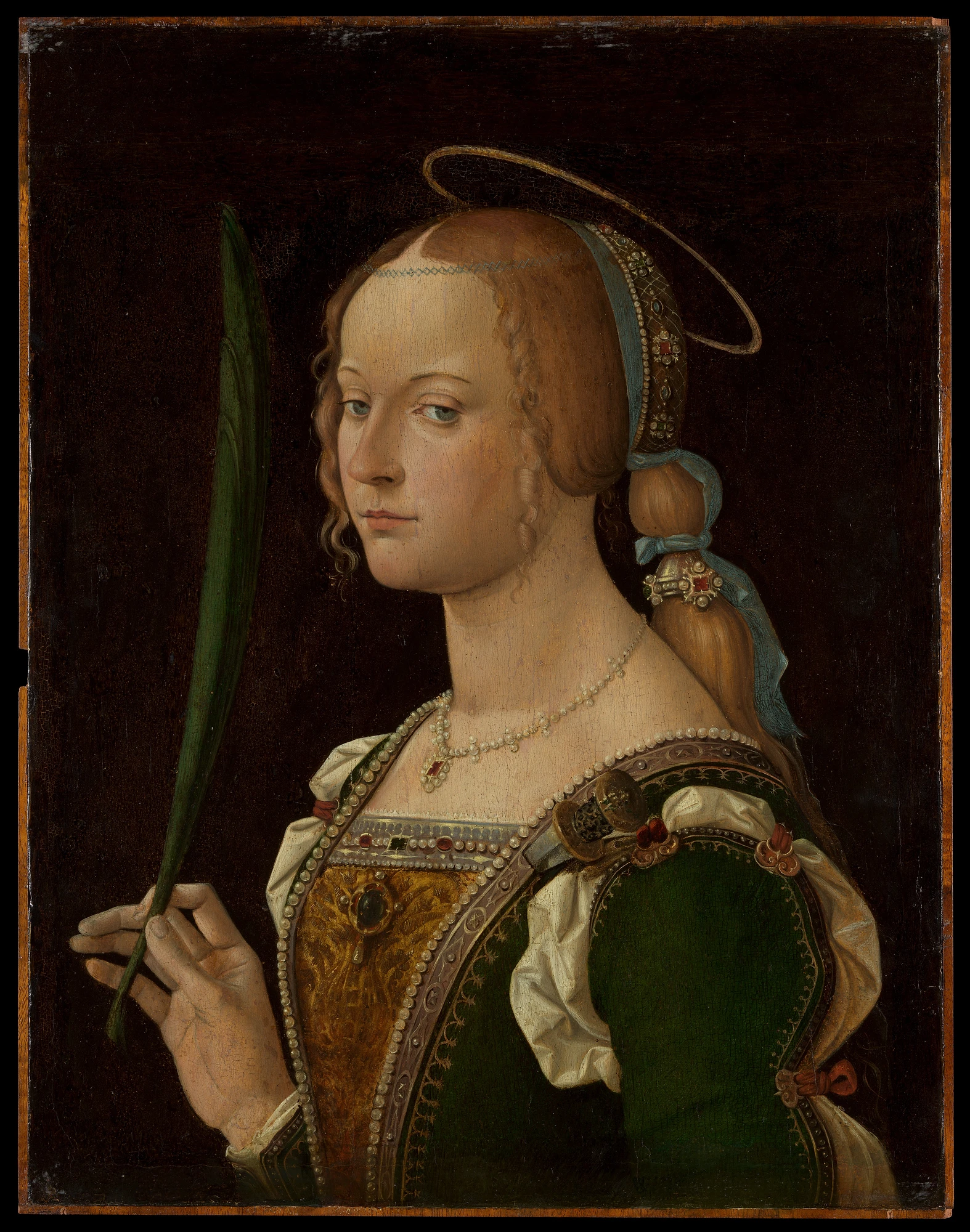


Saint Justina of Padua is a paintings by Italian artist Bartolomeo Montagna (Bartolomeo Cincani), created in 1490s. The work was created using oil on wood. It measures Overall, with added strips, 19 1/2 x 15 1/8 in. (49.5 x 38.4 cm); painted surface 19 1/8 x 14 3/4 in. (48.6 x 37.5 cm). The painting showcases the artistic techniques and aesthetic sensibilities of its era, reflecting both technical skill and cultural context. Artists of this period developed sophisticated approaches to composition, color, and subject matter that defined their artistic milieu. The work demonstrates mastery of the medium and contributes to our understanding of artistic practice during this time. The work entered the Metropolitan Museum's collection through Bequest of Benjamin Altman, 1913. The piece is preserved in the European Paintings department, where it contributes to the Museum's comprehensive representation of world art and cultural heritage.