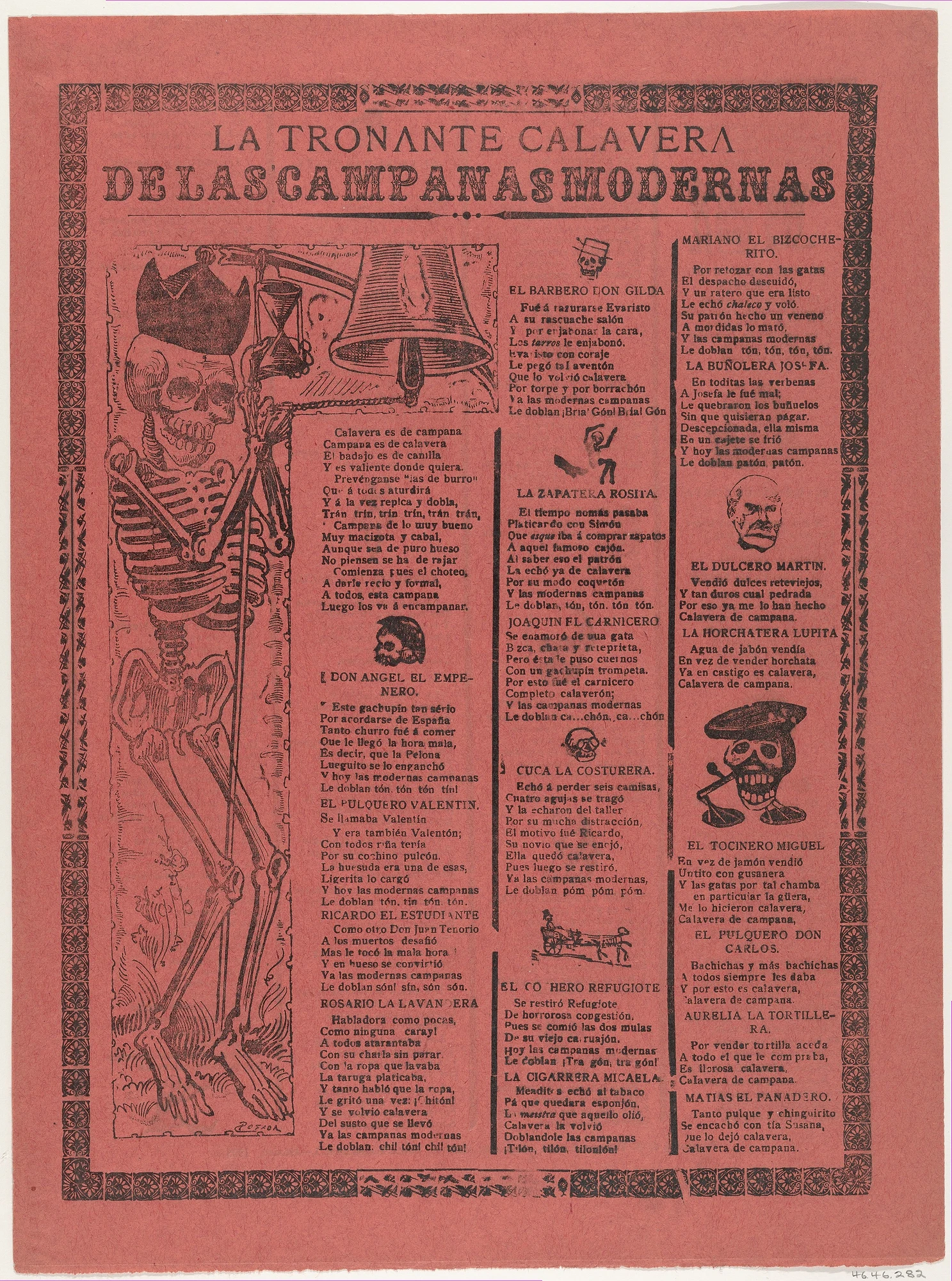
The thundering skeleton of the modern bells
The thundering skeleton of the modern bells is a zincograph and letterpress print by Mexican artist José Guadalupe Posada, created in 1905 and published by Antonio Vanegas Arroyo. The work exemplifies the calavera tradition of satirical broadside prints that became synonymous with Mexican popular culture and Day of the Dead celebrations. The print depicts a dancing skeleton surrounded by text, calling out the misdeeds of various tradespeople and professionals in Mexico City. The verses relate the misdemeanors of people of different occupations, with the skeleton demanding they mend their behavior. The imagery features Posada's characteristic bold, expressive linework on vibrant orange paper, creating a striking visual impact. The print likely refers to the bells and clock installed in June 1905 in the tower of the Metropolitan Cathedral in Mexico City's Zócalo, the symbolic heart of the nation. Posada worked prolifically for penny press publishers, creating thousands of prints that addressed contemporary social issues through satirical commentary. His calaveras blended indigenous Mexican imagery with European printmaking techniques, making art accessible to working-class audiences. The work was executed using zincography, a relief printing process on metal plates, combined with letterpress typography. Posada's influential skeleton imagery later inspired the Mexican Muralism movement and continues to define visual representations of Día de los Muertos worldwide.