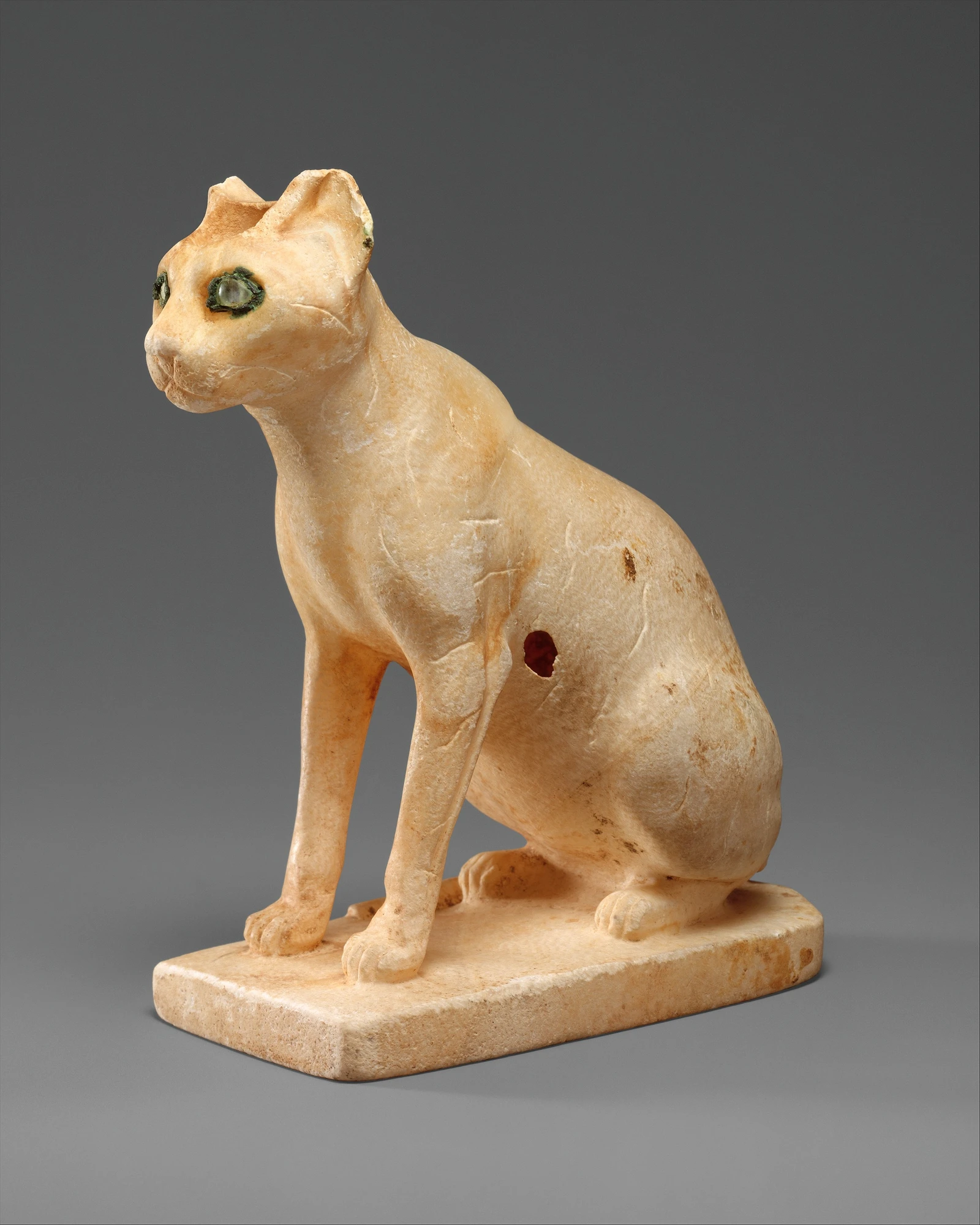
This work from Middle Kingdom, Dynasty 12, early, dating to ca. 1990–1900 B.C., provides valuable insight into the artistic practices and material culture of its era. Created in travertine (egyptian alabaster), copper, quartz crystal, paint, this work embodies the material practices and technical knowledge of its era. Artists' choices of materials reflected both practical availability and symbolic associations, with different media carrying distinct cultural meanings and artistic possibilities. Understanding historical techniques and materials enriches our appreciation of artworks as products of specific times, places, and cultural contexts. The cultural context of Middle Kingdom, Dynasty 12, early shaped every aspect of this work's creation, from available materials and techniques to subject matter and symbolic meanings. Now preserved in Egyptian Art collections, this work enriches our knowledge of artistic traditions, technical practices, and visual culture from ca. 1990–1900 B.C.. The Egyptian Art collection preserves such works as vital cultural heritage. Objects from ancient and non-Western cultures provide invaluable evidence for understanding the artistic achievements, religious beliefs, social structures, and daily practices of civilizations across human history. Anonymous works constitute the vast majority of historical art production, and their study reveals patterns of workshop practice, regional styles, and collective cultural expressions that transcend individual authorship.