Ctrl K
From sacred gods to sleeping companions — trace 4,000 years of humanity's love affair with cats through Egyptian bronze goddesses, Persian silver drinking vessels, Rembrandt etchings, Japanese ukiyo-e prints, and Impressionist sketches.
32 works · 1 museums
For at least four millennia, cats have occupied a unique place in human art and imagination. No other animal has been worshipped as a god, cherished as a companion, and celebrated as an artistic subject with such consistency across cultures.
This exhibition tells that story in seven chapters.
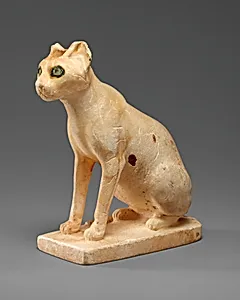
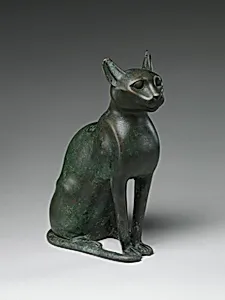
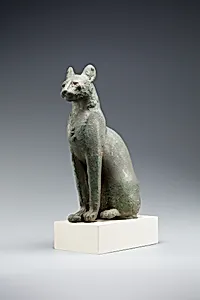
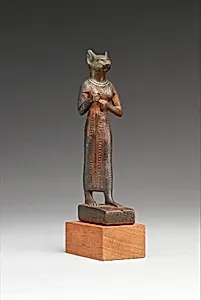
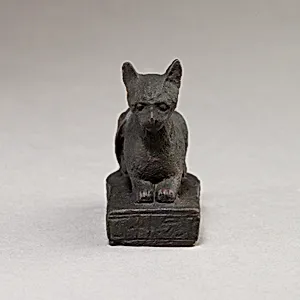
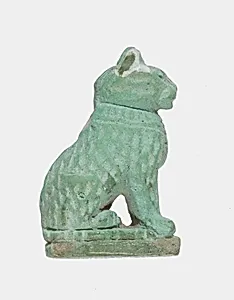
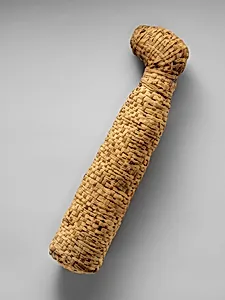
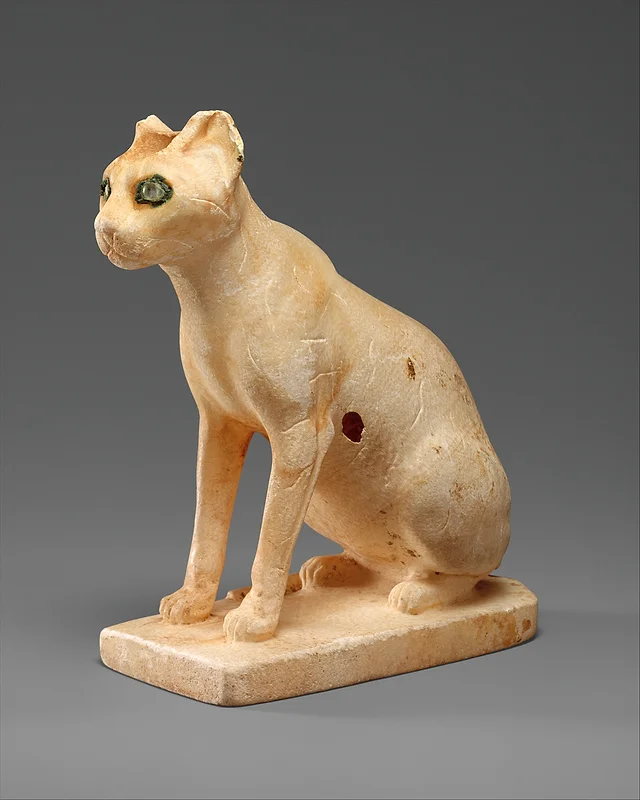
We begin in ancient Egypt, where cats were sacred incarnations of the goddess Bastet. A cosmetic vessel from 1900 BC — shaped like a reclining cat with copper-rimmed eyes — is among the earliest surviving cat artworks. Bronze statuettes, faience amulets, and even mummified cats testify to a devotion that lasted three thousand years.
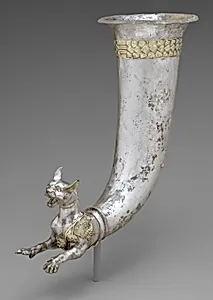
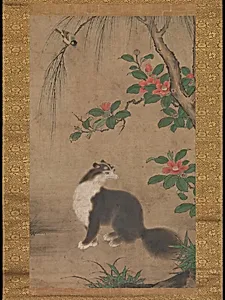
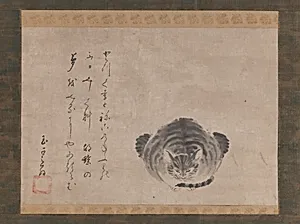
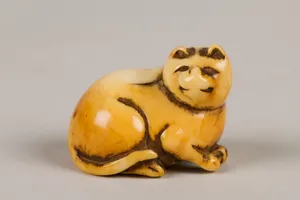
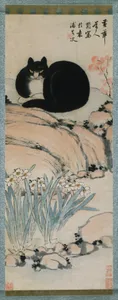
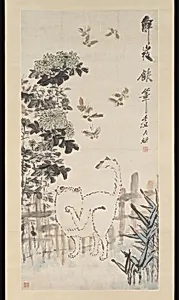
The story moves east and north: a Persian silver rhyton terminating in a wild cat’s snarl, Japanese scroll paintings capturing the zen-like composure of sleeping cats, and tiny ivory netsuke carved with extraordinary precision.
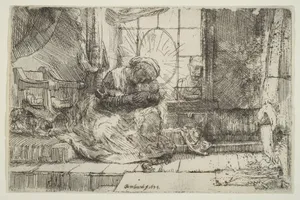
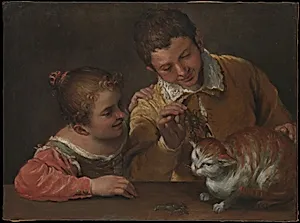
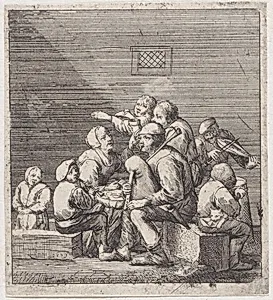
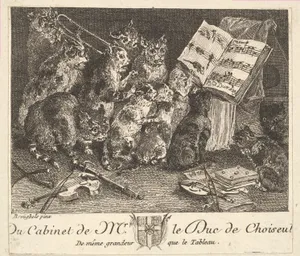
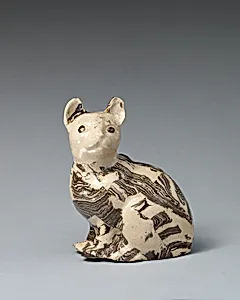
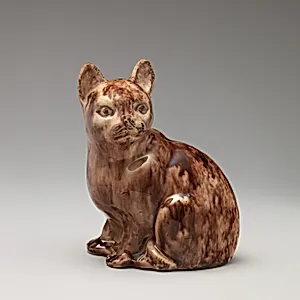
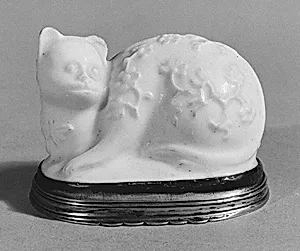
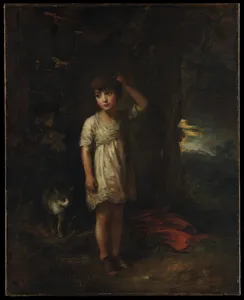
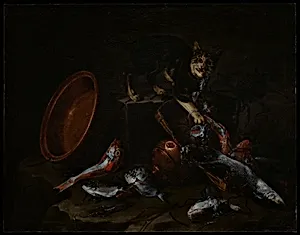
In Europe, cats appear in Rembrandt’s intimate domestic scenes, in Baroque comic prints showing absurd “cat concerts,” and in elegant porcelain figurines from Staffordshire and Saint-Cloud. By the 18th century, Gainsborough paints a boy cradling a cat with the same tenderness he gives to aristocratic portraits.
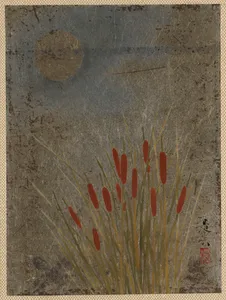
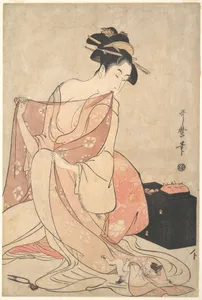
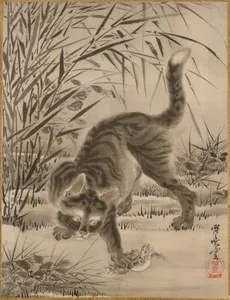
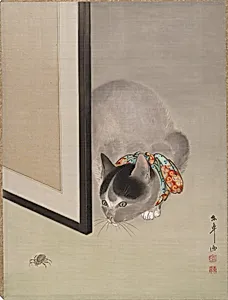
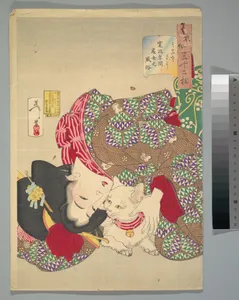
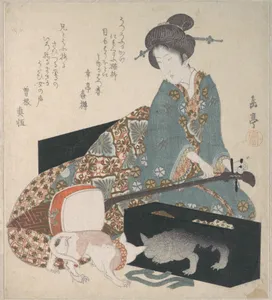
The Japanese tradition reaches its peak in the ukiyo-e era: Utamaro’s graceful women with cats, Kyosai’s hilarious cat-catching-a-frog, and exquisite Meiji-period paintings of cats watching spiders or dreaming in moonlight.
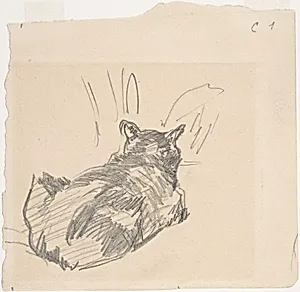
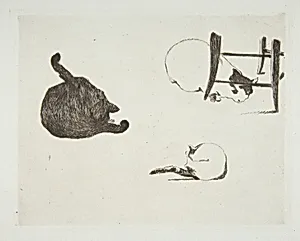
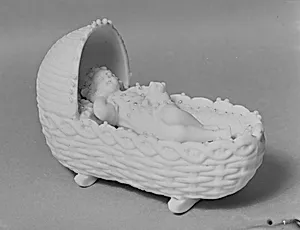
The exhibition closes with the modern cat — Manet’s bold graphic cats, Steinlen’s iconic Parisian poster cats, and a touching American folk sculpture of a baby asleep with a kitten. From temple to living room, from god to friend, the cat’s journey through art mirrors our own.
Curator
Vasily Gnuchev
Visibility
Public