Ctrl K
1867–1931
Occupations
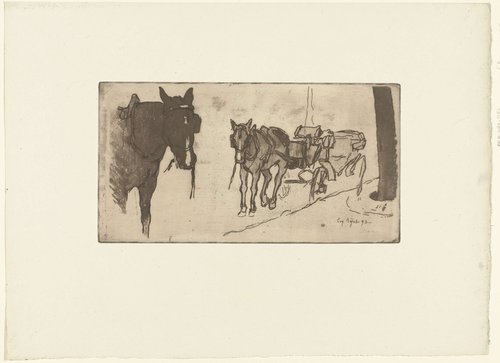
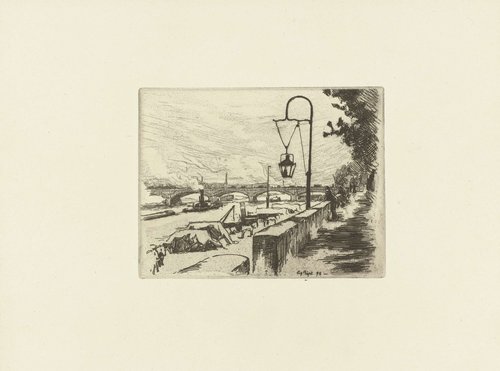
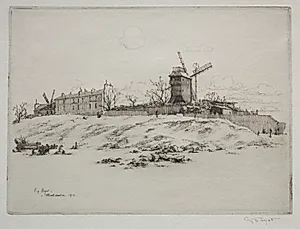
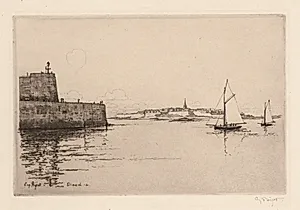
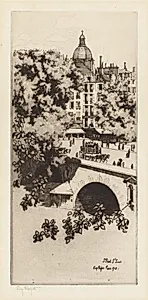
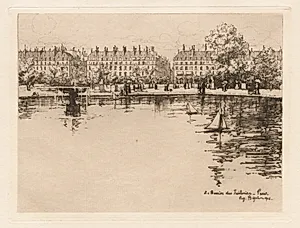
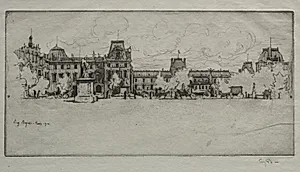
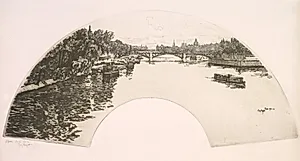
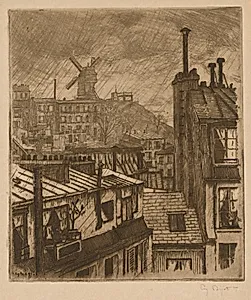
Eugène Béjot (1867–1931) was a distinguished French etcher whose delicate depictions of Paris secured his reputation as one of the finest printmakers of the late nineteenth and early twentieth centuries. Born in Paris, Béjot devoted his career to capturing the architectural beauty and atmospheric character of his native city, particularly the Seine River, its bridges, quays, and historic buildings. His technical mastery and sensitive use of light created etchings that evoke Paris's unique atmosphere with exceptional subtlety. After studying at the Académie Julian and learning etching techniques from Henri-Gabriel Ibels in 1891, Béjot quickly established his reputation. His first commissioned series, 'La Seine à Paris' (1892), demonstrated his already formidable technical skills, while his widely acclaimed 'La Samaritaine' exhibited at the Peintres-Graveurs exhibition in 1893 firmly established his standing among France's leading printmakers. His work garnered international recognition, particularly in England, where he was elected to the Royal Society of Painter-Etchers and Engravers in 1908. In France, he received the honor of Chevalier of the Legion of Honour in 1912, acknowledging his significant contributions to French printmaking.
Eugène Béjot was born on August 31, 1867, in Paris, the city that would become his lifelong subject and inspiration. Growing up in the French capital during the transformative years following Haussmann's renovation, Béjot developed a deep attachment to Paris's architectural heritage and urban character.
He studied at the Académie Julian in Paris, one of the most progressive art schools of the period, which welcomed students excluded from the official École des Beaux-Arts and encouraged individual artistic development.
In 1891, Béjot began learning the etching technique under Henri-Gabriel Ibels, a prominent illustrator and printmaker associated with the Nabis group. This training proved decisive for Béjot's artistic direction, as he found in etching the perfect medium for capturing Paris's architectural details and atmospheric effects.
Béjot's technical skills manifested immediately in his first commissioned series, 'La Seine à Paris' (1892), which demonstrated exceptional command of the etching medium despite his recent introduction to the technique. This early success led to his landmark work 'La Samaritaine,' exhibited at the prestigious Peintres-Graveurs exhibition in Paris in 1893, which secured his reputation among collectors and critics.
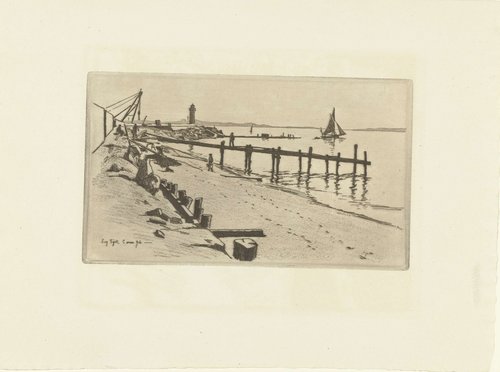
Throughout his career, Béjot's work remained inextricably linked to Paris. He created numerous etchings of the Seine, the city's quays, bridges, and historic buildings, developing a distinctive approach characterized by delicate line work and subtle manipulation of light and shadow to evoke Paris's atmospheric qualities.
His reputation extended internationally, particularly to England, where French printmaking enjoyed considerable appreciation. In 1908, he received election to the Royal Society of Painter-Etchers and Engravers in London, a significant honor reflecting his standing in the international printmaking community.
In 1912, the French government recognized his artistic achievements by naming him Chevalier of the Legion of Honour, France's highest decoration. Béjot continued working until his death in Paris on February 28, 1931, leaving a substantial body of etchings that constitute an invaluable artistic record of early twentieth-century Paris.
Artheon Research Team
Last updated: 2025-11-09
Biography length: ~458 words
Wikidata (CC0); Getty ULAN (ODC-By)