1825–1875
Occupations
Bernardus Gerardus ten Berge (1825-1875) was a Dutch landscape and animal painter whose atmospheric depictions of the Netherlands countryside exemplified mid-nineteenth-century Dutch Romantic-Realist painting. Born in Alkmaar on September 10, 1825, as the son of a gold and silversmith, Ten Berge learned painting from his brother-in-law Pieter Plas before establishing himself as a skilled practitioner of pastoral landscape. Working primarily in his native Alkmaar with a brief period in Amsterdam in 1852, he specialized in carefully crafted scenes featuring Dutch flat landscapes, often populated with cattle, that balanced topographical accuracy with romantic atmosphere. His technical versatility extended to stable interiors, cityscapes, portraits, and genre scenes, executed through painting, drawing, and lithography. Ten Berge's works captured the distinctive character of Dutch countryside—dune landscapes, forest scenes, and pastoral settings—with the atmospheric sensibility characteristic of the Hague School's predecessors. His career was cut short when he died in Alkmaar at age fifty on November 24, 1875.
Bernardus Gerardus ten Berge was born on September 10, 1825, in Alkmaar, a historic city in North Holland known for its cheese market and canals. He was born into an artisan family; his father worked as a gold and silversmith, practicing a craft requiring precision, patience, and aesthetic sensibility—qualities that would serve his son well in artistic pursuits.
Rather than following his father into metalwork, Ten Berge pursued painting. He received his artistic education from Pieter Plas, who had married into the family and thus became Ten Berge's brother-in-law. Plas provided instruction in landscape painting techniques, compositional principles, and the atmospheric approach characteristic of Dutch nineteenth-century landscape practice.
Ten Berge established his practice in Alkmaar, where he worked from approximately 1840 throughout his career. In 1852, he temporarily relocated to Amsterdam, spending time in the capital before returning to his native city. This Amsterdam period may have provided exposure to broader artistic circles and commercial opportunities, though Alkmaar remained his primary base.
As a qualified painter, draughtsman, and lithographer, Ten Berge demonstrated technical versatility across multiple media. His primary subject matter consisted of Dutch landscapes, often featuring the flat countryside characteristic of the Netherlands. He excelled particularly at depicting cattle in landscape settings, combining animal painting with atmospheric pastoral scenes.
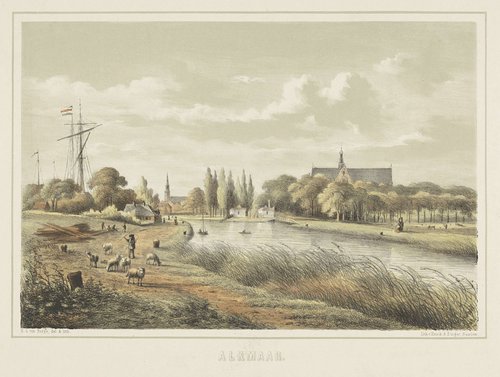
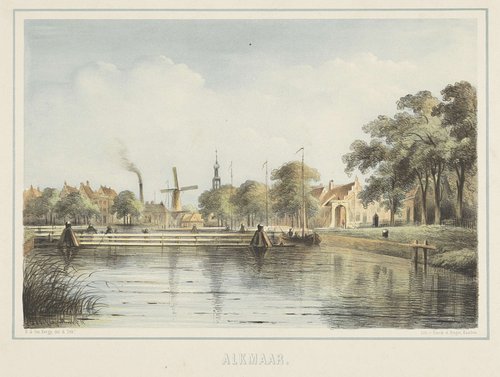
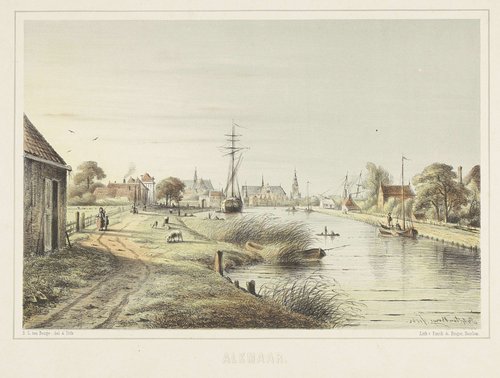
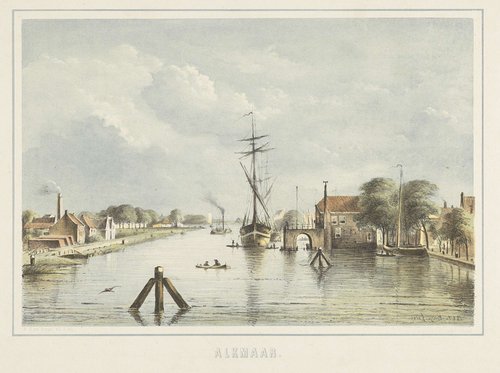
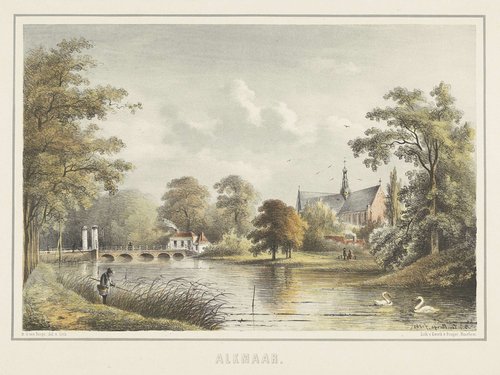
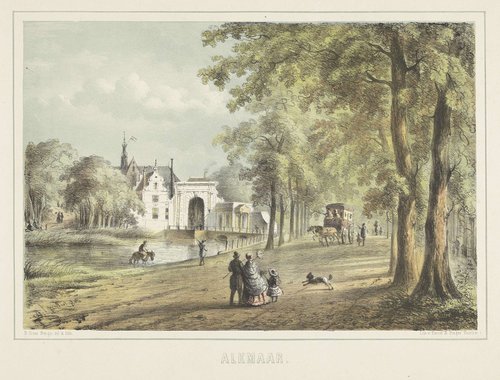
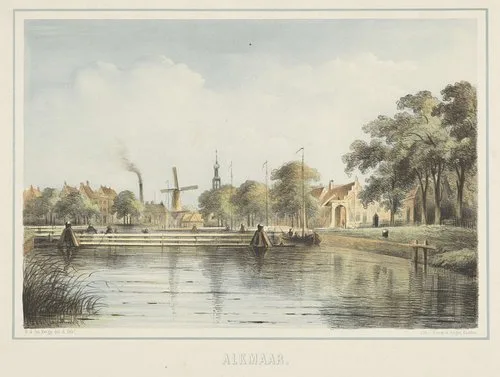
His works encompassed various subjects within landscape tradition: dune landscapes capturing the windswept character of coastal Holland, forest landscapes with their darker, more enclosed atmospheres, and topographical views documenting specific locations. Beyond landscape, he produced stable interiors showing animals in architectural settings, cityscapes including views of Alkmaar's historic architecture, portraits, and occasional genre scenes depicting everyday life.
Ten Berge's paintings typically bore his signature and dates from the 1850s through the early 1870s, documenting his consistent production over two decades. His work exemplified the careful craftsmanship and atmospheric sensitivity valued in mid-nineteenth-century Dutch painting, connecting earlier Romantic landscape traditions with the emerging Realist approach that would culminate in the Hague School.
Ten Berge died in Alkmaar on November 24, 1875, at age fifty. His works entered collections including the Rijksmuseum and continue appearing in auction houses, testifying to his achievement within Dutch nineteenth-century landscape painting.
Artheon Research Team
Last updated: 2025-11-09
Biography length: ~445 words
Wikidata (CC0); Getty ULAN (ODC-By)