Ctrl K
1726–1792
Movements
Occupations
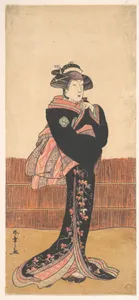
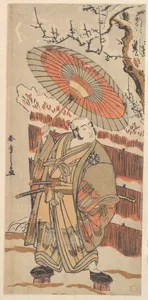
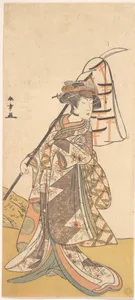
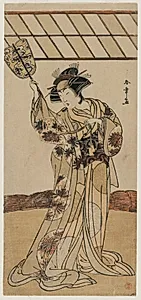
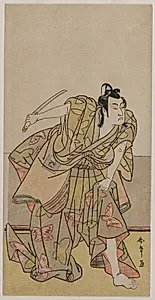
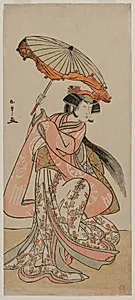
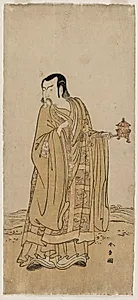
Katsukawa Shunshō (1726–1793) revolutionized ukiyo-e printmaking by introducing realistic portraiture to kabuki actor prints, founding the Katsukawa school that would dominate theatrical imagery in late 18th-century Japan. Born in 1726, Shunshō transformed the conventional approach to yakusha-e (actor prints) by depicting performers with individual facial features and genuine likenesses rather than the stylized, generic faces that had been the norm. This innovation fundamentally changed how kabuki actors were represented in Japanese popular art and elevated the status of actor prints within the ukiyo-e tradition. A member of the samurai class who chose an artistic career, Shunshō combined rigorous training in traditional Japanese painting with deep knowledge of kabuki theater to create a new visual language for theatrical representation. His career, spanning from approximately 1760 until his death on January 19, 1793, coincided with kabuki's golden age in Edo (modern Tokyo). Through thousands of prints and paintings, he documented the leading actors and memorable performances of his era, creating an invaluable visual record of 18th-century Japanese theater. Beyond his artistic innovations, Shunshō's significance lies in his role as teacher and school founder. The Katsukawa school he established trained some of the most important artists in ukiyo-e history, including Katsukawa Shun'ei, Katsukawa Shunkō, and—most famously—Katsushika Hokusai, who would become one of the world's most celebrated printmakers. His bijin-ga (beautiful women) paintings, though less famous than his actor prints, are considered by scholars to be among the finest examples of the genre in the second half of the 18th century. Shunshō's legacy extends through his students and their students, making him a pivotal figure in the development of Japanese printmaking.
Katsukawa Shunshō was born in 1726, the scion of a samurai clan in Edo (modern Tokyo). His decision to pursue a career in art rather than follow the traditional samurai path was unusual for his class, reflecting both personal inclination and the gradual changes in Japanese society during the mid-Edo period, when rigid class distinctions were slowly becoming more flexible.
Shunshō first came to Edo to study haiku poetry and painting, indicating a serious engagement with both literary and visual arts. This dual interest in poetry and image was characteristic of Japanese artistic culture, where the integration of text and image was fundamental to many art forms.
He received his artistic training under Miyagawa Shunsui, who was the son and student of the renowned artist Miyagawa Chōshun (1682–1752). The Miyagawa school specialized in paintings of beautiful women (bijin-ga) and scenes from the pleasure quarters, working primarily in the traditional painting medium rather than prints. This training gave Shunshō a thorough grounding in figure painting, composition, and the techniques of Japanese painting.
The influence of the Miyagawa school would remain visible throughout Shunshō's career, particularly in his later bijin-ga paintings. However, he would take his training in a new direction by focusing on kabuki actor portraits and by working extensively in the medium of woodblock prints, which allowed for mass production and wider distribution.
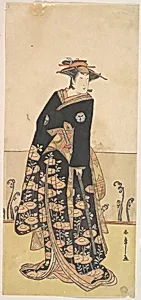
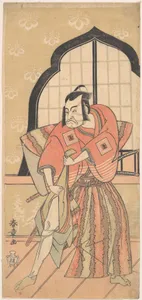
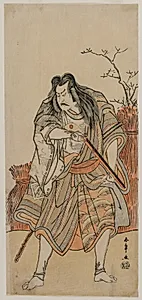
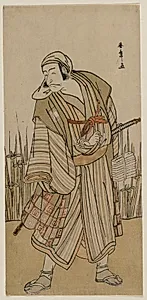
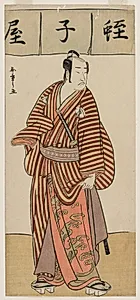
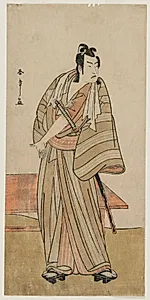
Shunshō became a noted printmaker of actors, with his first works dating from around 1760. At this time, yakusha-e (actor prints) were dominated by the Torii school, which had essentially monopolized theatrical imagery since the late 17th century. The Torii school style was characterized by bold, dynamic compositions and stylized figures, but actors' faces were largely generic, following conventional types rather than individual likenesses.
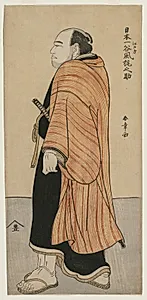
Though originally associated with the Torii school tradition, Shunshō soon broke away and began developing his own distinctive approach. His revolutionary innovation was to strive for genuine portrait likeness in his depictions of kabuki actors. He studied the actual facial features, physiques, and characteristic poses of individual performers, creating prints that viewers could recognize as specific actors.
This shift from generic types to individual portraits may seem minor from a modern perspective, but it represented a fundamental change in how theatrical imagery functioned. Shunshō's prints allowed audiences to remember favorite performers, created a new kind of celebrity culture around actors, and elevated the actor print from mere advertisement to collectible art object.
His success in this new approach rapidly won him fame. Audiences and collectors enthusiastically embraced these more personalized images, and Shunshō quickly surpassed the conventional Torii school in popularity and influence. By the late 1760s, he was establishing himself as the leading designer of actor prints in Edo.
Having established his distinctive style and approach, Shunshō founded what would become known as the Katsukawa school. This was not a formal institution but rather a workshop and training system in the traditional Japanese manner, where students lived and worked with the master, learning through observation, practice, and direct instruction.
The school name 'Katsukawa' (literally 'victorious river') reflected both ambition and achievement. Students who completed their training were given names incorporating 'Shun' (春), creating artistic lineages that could be traced through nomenclature—a traditional Japanese practice that emphasized continuity and transmission of knowledge.
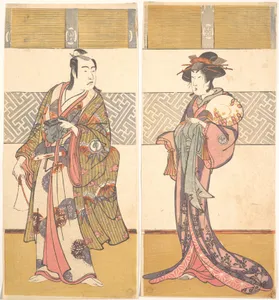
During this period, Shunshō attracted talented students who would themselves become important artists. Among the earliest were Shunkō and Shunchō, both of whom would make significant contributions to kabuki portraiture. The school developed systematic approaches to composition, particularly in multi-figure hosoban (narrow vertical format) prints showing multiple actors from a single performance.
Shunshō's own production during these years was prodigious. He created prints documenting virtually every major kabuki production in Edo, working closely with publishers and probably maintaining direct contacts with the theaters themselves. His prints served multiple functions: as advertisements for upcoming performances, as souvenirs for theater-goers, and as collectibles for enthusiasts of particular actors.
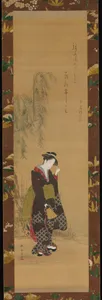
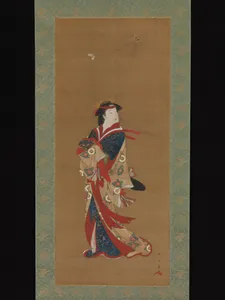
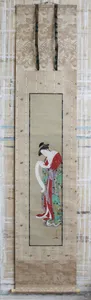
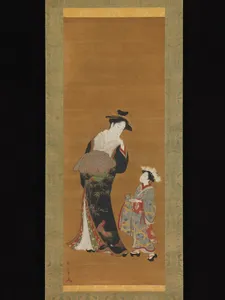
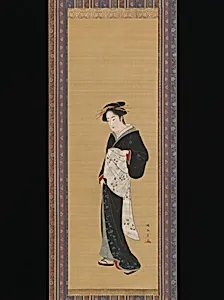
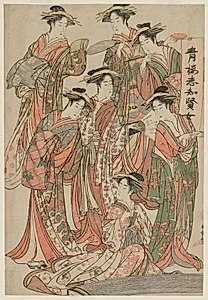
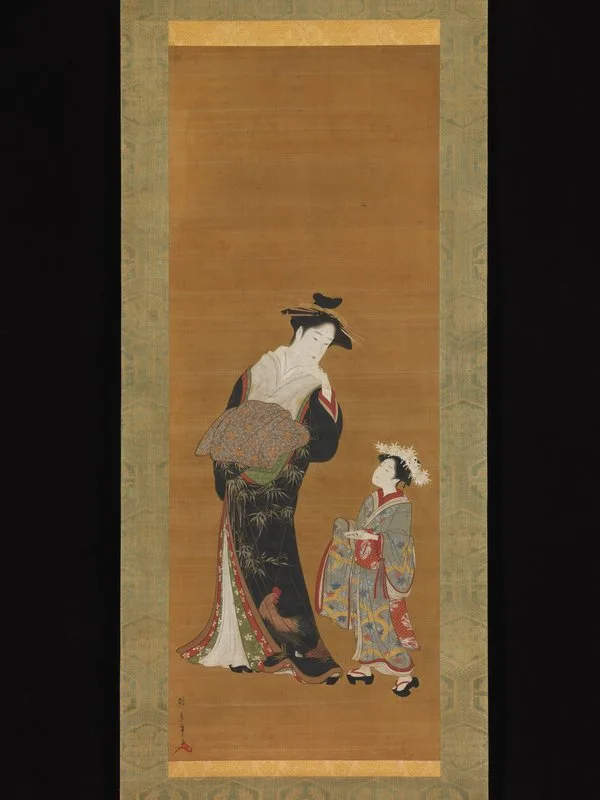
Beyond actor prints, Shunshō was also developing his skills in other genres. His bijin-ga paintings from this period show increasingly sophisticated handling of figure composition, drapery, and the subtle suggestion of personality and mood. These paintings, executed in traditional formats using brush and pigments on silk or paper, demonstrated his mastery of both popular print media and elite painting traditions.
In his final years, Shunshō continued his prolific output while also training new students, including a young artist who would enter his studio around 1778 and later take the name Katsushika Hokusai. Though Hokusai would eventually move far beyond his teacher's theatrical focus to become famous for his landscapes, his early training under Shunshō provided the technical foundation for his later innovations.
Shunshō's mature work showed increasing sophistication in composition and characterization. He developed the ōkubi-e (large head) format for actor portraits, allowing even more detailed and expressive facial portraiture. These close-up portraits captured not just physical appearance but actors' ability to convey emotion and character through facial expression.
He also worked extensively in painting, creating works that some scholars consider the finest bijin-ga of the period. These paintings of beautiful women combined the observational realism he had developed in his actor portraits with traditional aesthetic ideals. Unlike prints, which were collaborative efforts involving designers, block carvers, and printers, these paintings were entirely his own work, allowing fuller expression of his artistic vision.
His work in surimono (privately commissioned prints, often for special occasions) showed yet another facet of his artistry. These prints, produced in small numbers on fine paper with expensive pigments and often including metallic effects, allowed for greater technical refinement than commercial prints.
Shunshō died on January 19, 1793, at approximately 67 years of age, leaving behind a transformed field of theatrical printmaking and a thriving school that would continue his innovations. His students Shun'ei and Shunkō carried forward his approach to actor portraiture, while Hokusai would take the technical skills learned in the Katsukawa studio to create works that would eventually influence Western art profoundly.
Artheon Research Team
Last updated: 2025-11-09
Biography length: ~1,726 words
Wikidata (CC0); Getty ULAN (ODC-By)