Ctrl K
1831–1906
Occupations
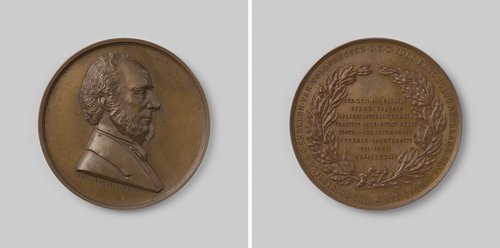
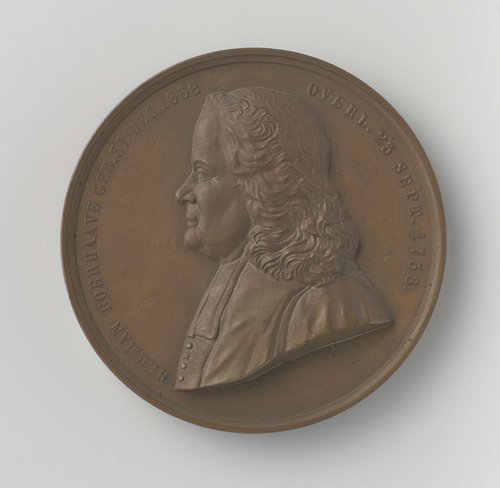
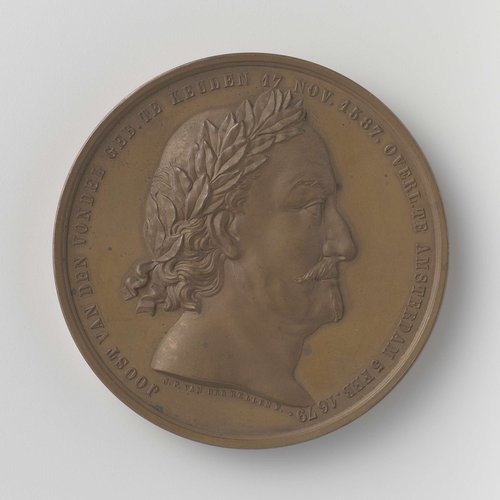
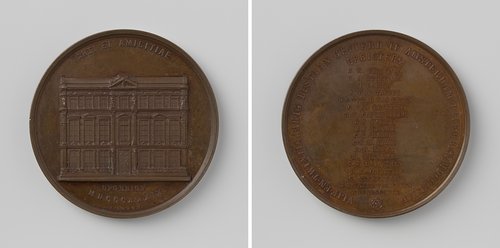
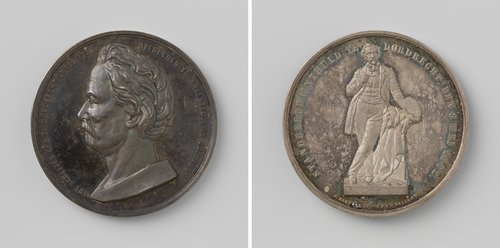
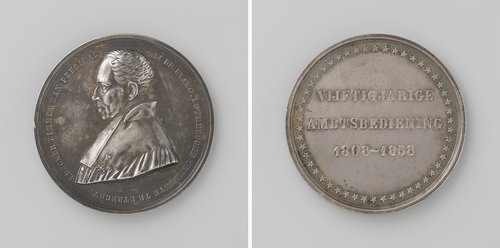
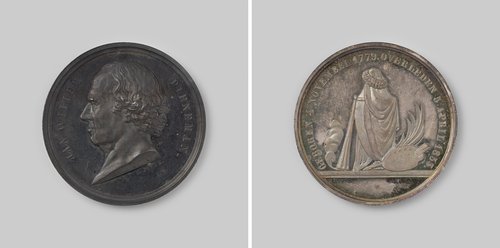
Johan Philip van der Kellen (1831-1906) was a Dutch engraver and museum curator who made significant contributions to both the practice of medallic art and the institutional development of Dutch print collections. Born in Utrecht on July 9, 1831, and dying in Baarn in 1906, van der Kellen pursued a dual career as creative artist and cultural administrator that exemplified the nineteenth-century model of the artist-scholar. Van der Kellen worked as a medallist and engraver at the Mint of Utrecht from 1852 to 1876, creating coins and medals with the precision and artistic sensibility that characterized the best numismatic work of the period. His scholarly accomplishments paralleled his artistic production: in 1866, he published his "Peintre-graveur hollandais et flamand," a catalogue raisonne of Dutch and Flemish printmakers that received great acclaim and led to his invitation to contribute to Julius Meyer's "Allgemeines Kunstler-Lexicon." In 1874, he was offered the prestigious position of director of the Berlin Kupferstichkabinett (Print Cabinet), but he chose to remain in the Netherlands, accepting instead the directorship of the Rijksprentenkabinet (Royal Print Cabinet) in Amsterdam, which he led from 1876 to 1896. Under his leadership, the collection grew from approximately 70,000 to around 125,000 prints, nearly doubling its holdings. The Rijksmuseum holds a portrait of van der Kellen painted by Jan Veth in 1904, commemorating his contributions to Dutch cultural heritage.
Johan Philip van der Kellen was born in Utrecht on July 9, 1831. He trained as an engraver and medallist, entering employment at the Mint of Utrecht in 1852. For twenty-four years, he worked creating coins and medals, developing exceptional technical skills in small-scale engraving and relief sculpture. Parallel to his artistic work, he pursued scholarly research into the history of Dutch and Flemish printmaking. In 1866, he published his "Peintre-graveur hollandais et flamand," a comprehensive catalogue of Dutch and Flemish printmakers that demonstrated both his connoisseurship and his scholarly rigor. This publication brought him recognition in the international art historical community and led to his invitation to contribute to major reference works. In 1874, he was offered the directorship of the Berlin Kupferstichkabinett, one of the most prestigious print collections in Europe, but he preferred to remain in the Netherlands.
In 1876, van der Kellen accepted the directorship of the Rijksprentenkabinet (Royal Print Cabinet) in Amsterdam, a position he would hold for twenty years until 1896. His tenure transformed the institution: under his leadership, the collection nearly doubled in size, growing from approximately 70,000 prints to around 125,000. This expansion required not only acquisition resources but also scholarly expertise in authentication, attribution, and connoisseurship—skills van der Kellen had developed through decades of study. His directorship established professional standards for print curatorship in the Netherlands and contributed significantly to the preservation and accessibility of Dutch graphic art heritage. After his retirement in 1896, he continued to be honored for his contributions. In 1904, the painter Jan Veth created his portrait, now in the Rijksmuseum collection, commemorating his achievements. Van der Kellen died in Baarn in 1906, having devoted more than half a century to the medallic arts and print scholarship.
Artheon Research Team
Last updated: 2025-11-09
Biography length: ~498 words
Wikidata (CC0); Getty ULAN (ODC-By)