1579–1637
Occupations
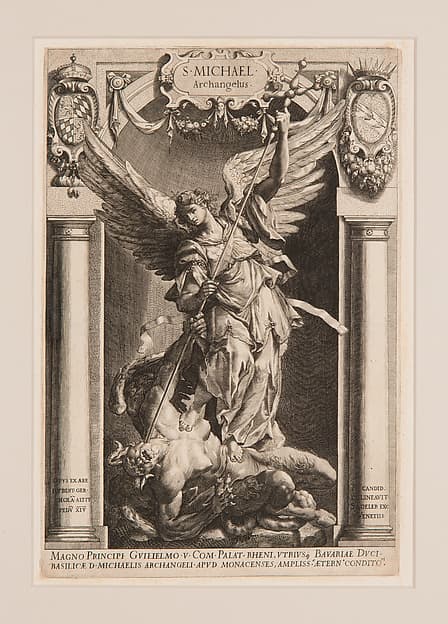
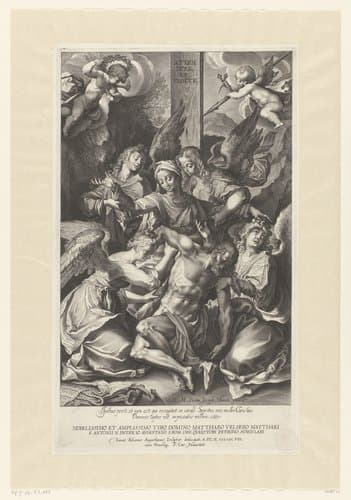
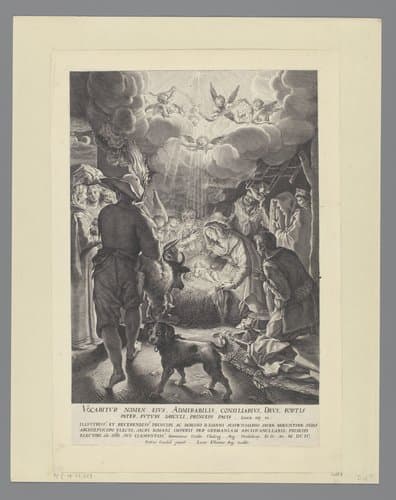
Lucas Kilian (1579–1637) was one of the most celebrated engravers of early 17th-century Germany and the most prominent member of the Kilian dynasty of printmakers in Augsburg. Born in Augsburg in 1579, Lucas Kilian achieved international recognition for his technically virtuosic engravings and became a leading figure in the transition from late Renaissance to early Baroque printmaking styles. His work exemplifies the sophisticated mannerist aesthetic that flourished at the Habsburg courts in Prague and Munich, combining intricate allegorical complexity with proto-Baroque dynamism. Kilian's significance extends beyond his technical mastery. As part of the Kilian family workshop, he helped establish Augsburg as one of Europe's major centers of printmaking and publishing in the 17th century. His portrait engravings, set within elaborate allegorical frames, were commissioned by the highest levels of European society, documenting the nobility, scholars, and artists of his age. His anatomical illustrations, particularly the 'Catoptri Microcosmici' (Mirrors of the Microcosm) after designs by Johannes Remmelin, became medical bestsellers that were reprinted across Europe for generations. Trained in both Augsburg and Venice, Kilian synthesized Northern European precision with Italian compositional sophistication. He worked after designs by the most eminent court painters of Emperor Rudolf II, helping to disseminate the refined mannerist style that characterized late Habsburg culture. His career, spanning from approximately 1601 until his death in 1637, coincided with religious and political upheavals including the Thirty Years' War, yet his workshop maintained productivity and quality throughout these turbulent times. His legacy continued through his brother Wolfgang and the extended Kilian family, who remained important figures in Augsburg printmaking into the 18th century.
Lucas Kilian was born in Augsburg in 1579, the son of Bartholomaus Kilian the Elder, a Silesian goldsmith who had settled in the prosperous Free Imperial City, and Maria Pfeiffelmann. Augsburg in the late 16th century was one of the wealthiest cities in Europe, enriched by banking families like the Fuggers and positioned at the crossroads of trade routes between Italy and Northern Europe.
Tragedy struck when Lucas's father died in 1588, leaving the nine-year-old boy and his younger brother Wolfgang orphaned. Their mother soon remarried Dominicus Custos (1560–1612), an experienced engraver and publisher who had emigrated from Antwerp, one of the great printmaking centers of the Netherlands. This remarriage proved fortunate for the brothers' artistic development.
Under their stepfather's tutelage, Lucas and Wolfgang received thorough training in the art of copper engraving. Dominicus Custos maintained a professional workshop producing prints and operating as a publisher, giving the boys direct experience in all aspects of the print trade. They learned the technical skills of engraving—the controlled use of the burin to incise lines into copper plates—as well as the business practices of printing and distribution.
Recognizing Lucas's exceptional talent, Custos arranged for him to continue his training in Venice, then one of Europe's most vibrant artistic centers. From 1601 to 1604, young Kilian worked in the printing shop of Giusto (Justus) Sadeler, a member of the renowned Sadeler dynasty of engravers. The Sadelers were among the finest printmakers in Europe, and this apprenticeship gave Kilian exposure to the highest standards of engraving technique and sophisticated compositions after Italian masters.
Lucas returned to Augsburg in 1604 following the death of his stepfather Dominicus Custos in 1612, ready to work alongside his brother Wolfgang in the family workshop. The brothers collaborated closely, building on the foundation their stepfather had established while developing their own distinctive styles and specializations.
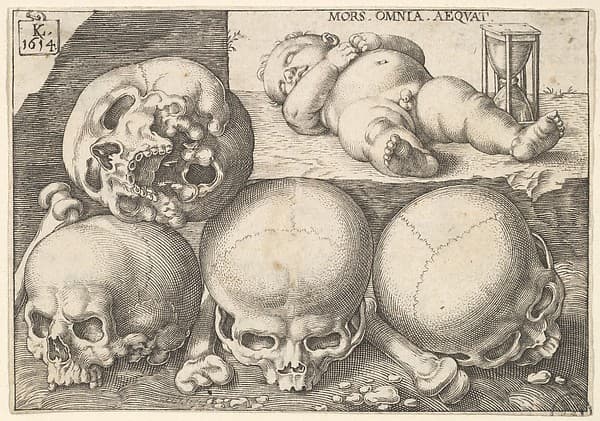
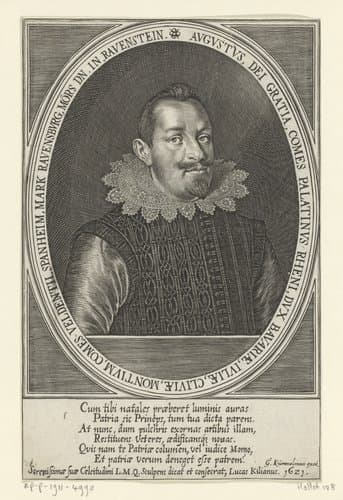
Lucas quickly established himself as an engraver of exceptional skill. His early works demonstrated complete mastery of the burin, producing engravings of remarkable clarity and precision. He specialized in several interconnected areas: portrait engravings within elaborate allegorical frames, mythological subjects, and ornamental prints.
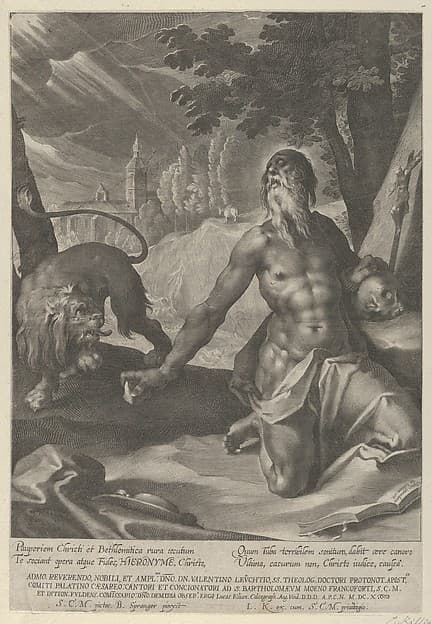
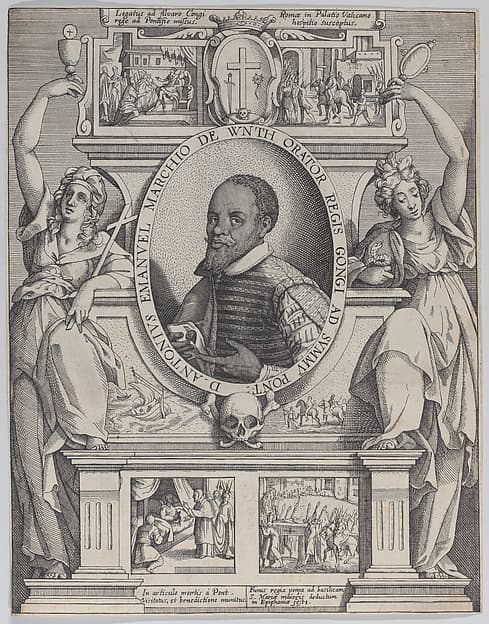
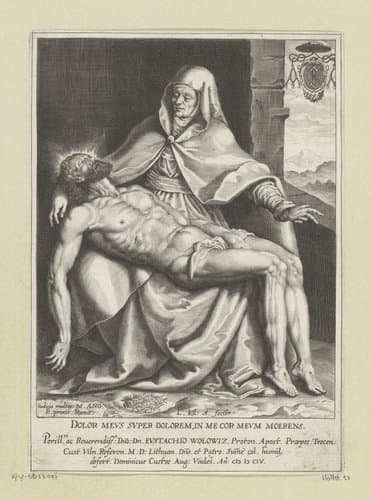
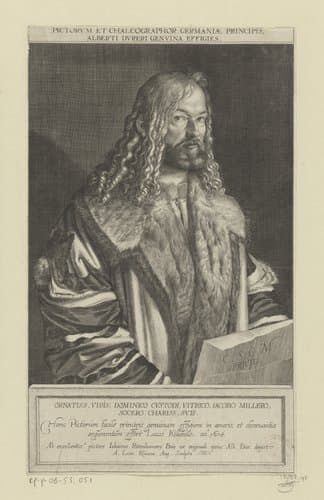
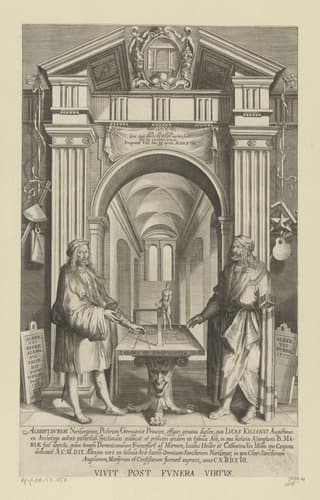
His portrait work became particularly celebrated. Rather than simple head-and-shoulders images, Kilian's portraits were set within complex allegorical frames incorporating symbolic elements, coats of arms, architectural details, and decorative motifs. These elaborate compositions reflected the late Renaissance and early Baroque love of symbolism and emblem, where every element carried meaning. His subjects included nobility, scholars, and fellow artists, creating a visual record of early 17th-century European elite culture.
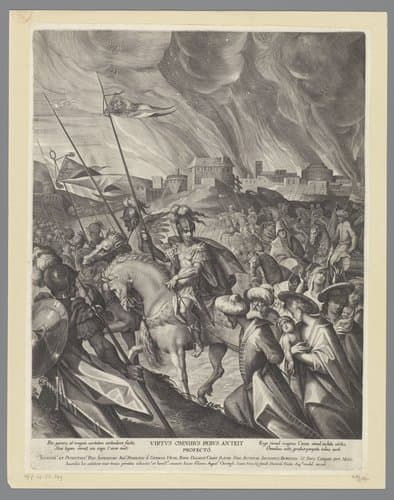
During this period, Kilian also began engraving after paintings and designs by court artists working for the Habsburg emperors. The court of Rudolf II in Prague (emperor 1576–1612) had become a center of sophisticated mannerist art, bringing together artists from across Europe. Kilian's engravings after these masters helped disseminate their sophisticated style throughout Europe, making court art accessible to broader audiences.
The middle period of Kilian's career saw him working on his most ambitious and influential projects. In 1613, he produced the engravings for 'Catoptri Microcosmici' (Mirrors of the Microcosm), anatomical illustrations designed by the physician Johannes Remmelin (1583–1632) and published by Stephan Michelspacher in Augsburg.
These anatomical broadsheets were revolutionary in their approach. They featured multi-layered flap systems that allowed viewers to progressively reveal different body systems—first the external appearance, then muscles, then internal organs, and finally the skeleton. This interactive approach made complex anatomical knowledge accessible and engaging, serving both medical education and popular interest in the natural world.
The 'Catoptri Microcosmici' became an extraordinary success, reprinted numerous times throughout the 17th century and translated into multiple languages. Editions appeared across Europe, from England to the Netherlands to Italy. Kilian's precise engraving was essential to the work's educational value, rendering anatomical structures with scientific accuracy while maintaining aesthetic appeal.
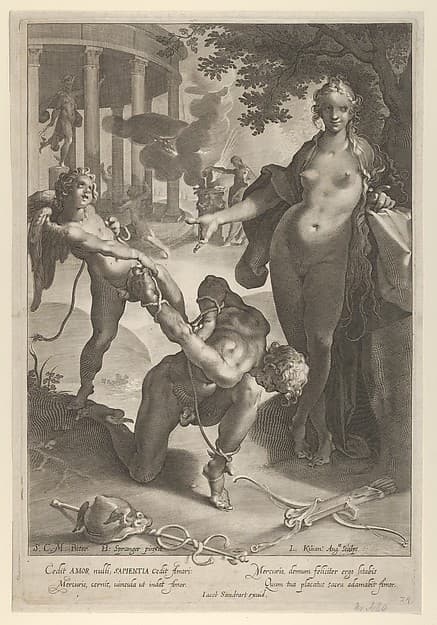
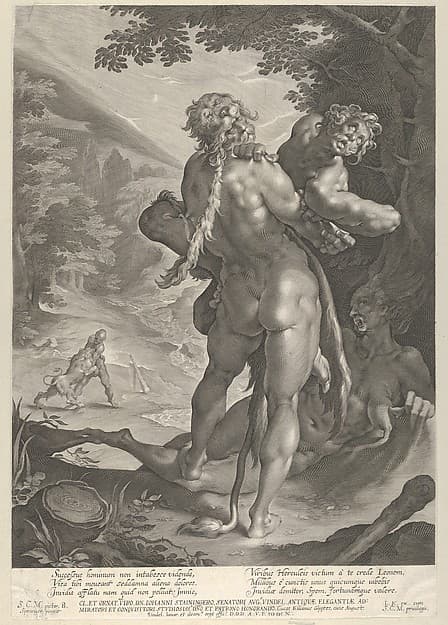
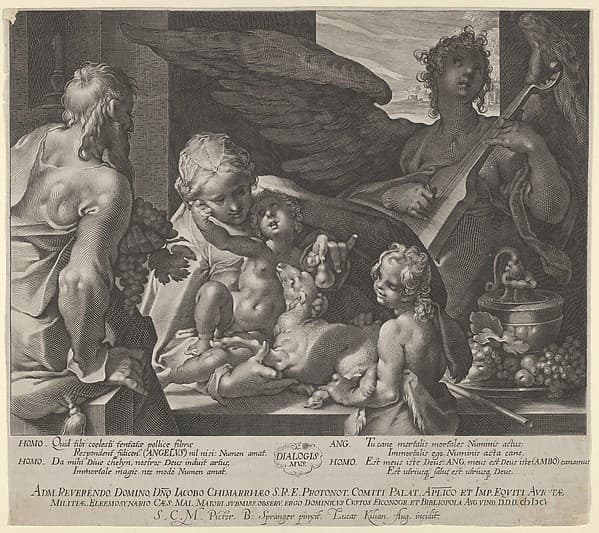
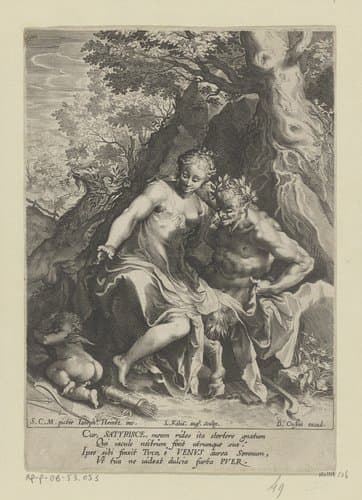
Simultaneously, Kilian continued producing portrait engravings and mythological subjects. His mythological works, often after designs by court painters, demonstrated his ability to handle complex multi-figure compositions with numerous allegorical elements. These engravings exemplified the sophisticated proto-Baroque style—retaining the mannered elegance of late Renaissance art while introducing greater dynamism and emotional intensity.
His reputation spread internationally. Collectors and scholars across Europe sought his prints, and he received commissions from nobility and institutions. His workshop became one of the most productive in Augsburg, producing hundreds of plates covering diverse subjects.
Kilian's final years coincided with the devastating Thirty Years' War (1618–1648), which brought immense suffering to German territories. Augsburg, as a Free Imperial City, was caught in the conflict's religious and political tensions. Despite these disruptions, Kilian's workshop maintained production, though the market for luxury prints likely contracted during wartime.
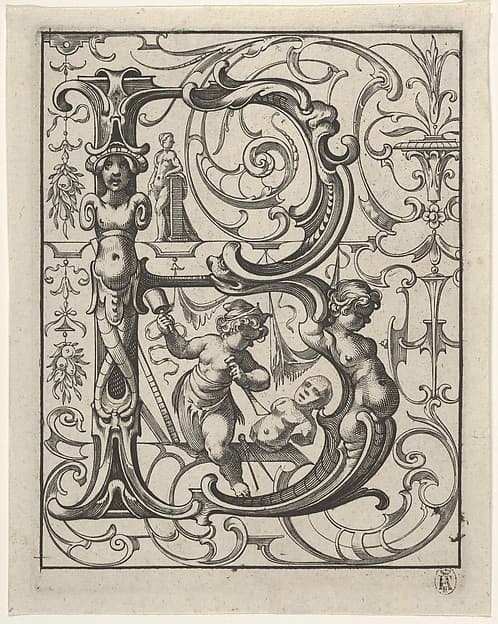
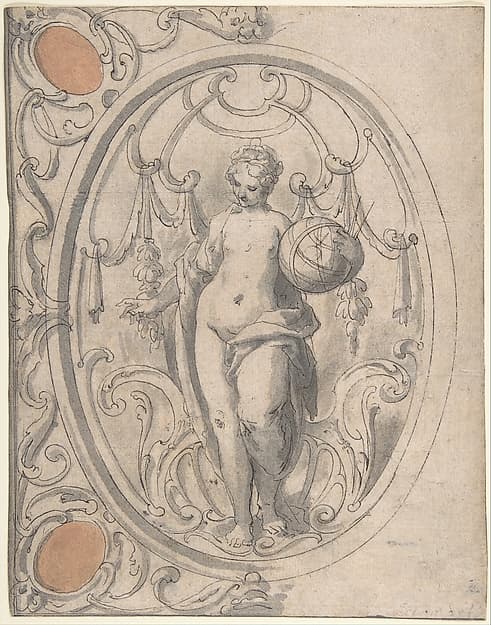
He continued working on portrait commissions and ornamental prints. His ornamental designs, featuring elaborate cartouches, strapwork, and decorative frames, were widely used by other artists and craftsmen as models for everything from book bindings to furniture decoration. These prints served practical functions as pattern books while also being collected as works of art in their own right.
Lucas Kilian died in Augsburg in 1637, leaving behind a body of work estimated at hundreds of plates. His younger brother Wolfgang continued the family business, taking up some of Lucas's unfinished projects and maintaining the Kilian workshop's prominence. Wolfgang's sons, Bartholomaus the Younger and Philipp, carried the family tradition into the later 17th century.
The Kilian workshop's influence extended well beyond the family itself. The prints they produced helped establish Augsburg as a major European printmaking center, rivaling Antwerp and Paris. Their business model—combining artistic production with publishing and distribution—became a template for successful print workshops throughout Europe.
claude-biography-agent
Last updated: 2025-11-09
Biography length: ~1,558 words
Wikidata/Wikimedia Commons