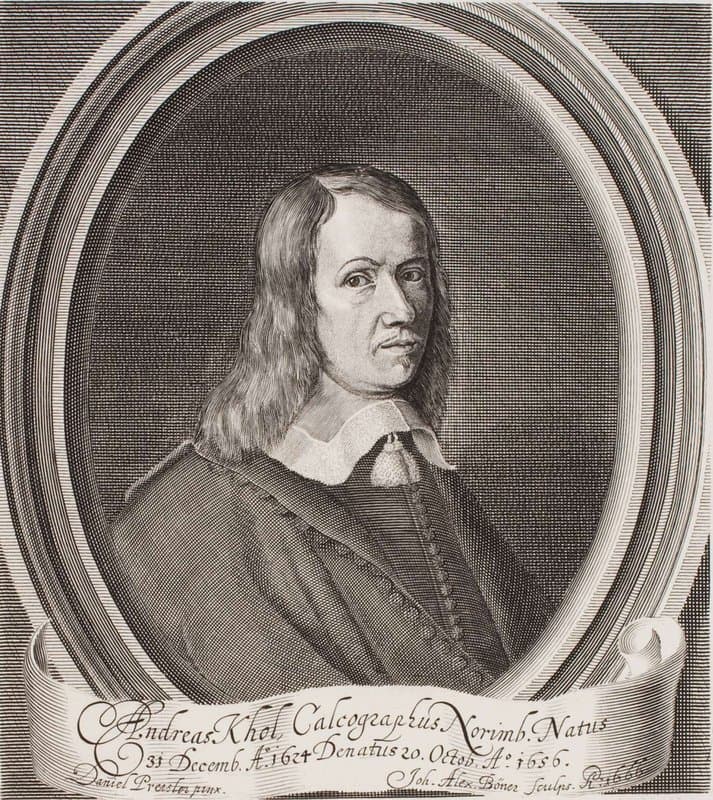
1624–1657
Occupations
Andreas Kohl (1624–1657) was a German engraver working in Nuremberg during the Baroque period whose brief career produced accomplished portrait engravings of his contemporaries. Born in Nuremberg in 1624 and dying there in 1657 at just thirty-three years old, Kohl's professional activity coincided with the latter part of the devastating Thirty Years' War (1618–1648) and the early post-war period of reconstruction. Despite his short life, Kohl achieved recognition for his copper engravings, particularly portrait work including a documented 1653 portrait of Johannes Weber from Nuremberg. His works are held in collections including the National Gallery of Art in Washington, D.C., and occasionally appear in art auctions, testifying to continued appreciation of his technical accomplishment. Kohl represents the continuity of Nuremberg's printmaking tradition during a difficult period in German history, maintaining the high standards of engraving for which the city had been famous since Albrecht Dürer's time over a century earlier.
Andreas Kohl was born in Nuremberg in 1624, entering a world at war. The Thirty Years' War (1618–1648), one of European history's most destructive conflicts, had been raging for six years. Nuremberg, a Free Imperial City of the Holy Roman Empire, experienced significant disruption during the war years, though its status and fortifications provided some protection.
Nuremberg possessed a distinguished artistic heritage, particularly in printmaking. Albrecht Dürer (1471–1528) had made the city synonymous with the highest standards of engraving and woodcut, and subsequent generations of Nuremberg artists maintained these traditions. Kohl's training would have emphasized the precise technical control and high finish that characterized Nuremberg printmaking.
Details of Kohl's specific training are not documented in accessible sources, though his later professional accomplishment demonstrates comprehensive instruction in copper engraving techniques. He would have learned to handle the burin, the primary engraving tool, with the precise control necessary for creating clean, expressive lines.
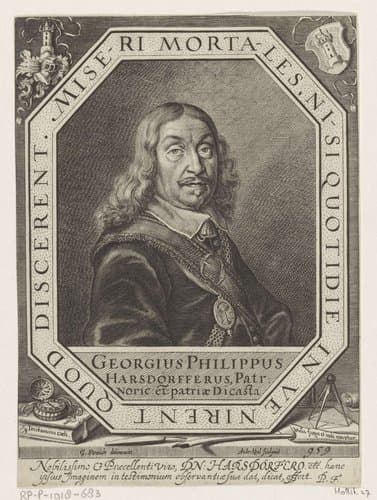
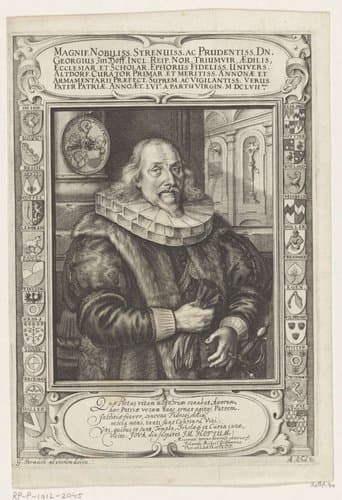
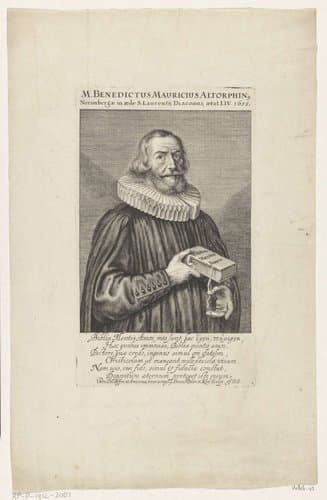
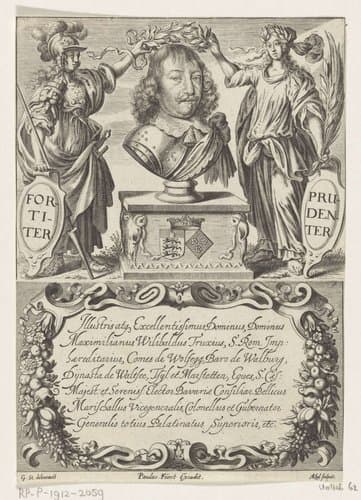
Kohl's professional work focused on portrait engraving, creating images of his Nuremberg contemporaries. A documented example is his portrait of Johannes Weber from Nuremberg, executed in 1653 when Kohl was twenty-nine years old. This copper engraving demonstrates his mature technical capability in the demanding art of portrait printmaking.
Portrait engraving served important social functions in 17th-century Germany: it created images for family collections, documented notable citizens, and allowed wider circulation of individuals' likenesses than painted portraits could achieve. Kohl's work contributed to this visual documentation of Nuremberg society.
Andreas Kohl died in 1657 in Nuremberg at just thirty-three years old. His early death cut short a career that had demonstrated accomplished technique and suggests what fuller development might have achieved. The causes of his death are not recorded, though the post-war period saw various health challenges including diseases exacerbated by wartime disruptions.
Despite his brief career, Kohl's works maintained value and recognition. The National Gallery of Art in Washington holds at least one work from the mid-17th century, and his engravings occasionally appear at auction, indicating continued collector interest.
claude-biography-agent
Last updated: 2025-11-09
Biography length: ~630 words
Wikidata/Wikimedia Commons