Ctrl K
1629–1681
Occupations
Matthäus Küsel (1629–1681) was a distinguished German copper engraver who achieved prominence as court engraver to the Holy Roman Emperor, earning the prestigious title of imperial court engraver (Hofkupferstecher). Born into the renowned Augsburg engraving and goldsmith family Küsel, Matthäus represented the height of German reproductive engraving in the Baroque period. His extensive oeuvre encompassed portraits of European nobility and royalty, religious subjects, theatrical designs, book illustrations, and commemorative prints. Working at the intersection of art and politics during a period when printed images served crucial functions in establishing and maintaining political authority, Küsel created works that circulated throughout the Holy Roman Empire and beyond, making him one of the most influential printmakers of his generation.
Matthäus Küsel was born on February 12, 1629, in Augsburg, one of the great centers of German printmaking and goldsmithing. He was born into an artistic dynasty: his father, Matthias Küsel (died 1664), was a skilled watchmaker and goldsmith, providing young Matthäus with early exposure to the precision craftsmanship and technical skills that would serve him throughout his career. The Küsel family had established themselves as respected artisans in Augsburg, a city that had long been a major center for metalwork, printing, and publishing.
Augsburg in the early seventeenth century, though recovering from the devastations of the Thirty Years' War (1618–1648), remained an important artistic center. The city's tradition of fine metalwork and engraving stretched back to the Renaissance, with artists like the Hopfer family and others establishing Augsburg as a major center for printmaking. Growing up in this environment, Matthäus received comprehensive training in the technical aspects of engraving, learning to work copper plates with the precision and control required for reproductive printmaking.
In 1656, Küsel undertook study travels that took him to Venice, exposing him to Italian art and engraving techniques. This journey south was a traditional component of a Northern European artist's education, allowing him to study Italian Renaissance and Baroque art firsthand and to observe the sophisticated printmaking culture of Venice. The experience broadened his artistic horizons and introduced him to the grandiose Baroque style that was flourishing in Italy and would influence his later work.
In 1658, Küsel married a daughter of the painter Bernhard Zech, cementing his position within Augsburg's artistic community. This marriage connected him to another established artistic family and provided both personal stability and professional opportunities. Marriage alliances between artistic families were common in this period, creating networks that facilitated collaboration and the exchange of commissions.
Following his marriage, Küsel's reputation grew steadily. His technical proficiency and ability to translate paintings and designs into effective engravings attracted the attention of major patrons. The demand for reproductive engravings was substantial in this period; prints served to disseminate images of important artworks, to commemorate significant events, and to establish and reinforce political authority through portraits of rulers and nobles.
The defining achievement of Küsel's career came when he was appointed imperial court engraver (Hofkupferstecher) to the Holy Roman Emperor. This prestigious position brought him into the orbit of the Bavarian and imperial courts, and he consequently spent considerable time in Munich and Vienna, the centers of Catholic Baroque culture in German-speaking lands. The appointment reflected both his technical mastery and his ability to work in the grand Baroque style favored by aristocratic and ecclesiastical patrons.
Following his appointment, Küsel began signing his works with the proud designation 'S.C.M. sculptor' (Sacrae Caesareae Maiestatis sculptor), indicating his status as engraver to His Sacred Imperial Majesty. This signature appeared on his prints alongside his monogram, asserting his official position and lending authority to his works. The title brought not only prestige but also steady employment creating portraits of the imperial family and commemorative prints for important state occasions.
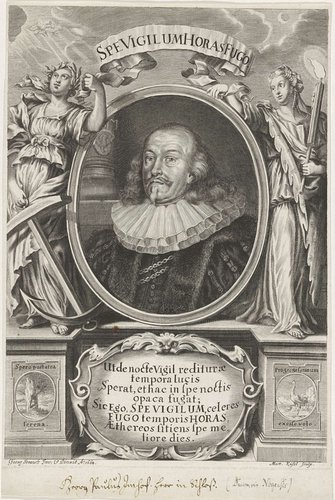
Numerous portraits of the imperial family by Matthäus Küsel are preserved today in the Austrian National Library in Vienna, testament to his productivity and the esteem in which his work was held. These portraits served important political functions, circulating the images of Habsburg rulers throughout their domains and beyond. Through reproductive engravings, the faces of emperors, empresses, and archdukes became familiar to subjects who would never see them in person, helping to construct and maintain political authority through visual means.
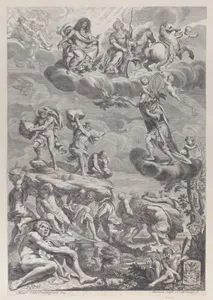
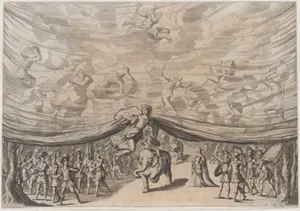
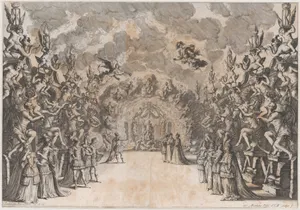
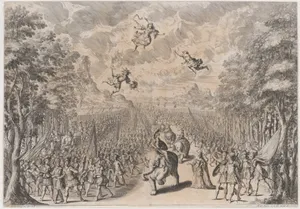
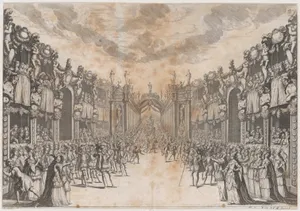
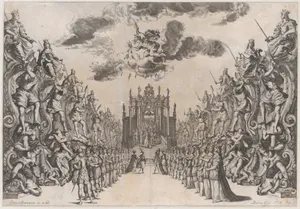
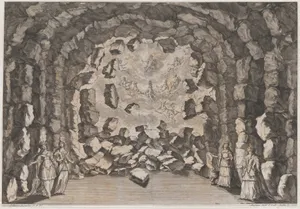
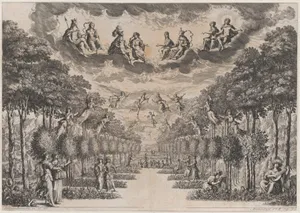
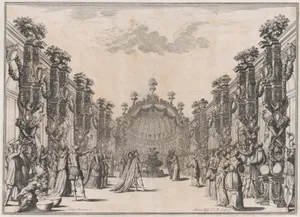
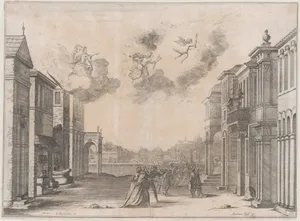
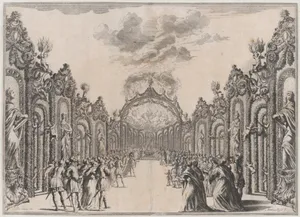
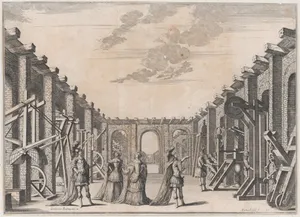
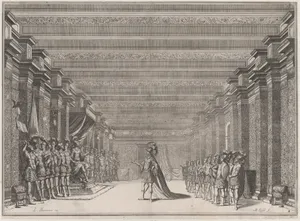
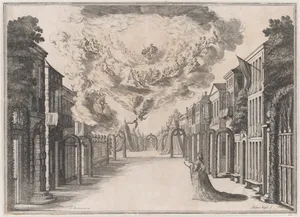
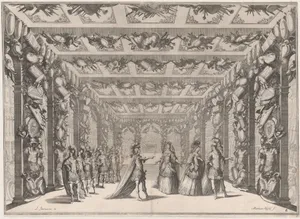
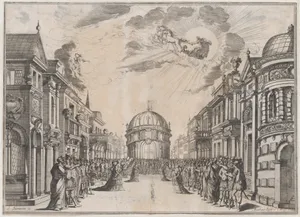
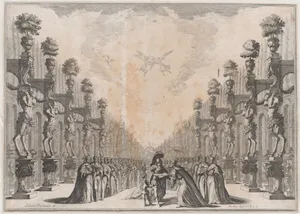
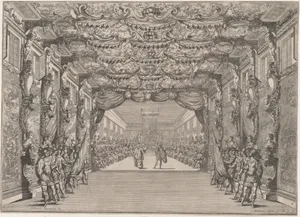
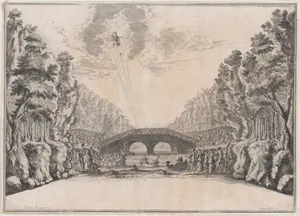
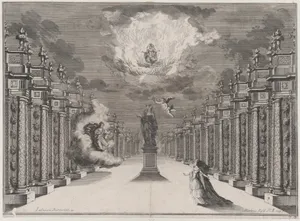
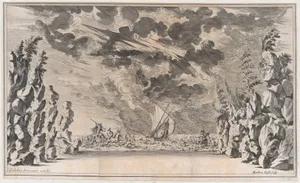
Küsel's extensive oeuvre includes portraits, religious prints, calendars, book illustrations, and thesis prints (elaborate frontispieces for academic disputations). He worked both after his own designs and after compositions by other artists, demonstrating versatility in translating diverse visual material into the medium of copper engraving. Particularly notable were his engravings of theatrical stage architecture after designs by Lodovico Burnacini, the imperial theatrical engineer. These prints documented the spectacular Baroque theatrical productions mounted at the imperial court, preserving images of ephemeral performances and stage designs.
Matthäus Küsel died in 1681 in Augsburg at the age of fifty-two. Despite his relatively short life, he left an enormous body of work that documented the artistic and political culture of the Holy Roman Empire during the height of the Baroque period. His prints remain important sources for historians studying everything from costume and fashion to theatrical design to the iconography of imperial power.
Artheon Research Team
Last updated: 2025-11-09
Biography length: ~723 words
Wikidata (CC0); Getty ULAN (ODC-By)