1828–1911
Movements
Occupations
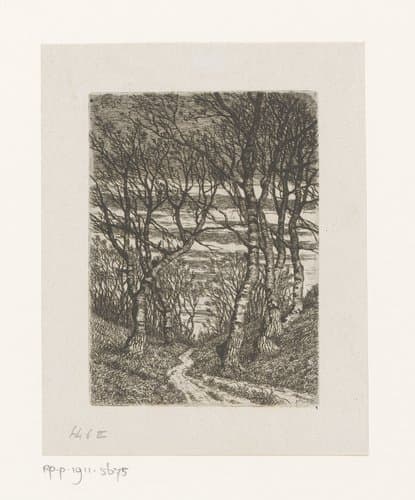
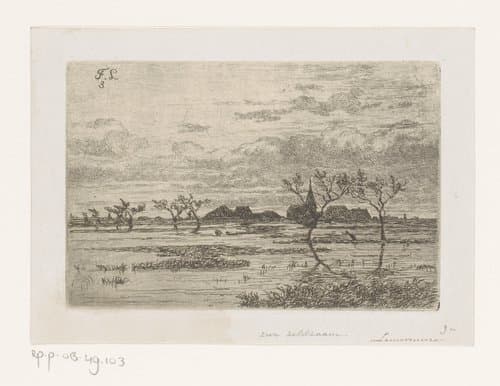
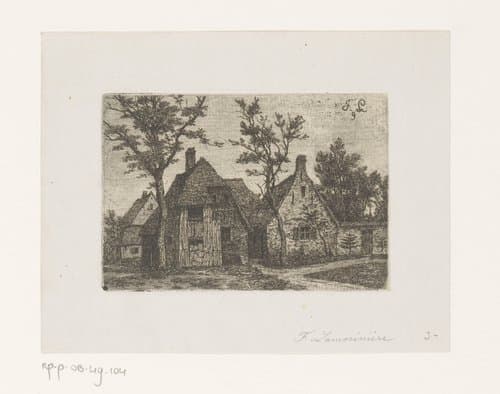
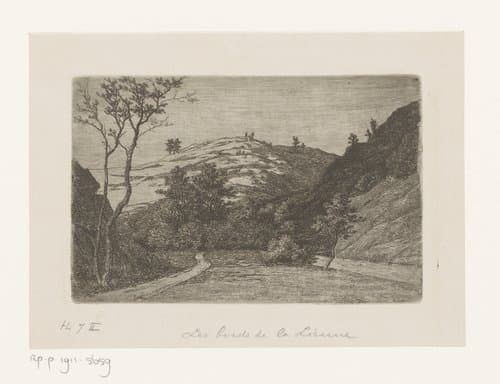
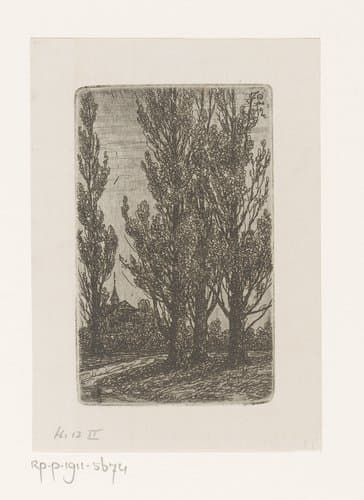
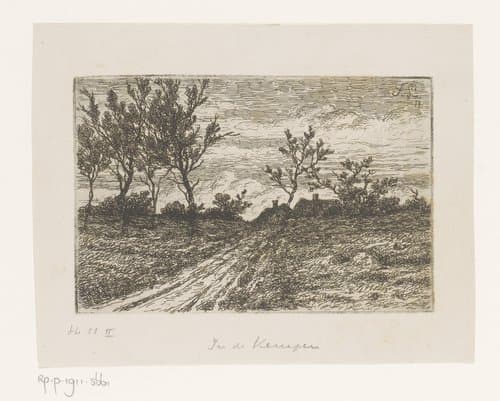
Jean Pierre François Lamorinière (1828-1911) was a Belgian landscape painter whose career bridged Romanticism and Realism, establishing him as a transitional figure in nineteenth-century Belgian art. Born in Antwerp, Lamorinière initially studied sculpture before redirecting his focus to painting under Emmanuel Noterman and marine painter Jacob Jacobs. He emerged as a significant figure in Belgian landscape painting, creating atmospheric depictions of his homeland's flat countryside that balanced direct observation with idealized composition. His 1853 visit to Barbizon placed him among the first Belgian artists to work outdoors in that seminal location, adopting plein-air practices from French contemporaries. Commercial success arrived in the mid-1850s through art dealer Gustave Couteaux, whose support brought royal patronage from the future Leopold II and international recognition. Honored with the Order of Leopold in 1860, Lamorinière continued painting until losing his eyesight in 1898, leaving a legacy that includes a green pigment named "Lamorinière green" after his characteristic color preferences.
Jean Pierre François Lamorinière was born on April 20, 1828, in Antwerp, entering the artistic world during a period of significant transition in Belgian landscape painting. He initially enrolled at the Antwerp Academy of Fine Arts as a sculpture student under Joseph Geefs, but after only a few weeks, he recognized his true calling lay in painting rather than three-dimensional form.
Lamorinière redirected his studies to the studio of Emmanuel Noterman, a painter and printmaker known for genre scenes featuring animals. This training provided foundation in observational skills and compositional principles. He also studied under Jacob Jacobs, a prominent marine painter celebrated for his scenes of southern ports and landscapes. From Jacobs, Lamorinière absorbed understanding of atmospheric effects, light, and the particular challenges of depicting water and sky.
His artistic development occurred within the context of Belgian landscape painting's evolution from the Romantic approach of painters like Balthasar Paul Ommeganck and Eugène Joseph Verboeckhoven toward greater realism. Lamorinière would ultimately position himself between these tendencies, synthesizing romantic atmosphere with increasingly direct observation.
In 1848, at age twenty, Lamorinière exhibited his first work at Antwerp: a painting titled "Sunset," now in the Walker Art Gallery in Liverpool. This early success indicated his emerging talent and established his presence in Belgium's artistic community.
A pivotal moment arrived in June 1853 when Lamorinière traveled to Barbizon, the French village that had become the epicenter of plein-air landscape painting. He was among the first Belgian painters to work outdoors there, following the example of French artists who were revolutionizing landscape practice by painting directly from nature rather than composing in the studio. This experience reinforced his commitment to observational accuracy while maintaining his characteristic approach of "improving" nature to match his spiritual ideals.
From the mid-1850s, Lamorinière's career accelerated through crucial support from Brussels art dealer Gustave Couteaux. The dealer's promotion brought Lamorinière's work to wealthy collectors and royal attention. Significantly, the future Leopold II of Belgium purchased one of his paintings through Couteaux, providing royal endorsement that enhanced the artist's reputation and commercial prospects.
In 1860, Lamorinière received the Order of Leopold, a Belgian national honorary order of knighthood, recognizing his artistic achievements and cultural contributions. This official honor confirmed his status among Belgium's leading landscape painters.
Around 1865, Lamorinière visited England, painting in the forest of Burnham near London. Several works depicting this English landscape are recorded from this period, demonstrating his willingness to work beyond his native Belgium while maintaining his characteristic atmospheric approach.
Throughout the later nineteenth century, Lamorinière continued developing his landscape practice, painting flat Belgian countryside with the careful balance between observation and idealization that defined his mature style. His compositions featured the low horizons, expansive skies, and subtle atmospheric effects characteristic of Low Countries landscape tradition, executed with the enhanced naturalism of mid-century realism.
His distinctive approach to color, particularly his preference for certain green pigments, became so characteristic that the firm Jacques Blockx Fils SA produced a color specifically called "Lamorinière green" in his honor—a rare recognition of a painter's influence on artists' materials manufacturing.
In 1898, at age seventy, Lamorinière suffered a devastating loss: he went blind, ending his ability to paint. For thirteen years, he lived without the practice that had defined his adult life. He died in Antwerp on January 3, 1911, at age eighty-two, having witnessed Belgian landscape painting's transformation from Romanticism through Realism toward the modernist experiments that would follow.
claude-biography-agent
Last updated: 2025-11-09
Biography length: ~492 words
Wikidata (CC0); Getty ULAN (ODC-By)