
Ctrl K
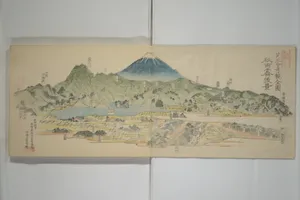
Amano Genkai, also known as Yamada Sadazane, was a Japanese artist active during the late Edo period. He is best remembered for his delicate woodblock-printed illustrations of Mount Fuji, which capture the mountain’s shifting moods across the seasons. His principal work, the album *Fuyō kikan* (Striking Views of Mount Fuji), appeared in 1828 as an oblong book of subtly colored prints bound in the traditional gajōsō format. The volume presents Fuji enveloped in atmospheric effects—mists, clouds, and seasonal light—rendered with refined line work and restrained palette typical of early nineteenth-century landscape prints.
The project involved collaboration with publisher Kaseya Sojun, who is sometimes credited alongside Genkai as co-creator or editor. Yamada Sadazane’s name appears in connection with the same publication, suggesting the two names may refer to the same individual or close associates working on the edition. No records of formal training, teachers, or artistic lineage have surfaced, leaving his early development undocumented. The prints themselves reflect the broader Edo-period fascination with Fuji as both sacred peak and pictorial subject, yet they stand out for their intimate, almost meditative treatment rather than dramatic or touristic emphasis.
Although Genkai’s documented output remains limited to this single major project, the album has ensured his place in museum collections worldwide, including the Metropolitan Museum of Art and the National Museum of Asian Art. Its survival in multiple impressions testifies to the enduring appeal of his quiet, atmospheric vision of Japan’s most iconic landscape. In an era when ukiyo-e was rapidly evolving, Genkai’s Fuji series offers a refined, contemplative counterpoint that continues to reward close viewing.
No artworks found for this artist