
Ctrl K
**Antonio Maria Zanetti (the younger), also known as Anton Maria Zanetti or Zanetti II (1706–1778), was a Venetian art historian, librarian, writer, and amateur etcher renowned for his scholarship on antiquities, Venetian painting, and classical sculpture.** Born on 1 January 1706 in the parish of San Giacomo dell’Orio in Venice to Alessandro Zanetti and Antonia Limonti, he came from a citizen-class family and later moved to the parish of Santa Maria Mater Domini. As a youth he studied with the Jesuits, developing a strong aptitude for the classics and proficiency in Greek, while also gaining skills in architecture, perspective, and music.)
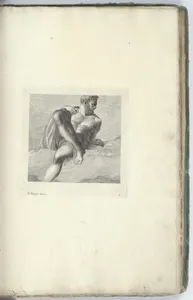
Zanetti learned to paint under the guidance of Nicolò Bambini and became a protégé of his older cousin, the artist, engraver, and connoisseur Antonio Maria Zanetti (the elder, 1680–1767). This relationship proved formative: beginning in the early 1720s, the two collaborated on a major project documenting classical sculptures in Venetian public collections. Zanetti supplied many drawings for the two-volume *Delle antiche statue greche e romane* (1740 and 1743), with engravings executed by artists including Giovanni Antonio Faldoni. He also produced his own etchings, notably contributing to *Varie pitture a fresco de’ principali maestri veneziani* (1760), which reproduced works by masters such as Giorgione, Titian, and Jacopo Tintoretto (Jacopo Robusti).)
In 1737 Zanetti was appointed custodian of the Marciana Library, a post he held until his death. There he compiled the first modern catalogues of its manuscript collections (Greek, Latin, and vernacular codices, published 1740–1741) and earlier assisted with a detailed inventory of the library’s public statuary. His publications on Venetian art include the 1733 *Descrizione delle pubbliche pitture di Venezia* and the 1771 *Della pittura veneziana e delle opere pubbliche de’ veneziani maestri*, which remain valuable references for the city’s artistic heritage.)
Zanetti’s legacy lies in his rigorous documentation and connoisseurship, which helped preserve and disseminate knowledge of Venetian antiquities and painting at a time when many works were at risk. His prints after earlier masters, including Tintoretto, bridged the worlds of scholarship and artistic reproduction, while his library catalogues established modern bibliographical standards. He died in Venice on 3 November 1778.