Ctrl K
**Aqa Mirak** (also known as Āqā Mīrak, Sayyed Jalāl-al-Dīn Ḥosaynī Eṣfahānī) was a leading Persian painter and illustrator of the Safavid period, active primarily between the 1520s and his death in Qazvin in 1576. Of Isfahani origin and a sayyed, he trained as a pupil of the renowned master Kamāl al-Dīn Behzād. He rose to prominence in the royal workshop of Shah Ṭahmāsp I, serving not only as an artist but also as a trusted companion, purveyor, and confidant to the monarch. Contemporary sources describe him as a skilled figural and portrait painter, an excellent colorist, and a poet in his own right.
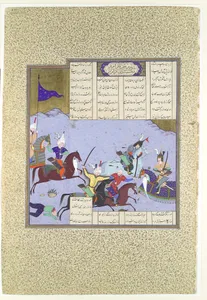
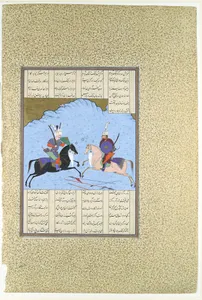
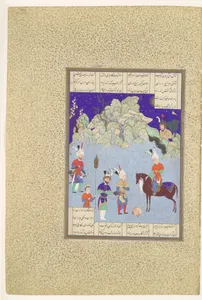
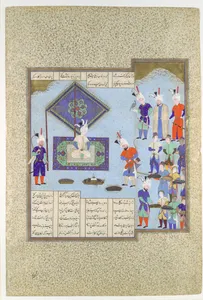
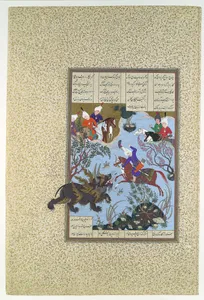
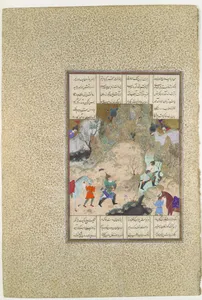
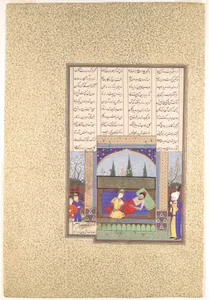
Aqa Mirak worked in the refined tradition of Persian miniature painting associated with the Safavid court. He contributed significantly to major royal manuscripts, including illustrations for the celebrated *Shahnameh of Shah Tahmasp* (a lavish copy of Ferdowsi’s epic) and Nizami’s *Khamsa*. Along with colleagues such as Mir Musavvir and Solṭān-Moḥammad, he also executed wall paintings for princely palaces in Tabriz. His compositions are noted for their harmonious design, vibrant palettes, and elegant figural style, reflecting the sumptuous aesthetic of mid-16th-century Safavid art. He later lived in Mashhad (c. 1555–1565) before settling in Qazvin.
Among his documented works are folios from the *Shahnameh* project—such as scenes depicting royal courts and epic battles—and contributions to the British Museum’s *Khamsa of Nizami* (Or. 2265). Chroniclers like Dust Muhammad and Qazi Ahmad praised his creativity, technical mastery, and close relationship with the shah, noting that he had “no peer in artistic design.”
Aqa Mirak’s legacy endures through the masterpieces he helped create, which exemplify the golden age of Persian manuscript illustration. His paintings remain in major collections worldwide, including the Metropolitan Museum of Art, and continue to influence studies of Safavid art and the transmission of Persian literary traditions through visual storytelling.
**Abu’l Qasim Firdausi** (Ferdowsi, c. 940–1025) was the great Persian poet whose epic *Shahnameh* (“Book of Kings”) provided the literary foundation for countless later illustrations, including those by Aqa Mirak. Born in Tus in Khorasan to a family of landowners, he devoted some thirty-five years to compiling and versifying ancient Iranian legends and history into one of the world’s longest epic poems. He completed the work around 1010 and presented it to Sultan Mahmud of Ghazni. Though not a visual artist himself, Firdausi’s masterpiece became the central text for Persian miniature painters across centuries, preserving pre-Islamic cultural heritage and shaping the iconography of royal manuscripts. His legacy as the preserver of Persian language and identity remains unparalleled.