Ctrl K
1812–1852
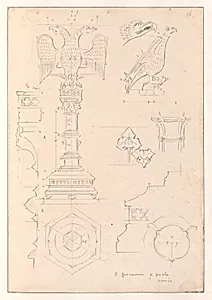
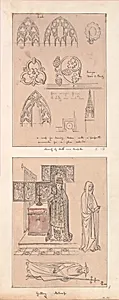
Augustus Welby Northmore Pugin (1812–1852) was a British architect, designer, and theorist whose fervent advocacy for Gothic architecture transformed Victorian Britain's built environment and established the intellectual foundations of the Gothic Revival movement. Born in London to the French architect and draughtsman Auguste Charles Pugin, he showed exceptional talent from childhood, producing detailed architectural drawings of medieval buildings from an early age and absorbing the technical knowledge of medieval construction that would inform his life's work. His conversion to Roman Catholicism in 1835 deepened his commitment to Gothic architecture, which he came to see not merely as a stylistic preference but as the only honest expression of Christian civilization.
Pugin's theoretical writings — particularly Contrasts (1836) and The True Principles of Pointed or Christian Architecture (1841) — were polemical masterpieces that argued passionately for the moral and spiritual superiority of Gothic design over the classical and eclectic styles then fashionable. His arguments, combining architectural analysis with fierce social and religious critique, electrified a generation of architects and reformers and laid the groundwork for the broader Arts and Crafts movement that followed. He insisted that every element of a building must be both structurally necessary and expressive of its purpose — a principle that would reverberate through architectural thought for a century.
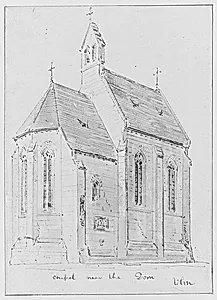
As a practicing architect, Pugin was extraordinarily prolific despite his short life. He designed numerous Catholic churches across Britain and Ireland, as well as schools, convents, and private houses, all marked by his deep knowledge of medieval precedent and his insistence on craftsmanship and authenticity in every detail. His most visible legacy is his collaboration with Charles Barry on the interior decoration and furnishing of the rebuilt Palace of Westminster — the Houses of Parliament — whose Gothic detailing, from wallpapers and tiles to furniture and metalwork, was overwhelmingly Pugin's creation.
Pugin died in 1852 at the age of forty, his health destroyed by prodigious overwork. In his brief career he had transformed British architecture, design, and the decorative arts, leaving behind churches, buildings, and theoretical writings that shaped Victorian culture profoundly. He is remembered as one of the most passionate and consequential architectural visionaries of the nineteenth century.