
Ctrl K
1763–1763
**Bakhméteff Glassworks**, also known as the Nikolsko-Pestrovsky Bakhmetev plant, was a prominent Russian glass manufactory established in 1763 in the villages of Nikolskoye and Pestrovka in the Penza province. Founded by retired Major Alexei Ivanovich Bakhmetev with the permission of Empress Catherine II, the enterprise quickly became one of the leading private glass producers in Russia, rivaling the Imperial Glass Factory in quality and innovation.
The factory specialized in a wide range of glassware, beginning with tinted pieces in azure, violet, and green shortly after its founding. It later excelled in milky glass imitating porcelain, crystal production, and multilayered flashed glass in vibrant colors such as scarlet, turquoise, cobalt, and pink. Master artisan Alexander Vershinin, a serf active from 1795 to 1822, played a key role in elevating its artistic output; he created elaborate crystal services for the imperial court and memorable items featuring portraits of 1812 Patriotic War heroes.
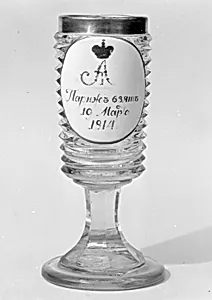
Notable surviving works include a commemorative glass dated 1814, now in the Metropolitan Museum of Art, and double-walled glasses with interior landscapes or medallions attributed to Vershinin and the Bakhméteff workshops around 1800–1810. These pieces exemplify the factory’s technical mastery in engraving, gilding, filigree, and sulfide inclusions.
Under Bakhmetev family management until 1884 and later Prince Alexander Dmitrievich Obolensky until 1917, the plant supplied the Russian aristocracy and court while earning international recognition, including awards at the 1900 Paris World Exhibition. Its legacy endures in the high-quality crystal traditions it helped establish, with production continuing in various forms into the Soviet era and beyond as one of Russia’s most significant historic glass enterprises.
No artworks found for this artist