
Ctrl K
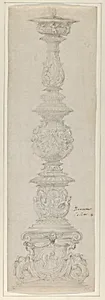
Bernardo Buontalenti, also known as Bernardo delle Girandole (c. 1531–1608), was a versatile Italian artist, architect, military engineer, stage designer, and inventor who spent his career in the service of the Medici family in Florence. Born Bernardo Timante Buonacorsi in Florence, he entered Medici employment as a youth and remained closely tied to the court for the rest of his life, contributing to fortifications, villas, gardens, theatrical productions, and mechanical innovations. His nickname “delle Girandole” likely derived from his work with fireworks displays and ornate candelabra designs.
Buontalenti worked in the Mannerist tradition, blending architectural precision with inventive ornamentation and theatrical flair. He designed key Medici projects including the Villa di Pratolino with its elaborate gardens and water features, the Tribune of the Uffizi Gallery, the Forte di Belvedere, the Grotta Grande in the Boboli Gardens, and the urban plan for Livorno. He also created stage sets and machinery for court spectacles. A drawing for a candelabra now in the Metropolitan Museum of Art was long attributed to Benvenuto Cellini before being reassigned to Buontalenti, reflecting the overlap in their courtly decorative styles.
Beyond architecture and design, Buontalenti is traditionally credited with inventing gelato for the Medici court, showcasing his inventive mind alongside his artistic output. His polymath abilities extended to mathematics, mechanics, and military engineering, making him one of the most valued figures at the Florentine court during the late Renaissance.
Buontalenti’s legacy endures in the surviving Medici villas, gardens, and fortifications that define Florence’s Mannerist landscape, as well as in his influence on theatrical design and courtly spectacle. His ability to integrate art, engineering, and invention left a lasting mark on Florentine culture.