Ctrl K
Honoré-Victorin Daumier was a French painter, sculptor, and printmaker whose incisive caricatures and paintings captured the social and political upheavals of 19th-century France. Born on February 26, 1808, in Marseille to a glazier father with literary ambitions, Daumier moved with his family to Paris in 1814. There he began his artistic training through practical work in lithography, producing illustrations for books and periodicals while developing a keen eye for human folly and institutional hypocrisy.
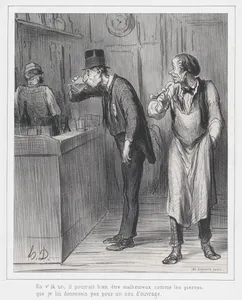
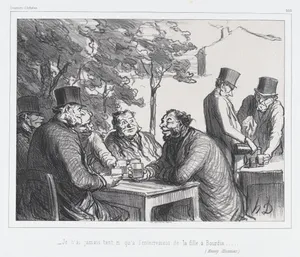
Daumier gained fame through his prolific output of lithographs for satirical journals such as *La Caricature* and *Le Charivari*, where he lampooned the July Monarchy, the bourgeoisie, lawyers, politicians, and the clergy with sharp wit and expressive draftsmanship. Working in the Realist tradition, he blurred the lines between caricature and fine art, creating over 4,000 lithographs alongside hundreds of paintings, drawings, and sculptures that offered empathetic portrayals of ordinary people alongside biting social commentary. His republican sympathies infused his work with a democratic spirit, though his paintings received little attention during his lifetime despite admiration from contemporaries like Charles Baudelaire.
Though he occasionally exhibited at the Paris Salon, Daumier supported himself primarily through printmaking, often in collaboration with printers such as Bertauts. Later generations recognized his profound influence on Impressionist and Post-Impressionist artists through his innovative handling of light, movement, and everyday subjects. He died on February 11, 1879, in Valmondois, leaving a vast legacy that continues to illuminate the tensions of modern society. His works remain celebrated for their technical mastery and unflinching critique of power.