Ctrl K
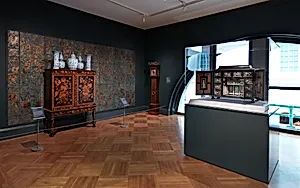
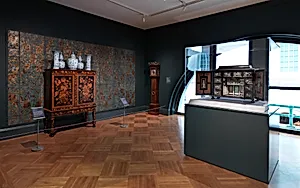
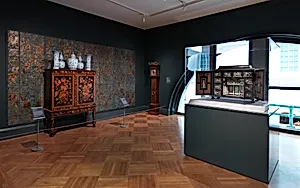
De Vergulde Roemer and De Gecroonde Son were renowned Dutch workshops based in Amsterdam during the mid-17th century, specializing in the production of opulent gilt-leather wall hangings. Emerging in the vibrant artistic milieu of the Dutch Golden Age, these ateliers built on a tradition imported from Spain, where painted leather panels had long adorned walls. The first such workshop in the Netherlands was established in Amsterdam by 1611, and De Vergulde Roemer (The Gilded Roemer, referencing a ornate stemmed glass) along with De Gecroonde Son (The Crowned Sow) exemplified the Dutch adaptation of this craft around 1650–70. Their output catered to the prosperous burgher class, transforming interiors into lavish displays of wealth and refinement.
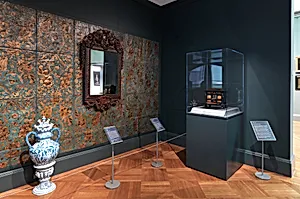
These workshops mastered a distinctive technique that set Dutch gilt leather apart: calf hides were meticulously prepared, embossed with molds to create bold relief patterns, and then adorned with silver leaf coated in yellow varnish to mimic shimmering gold. Vibrant polychrome paints brought to life intricate motifs, including cascading garlands of fruits and flowers intertwined with playful putti symbolizing the Five Senses—sight, hearing, touch, taste, and smell. This sensory exuberance reflected the era's Baroque exuberance and the Dutch penchant for illusionistic depth and texture, elevating functional wall coverings to sculptural art.
Surviving masterpieces attributed to these workshops include sets of gilt-leather panels now in the Metropolitan Museum of Art's collection, such as those featuring the Five Senses putti amid floral abundance (ca. 1650–70). These ensembles, comprising multiple hangings, demonstrate the scale and narrative cohesion typical of their production. Google Arts & Culture also showcases similar pieces, highlighting their preservation and accessibility.
The legacy of De Vergulde Roemer and De Gecroonde Son endures in the history of Dutch decorative arts, bridging painting, sculpture, and interior design. Their innovations influenced European luxury goods trade, underscoring Amsterdam's role as a hub of craftsmanship during a time when the Republic dominated global commerce. Today, these hangings offer a tactile glimpse into Golden Age opulence, reminding us how everyday materials could embody sensory delight and status. (348 words)