
Ctrl K
1857–1907
Currier & Ives, the preeminent American printmaking firm, was founded in 1835 by Nathaniel Currier in New York City, initially operating as N. Currier, Lithographer. Born in 1813 in Roxbury, Massachusetts, Currier apprenticed at age fifteen in the pioneering Boston lithography shop of William and John Pendleton, learning the craft under their chief printer, the French lithographer Dubois, who had introduced the technique to America. After brief stints in Philadelphia and a short partnership with printmaker Stodart, Currier established his independent venture, capitalizing on public demand for visual news with his breakthrough print of the 1835 Great Fire of New York. His brother Charles later joined as a lithographer, while Lorenzo contributed frontier sketches, forging key family ties in the business.
In 1852, James Merritt Ives, a self-trained artist and bookkeeper connected through marriage to Currier's family, joined as business manager; he became full partner in 1857, renaming the firm Currier & Ives. The duo specialized in affordable, hand-colored lithographs produced via an innovative assembly-line process: artists drew on limestone slabs, skilled printers like John Cameron transferred images, and teams of immigrant women applied vibrant watercolors, one hue per worker. Working in the popular lithography tradition, they employed talents such as Frances Flora Bond Palmer—the first full-time woman lithographer in the U.S.—Arthur Fitzwilliam Tait for sporting scenes, Louis Maurer for genre works, and George H. Durrie for iconic winter landscapes. Their bold, accessible style captured Victorian sentimentality, blending realism with nostalgia in depictions of American expansion, disasters, and daily life.
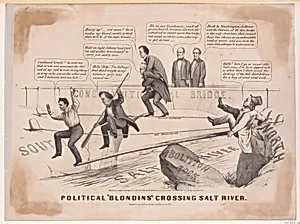
Among their 7,500-plus images, standouts include the 1840 "Awful Conflagration of the Steam Boat Lexington," which launched Currier's fame; Fanny Palmer's epic 1868 "Across the Continent—Westward the Course of Empire Takes Its Way," celebrating Manifest Destiny; and series like "The Life of a Fireman" (c. 1850s) by Maurer and winter scenes such as "Central-Park Winter. The Skating Pond" (1862). Civil War prints, political portraits, and controversial Darktown Comics also flew off shelves, with over a million copies sold overall.
Currier & Ives chronicled America's transformation from agrarian roots to industrial power, adorning middle-class homes as endorsed by reformers like the Beecher sisters. Though eclipsed by photography and mechanized printing by 1907—when sons Edward Currier and Chauncey Ives liquidated the firm—their legacy endures in museums and reproductions, embodying 19th-century visual culture. (312 words)
All 1 artworks loaded