
Ctrl K
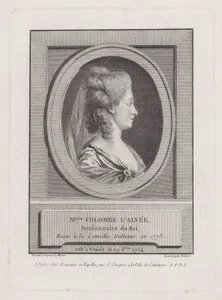
**Jean Marie Delattre (1745–1840)** was a French-born engraver and printmaker whose long career bridged the flourishing print cultures of Paris and London. Born in Abbeville, he trained in the prestigious Paris workshop of Jacques-Philippe Le Bas, mastering traditional line engraving before embracing the innovative stipple technique that would define much of his output.
After early work in Paris, including a period around 1772 as a portrait specialist for the print publishers Esnauts et Rapilly, Delattre moved to England in 1770. There he collaborated with William Wynne Ryland and later served as a principal assistant to the celebrated Francesco Bartolozzi, refining his skill in stipple engraving—building tonal effects through delicate dots rather than lines. He partnered with fellow engraver Victor Marie Picot in a London print-selling business and produced numerous book illustrations for major series such as Bell’s Poets, Bell’s Shakespeare, and Macklin’s Bible, often working after designs by Angelica Kauffman, Charles Nicolas Cochin II, and others.
Delattre’s technical prowess and professional standing were dramatically affirmed in 1801 when he successfully sued the painter John Singleton Copley over payment for an engraving, with fellow engravers testifying to the quality of his work. He continued producing prints well into old age, outliving his wife Ann (whom he married in 1773) and dying in Fulham, London, at around ninety-five. His engravings, held in collections including the British Museum and the Metropolitan Museum of Art, helped disseminate paintings and illustrations to wide audiences and exemplify the vital role of reproductive printmaking in eighteenth- and early nineteenth-century European art.