Ctrl K
**Étienne Bobillet and Paul Mosselman** were Franco-Netherlandish sculptors active in Bourges in 1453. They are best known for completing the tomb of Jean, duc de Berry (1340–1416), a project begun by Jean de Cambrai. Their collaborative work produced a series of alabaster mourner figures, known as pleurants, that once lined the sides of the duke’s sarcophagus in Bourges.
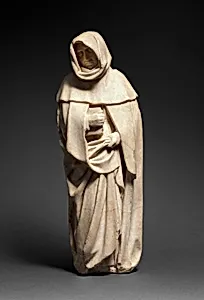
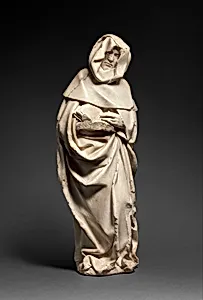
Little is documented about their individual training or early lives. They worked in the Franco-Netherlandish tradition, blending Netherlandish precision with the expressive qualities of Burgundian sculpture. Their mourners feature voluminous cloaks that envelop the figures and deep hoods that obscure the faces, creating an atmosphere of solemn grief. These statuettes, roughly fifteen inches tall, were originally part of a larger ensemble of about forty figures; twenty-five are known to survive today after the tomb was vandalized during the French Revolution and its components dispersed.
Two fine examples of their mourners are now in the collection of The Metropolitan Museum of Art. Carved in alabaster with traces of gilding around 1453, the figures exemplify the late medieval taste for individualized yet emotionally resonant tomb sculpture. One source notes that Paul Mosselman died in 1467, suggesting he may have continued working after their joint project in Bourges.
Their legacy rests on these surviving pleurants, which offer modern viewers a vivid glimpse into fifteenth-century funerary art and the patronage of one of the great Valois princes. The figures continue to be studied for their technical mastery and their role in the development of Burgundian sculptural style.