
Ctrl K
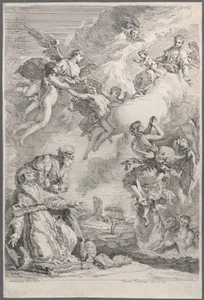
**Francesco Fontebasso** (1707–1769) was a prominent Italian painter of the late Baroque and Rococo periods, active primarily in his native Venice. Born on 4 October 1707, he trained under the esteemed Sebastiano Ricci, whose dynamic compositions and luminous color informed his early development. Fontebasso quickly absorbed the vibrant Venetian tradition while coming strongly under the influence of his contemporary Giovanni Battista Tiepolo, whose elegant figures and theatrical lighting shaped his mature style.
Fontebasso excelled as both a history painter and a skilled draughtsman, producing altarpieces, frescoes, and decorative schemes for churches and palaces. Notable works include the dramatic *The Sacrifice of Iphigenia* (1749) and the *Allegory of Faith* (c. 1750) in the church of San Zanipolo, Venice. In 1761 he traveled to Saint Petersburg, where he created ceiling paintings and lavish decorations for the Winter Palace; he returned to Venice in 1768 and contributed to the decoration of a chapel in San Francesco della Vigna.
Fontebasso died in Venice on 31 May 1769. His legacy endures through works held in major collections, including the Prado Museum in Madrid, which owns *The Bridegroom and the Foolish Virgins* along with numerous drawings, and the Kadriorg Palace in Tallinn, Estonia. As a bridge between the grand manner of Ricci and the refined Rococo of Tiepolo, Fontebasso helped sustain Venice’s reputation as a center of innovative decorative painting in the eighteenth century.
All 1 artworks loaded