
Ctrl K
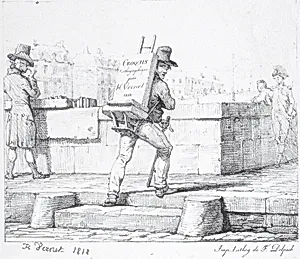
François-Séraphin Delpech (1778–1825) was a pioneering French lithographer and print publisher based in Paris, whose innovative workshop at 3 Quai Voltaire became a hub for early 19th-century graphic arts. Born in Paris's Chaillot quarter, Delpech studied drawing and painting before embarking on a multifaceted career. He worked as a stamp merchant in Sèvres for fourteen years, contributed art criticism to *Le Mercure de France* during the Napoleonic Empire, and began independent publishing around 1813. By 1817–1818, he distributed lithographs from Charles de Lasteyrie du Saillant, eventually acquiring stones and clients, including from prominent artists. In 1818, he established the Imprimerie lithographique de F. Delpech, a bustling storefront vividly captured in a lithograph by Carle Vernet (Antoine-Charles-Horace Vernet), depicting diverse Parisians admiring prints outside.
Delpech's shop flourished through close collaborations with the Vernet family, particularly Carle Vernet and his son Horace Vernet. He printed over 200 lithographs after their designs, including Horace Vernet's seminal *Croquis lithographiques par H. Vernet* (1818), a series of spirited sketches that showcased the medium's spontaneity, as well as military scenes like *La Cuisine au bivouac* and *Quel est de ces mourants l'étonnement extrême*. These works, often hand-colored, bridged painting and printmaking, capturing Vernet's dynamic Romantic style in affordable reproductions. Delpech also worked with Louis-Léopold Boilly on satirical *Grimaces* and *Têtes groupées* (1823–1828), Théodore Géricault, and others like Marie-Philippe Coupin de la Couperie.
From 1819, Delpech specialized in portrait lithography, producing the *Album lithographique* and the ambitious *Costumes civils et militaires de la monarchie française depuis 1200 jusqu’à 1820* (1820, 88 hand-colored plates). His 1823 *Iconographie des contemporains*—200 portraits of Revolution and Empire figures like Gaspard Monge and Jean-Jacques Régis de Cambacérès, with facsimile signatures—defined the "à la Delpech" portrait mode, blending precision and accessibility in the nascent French lithographic tradition. Married to fellow lithographer Marie Marguerite Naudet, who managed four daughters and continued the business after his 1825 death from a chest ailment, Delpech's legacy endures in collections at the Bibliothèque nationale de France, National Portrait Gallery (London), and beyond, cementing lithography's role in democratizing art.