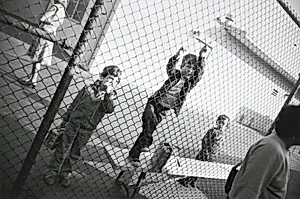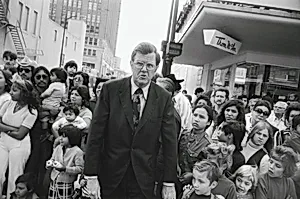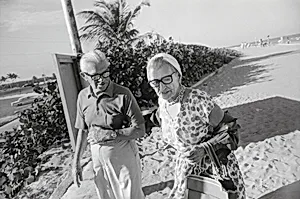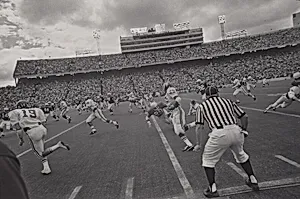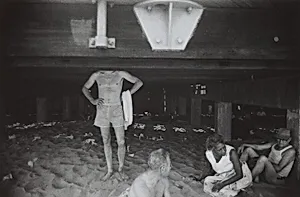
Garry Winogrand, born on January 14, 1928, in New York City's Bronx to Jewish immigrant parents Abraham and Bertha, grew up in a working-class neighborhood alongside his sister Stella. After graduating high school in 1946 and serving in the U.S. Army Air Force as a weather forecaster, where he first took up photography, Winogrand pursued painting at City College of New York and Columbia University in 1948. He honed his photographic skills in a 1951 photojournalism class at the New School for Social Research, studying under Alexey Brodovitch, whose instinct-driven approach profoundly shaped his instinctive style.
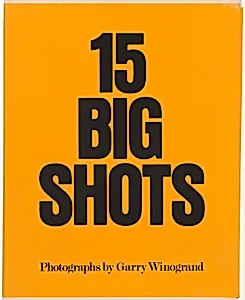
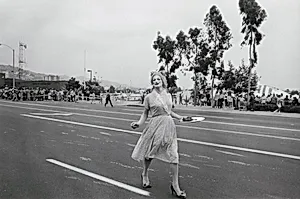
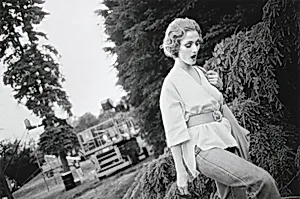
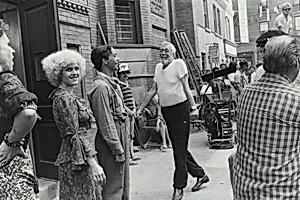
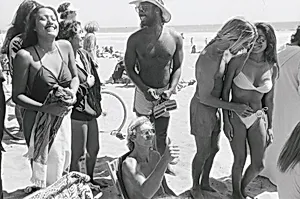
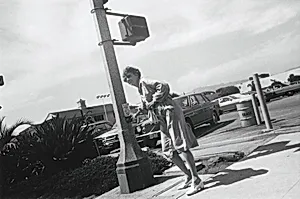
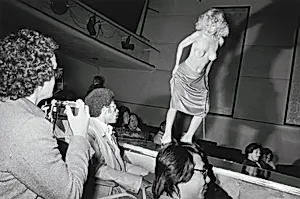
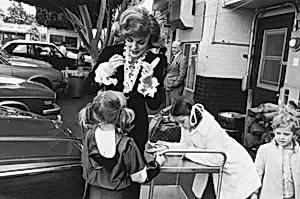
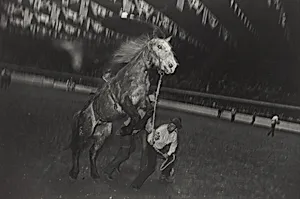
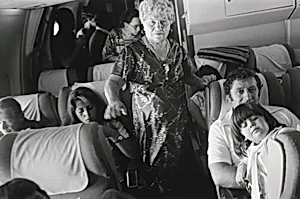
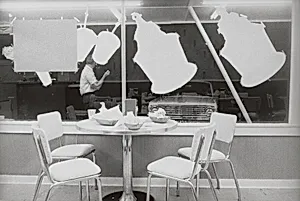
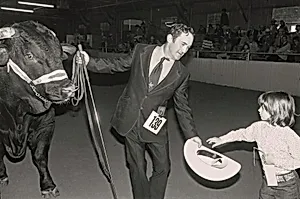
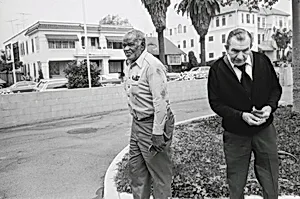
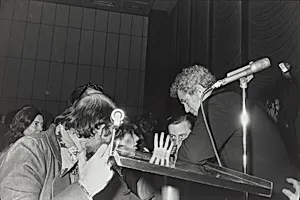
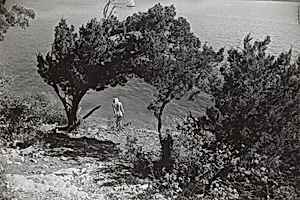
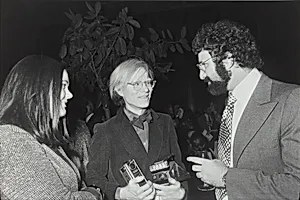
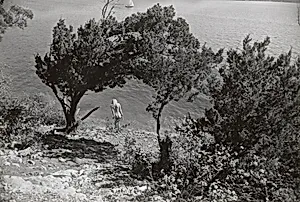
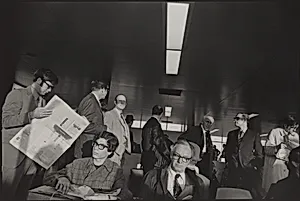
A pioneering street photographer, Winogrand captured the frenetic energy of mid-20th-century American life, particularly in New York, with a snapshot aesthetic defined by tilted horizons, wide-angle 28mm Leica shots, and chaotic, off-kilter compositions that pried into personal spaces and revealed social absurdities. Associated with street photography's evolution and grouped with Diane Arbus and Lee Friedlander in MoMA's seminal 1967 *New Documents* exhibition, he documented urban crowds, zoos, and events with visual puns and kinetic urgency. Iconic works include his 1955 *Marilyn Monroe, New York City* amid her skirt-blowing publicity stunt, the 1964 *New York World's Fair* bench scene, and series like *The Animals* (1969), Bronx Zoo images paralleling human-animal behaviors; *Women Are Beautiful* (1975), candid street portraits of women; *Public Relations* (1977), media-saturated events from 1969–1976; and *Stock Photographs: The Fort Worth Fat Stock Show and Rodeo* (1980).
In the 1970s, Winogrand taught at institutions including the School of Visual Arts, Cooper Union, the Art Institute of Chicago, and the University of Texas at Austin, while amassing over 5 million exposures, many undeveloped at his 1984 death from gallbladder cancer at age 56. His vast archive at the Center for Creative Photography fueled posthumous retrospectives like MoMA's 1988 and 2013–2015 tours, cementing his legacy as a transformative force in street photography. Winogrand's relentless, provocative gaze—influenced by Robert Frank and Walker Evans—inspired generations, from Nan Goldin to William Eggleston, challenging polished ideals and celebrating photography's power to distill everyday chaos into electric truth.