
Ctrl K
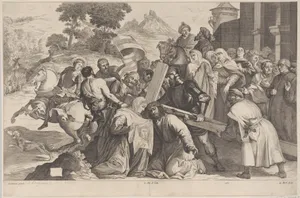
**Giovanni Cariani (c. 1490–1547), also known as Giovanni Busi or Il Cariani, was an Italian painter of the High Renaissance active primarily in Venice and the Venetian mainland, including his native Bergamo region.**
Born in Fuipiano Al Brembo, a hamlet of San Giovanni Bianco near Bergamo, Cariani was the son of Giovanni Busi, a local magistrate appointed by Venetian authorities. He moved to Venice by 1509, where he likely trained in the workshop of Giovanni Bellini or under the influence of Giorgione, absorbing the luminous color and atmospheric effects central to Venetian painting.
Cariani’s style blended Venetian color poetry with a provincial affection for landscape and psychological depth in his figures. He was strongly influenced by Palma il Vecchio and produced colorful altarpieces, devotional works, and portraits. While based in Bergamo from 1517 to 1523, he overlapped with Lorenzo Lotto, further enriching his approach to sacred conversations and donor portraits.
Among his notable works are the early *Adoration of the Shepherds* (c. 1515–1517, Royal Collection), *A Concert* (c. 1518–1520, National Gallery of Art, Washington, DC), *Resurrection of Christ with Two Donors* (1520, Pinacoteca di Brera, Milan), and the *Pala di San Gottardo* (1523, Pinacoteca di Brera). Later pieces such as *Madonna Cucitrice* (1525–1528, Galleria Nazionale d’Arte Antica, Rome) and *Finding the True Cross* (1530, Accademia Carrara, Bergamo) showcase his mature command of composition and light.
Cariani died in Venice in 1547. Though somewhat overshadowed by his great contemporaries, he remains valued for his distinctive fusion of Venetian elegance and Lombard naturalism, contributing to the vibrant artistic culture of early sixteenth-century northern Italy. His paintings are held in major collections including the National Gallery, London, and the Hermitage Museum.
All 1 artworks loaded