
Ctrl K
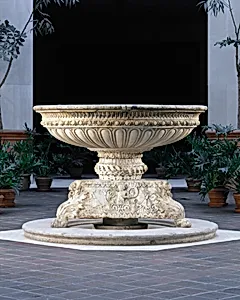
**Giuliano da Maiano (1432–1490)** was an Italian Renaissance architect, sculptor, and master of intarsia (wood inlay), born in the village of Maiano near Fiesole. He belonged to a prominent family of artists; his father worked as a stone-cutter who relocated the family business to Florence, and Giuliano frequently collaborated with his younger brothers, the sculptor Benedetto da Maiano and Giovanni da Maiano.
His early career centered on intricate woodwork and design in Florence. He contributed to the intarsia fittings for the New Sacristy of the Duomo (1463–1465) alongside Benedetto, carving wooden bas-reliefs of putti and garlands. Further collaborations included elaborate intarsia ceilings and doorcases in the Palazzo Vecchio, such as the Sala dei Dugento and Sala del Giglio (1472–1477). In 1480, he completed a notable tabernacle of the Madonna dell’Olivo for Prato Cathedral with his brothers.
As an architect, Giuliano embodied the Florentine Renaissance tradition, drawing on the refined rustication and window treatments pioneered by Alberti and Michelozzo. He served as house architect for the Pazzi family, rebuilding Palazzo Pazzi (1462–1472), and added a piano nobile to Palazzo dello Strozzino (c. 1456). Other key projects include Palazzo Antinori (1465–1469), Palazzo Spannocchieschi in Siena (c. 1475), and the chapel of Santa Fina in San Gimignano. Later commissions took him to Rome, Loreto, Faenza, and especially Naples, where from 1487 he designed the Villa di Poggio Reale and the grand Porta Capuana for Alfonso, Duke of Calabria.
Giuliano’s legacy lies in bridging sculpture, decorative arts, and architecture during the height of the Florentine Renaissance. His elegant, detailed work—particularly the famed intarsia “Studiolo” in the Ducal Palace at Gubbio—exemplified the period’s fusion of craftsmanship and classical revival. He died in Naples in 1490, where his funeral was attended by mourners provided by Alfonso himself, underscoring his international reputation.