
Ctrl K
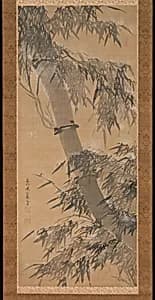
Taihō Shōkon (also known as Hakujun Shōkō), active from 1691 to 1774, was a Japanese painter of the Edo period (1615–1868), renowned for his delicate depictions of bamboo. Though sparse biographical details survive, his works reveal a mastery of ink monochrome techniques, capturing the subtle play of light, wind, and weather on natural forms. Early life and training remain not well documented, with no records of specific teachers or art schools identified in historical sources. He likely honed his skills within the broader tradition of Japanese literati painting (nanga or bunjin-ga influences), which emphasized poetic simplicity and brushwork inspired by Chinese models, though adapted to Edo-era aesthetics.
Shōkon's artistic style exemplifies the Edo period's fascination with nature's transience, particularly bamboo as a symbol of resilience and elegance. His paintings employ fine ink washes and precise linework to evoke atmospheric effects—snow dusting slender stalks or wind bending them with graceful tension. This approach aligns with the Kano and sumi-e traditions, prioritizing expressive minimalism over ornate detail. Works like *Bamboo in Snow* (The Metropolitan Museum of Art) showcase his ability to convey wintry stillness through layered shading and sparse composition, while *Bamboo in the Wind* (also at the Met) animates the scene with dynamic strokes that suggest rustling leaves and fleeting gusts. These pieces, executed on silk or paper, highlight his sensitivity to seasonal impermanence, a core theme in Japanese art.
Shōkon's legacy endures through his contributions to bamboo painting, a niche yet revered genre that influenced later Edo artists. His paintings grace major collections, including the Metropolitan Museum of Art in New York and Gallery-So in Kyoto, attesting to their enduring appeal. In an era dominated by ukiyo-e and decorative screens, Shōkon's introspective works offered a contemplative counterpoint, bridging classical Chinese ink traditions with Japanese refinement. Today, they invite viewers to appreciate the profound beauty in simplicity, reminding us of nature's quiet poetry amid the Edo period's cultural flourishing. (312 words)