Ctrl K
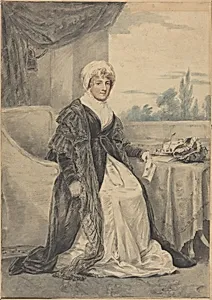
1769–1821
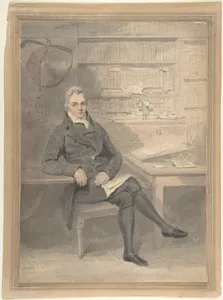
Henry Edridge (1768–1821) was a British watercolorist and portrait painter who achieved remarkable success combining the delicacy of miniature painting with the breadth of draughtsmanship in portrait watercolors. Born in Paddington in 1768 (baptized October 3), Edridge became one of the most sought-after portraitists in early nineteenth-century Britain, capturing likenesses of notable figures including Lord Nelson, explorer Mungo Park, Prime Minister William Pitt, and John Wesley. Edridge's distinctive approach evolved from early work in miniatures on ivory to elaborately finished watercolors on paper with light backgrounds, creating a style that satisfied the demand for more accessible alternatives to oil portraits. His technical mastery impressed Sir Joshua Reynolds, who insisted on acquiring one of Edridge's early miniatures and paid him handsomely. Though elected an associate of the Royal Academy in November 1820, Edridge died just months later from an asthma attack on April 23, 1821, at the height of his career.
Henry Edridge was born in 1768 in Paddington (baptized October 3, 1768), the son of a tradesman. At age fifteen, he was apprenticed to William Pether, a mezzotinter and landscape painter, who provided foundational training in printmaking and drawing.
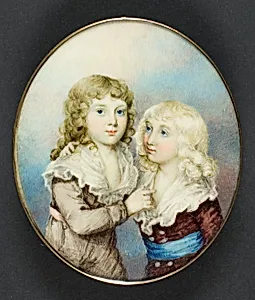
In 1784, at age sixteen, Edridge became a student at the Royal Academy. His talent quickly attracted attention: Sir Joshua Reynolds, the Academy's president and Britain's leading portraitist, was so impressed by one of Edridge's miniatures that he insisted on acquiring it and paid him handsomely.
This early recognition from Reynolds provided crucial validation and undoubtedly helped establish Edridge's reputation as a promising young artist.
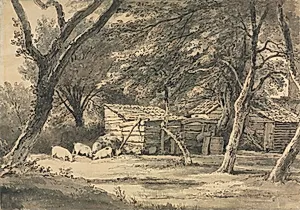
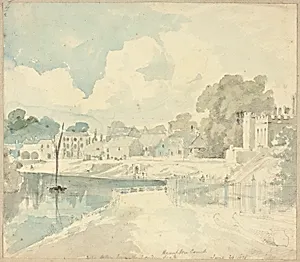
Edridge established his own portraiture business in 1789, at age twenty-one. He became proficient in multiple formats: miniatures, portraits, and landscapes.
His technique evolved significantly during his career. His earliest portraits were miniatures on ivory in the traditional manner. He subsequently turned to paper, working with black lead and India ink with ornate backgrounds, before developing his mature style of elaborately finished watercolors with light backgrounds.
This evolution demonstrated his responsiveness to changing taste and his ability to combine the intimacy and precision of miniature painting with the immediacy and atmospheric effects of watercolor.
Edridge became well known for a distinctive style that combined the delicacy of miniature painting with breadth of draughtsmanship, creating portrait watercolors that satisfied demand for more affordable and informal alternatives to formal oil portraits.
His subjects included many of the most notable figures of his era: Lord Nelson, the naval hero; explorer Mungo Park; Methodist missionary Thomas Coke; Prime Minister William Pitt; and the elderly John Wesley at age eighty-eight.
In November 1820, Edridge achieved the recognition of election as an associate of the Royal Academy, the institution where he had trained thirty-six years earlier. However, he died shortly after from an asthma attack on April 23, 1821, before he could fully enjoy this honor.
Artheon Research Team
Last updated: 2025-11-09
Biography length: ~486 words