
Ctrl K
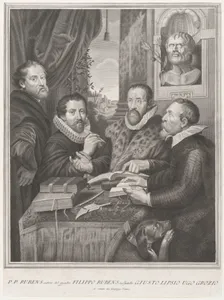
1577–1640
**Sir Peter Paul Rubens (1577–1640)** was a Flemish painter, draughtsman, and diplomat who became the most influential artist of the Flemish Baroque tradition. Born in Siegen in the Holy Roman Empire (now Germany) on 28 June 1577, he moved to Antwerp at age ten. There he received a classical education before pursuing art.
Rubens trained under three masters in Antwerp: landscape painter Tobias Verhaecht, Adam van Noort, and especially the Romanist painter Otto van Veen, whose intellectual approach shaped his development. He completed his apprenticeship in 1598 and joined the Guild of St. Luke as an independent master. In 1600 he traveled to Italy, where he spent eight years absorbing classical sculpture and the works of Renaissance masters such as Raphael, Michelangelo, and Titian while serving the Duke of Mantua and receiving commissions in Rome and Genoa.
Upon returning to Antwerp in 1608, Rubens established a large and highly organized workshop that produced an extraordinary volume of altarpieces, history paintings, portraits, and mythological scenes. His dynamic Baroque style—marked by vigorous movement, rich color, sensuality, and dramatic compositions—perfectly suited Counter-Reformation demands. Among his major works are the monumental triptych *The Descent from the Cross* (1611–1614) for Antwerp Cathedral and *The Assumption of the Virgin Mary* (1625–26). He also designed tapestries and book illustrations while undertaking diplomatic missions across Europe.
Rubens’s legacy endures as the preeminent exponent of Flemish Baroque painting. His exuberant, erudite art influenced generations of artists across Europe, and his studio system set a model for large-scale production. He died in Antwerp on 30 May 1640, leaving behind a vast body of work that continues to define the vitality and grandeur of the Baroque era.
No artworks found for this artist