
Ctrl K
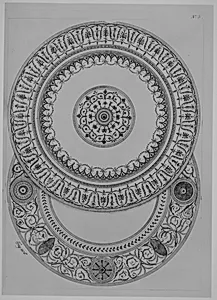
**J. B. Fay, working alongside publishers such as Louis-Joseph Mondhare and the firm Mondhare et Jean, represents a network of French engravers, artists, and print publishers active in Paris during the 18th century.** These figures collaborated on ornamental designs, maps, fashion plates, and optical views (vues d'optique), producing works that captured the decorative and documentary tastes of the period. Louis-Joseph Mondhare (1734–1796), born in Bougy in Normandy, established himself in Paris by 1759 and began publishing prints around 1760 under the imprint Chez Mondhare. In 1784, his son-in-law Pierre Jean (1754–1829) joined the business, forming the partnership Mondhare & Jean, which operated from premises on Rue Saint-Jacques.
J. B. Fay served as both artist and engraver on several projects, including ornamental frames with attributes and other decorative compositions. Other contributors frequently associated with these imprints include engravers and artists such as Jacques Juillet, Giraut, Michel, Prieur, Charmeton, and Pierre Tibesar, who worked on plates published in Paris during the 1780s. The firm also issued fashion illustrations and cartographic works, reflecting the commercial vitality of the Parisian print trade. Specific examples in museum collections feature detailed engravings of coiffures, trophies, and architectural ornaments, often bearing imprints like “Mondhare et Jean” or “Chez Jean.”
Their output exemplifies the collaborative nature of 18th-century French printmaking, where engravers, designers, and publishers combined skills to meet demand for affordable, high-quality images. While individual training details remain sparse, the group operated within the established traditions of Parisian engraving workshops. Mondhare’s firm maintained a prominent location near Saint-Jacques, a hub for print sellers, ensuring wide distribution of their productions.
The legacy of these artists and publishers lies in their role preserving and disseminating visual culture through engravings that survive in major collections today. Their prints offer valuable insight into late-18th-century French aesthetics, from ornamental design to everyday fashion and geography, and continue to inform studies of the period’s graphic arts. One representative work in the Metropolitan Museum of Art highlights the interconnected contributions of Fay, Mondhare, and associated engravers.