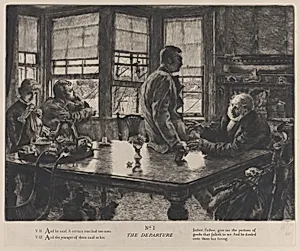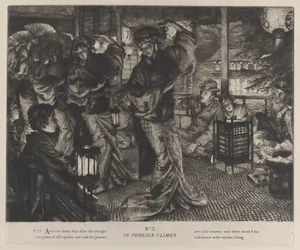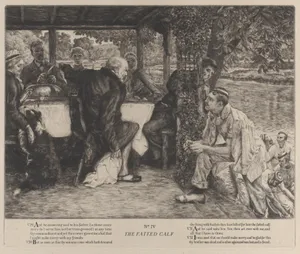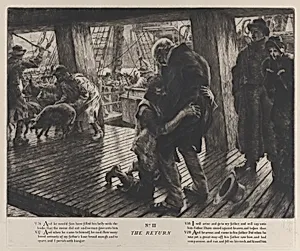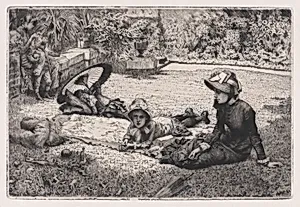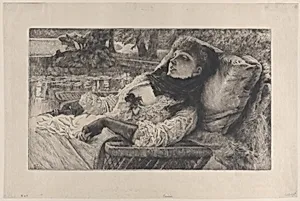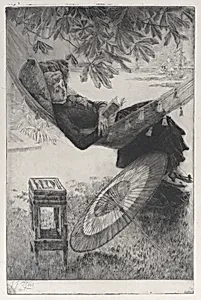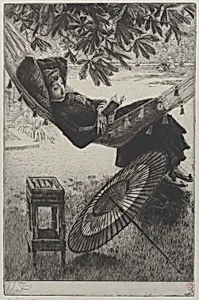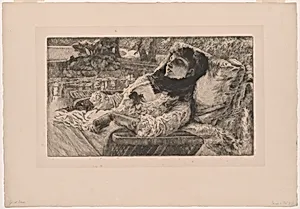
1836–1902
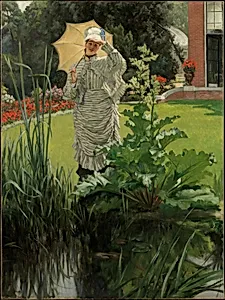
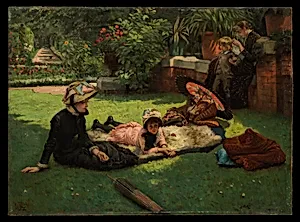
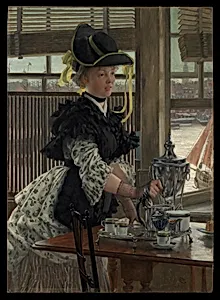
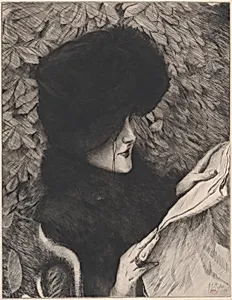
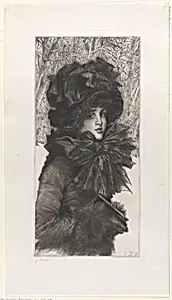
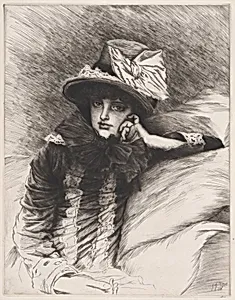
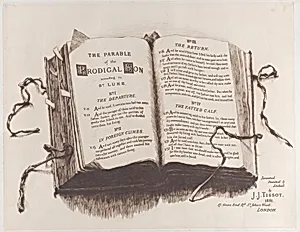
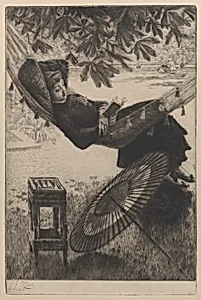
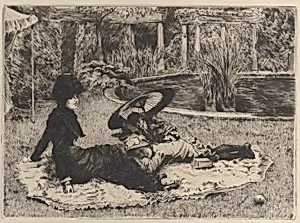
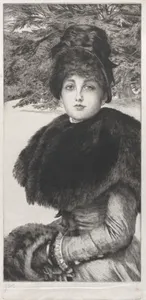
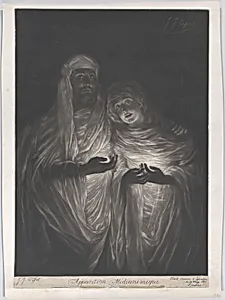
James Tissot (1836–1902) was a French painter and printmaker who spent much of his career in England and became renowned for his meticulously detailed depictions of fashionable Victorian society. Born Jacques Joseph Tissot in Nantes, he studied at the École des Beaux-Arts in Paris under Louis Lamothe and Hippolyte Flandrin and exhibited at the Salon from 1859.
Tissot's early career in Paris produced accomplished historical and genre paintings, and he was associated with the circle of Edgar Degas and the Impressionists, though he never formally joined the group. Following the Franco-Prussian War and the Paris Commune of 1871, Tissot moved to London, where he rapidly established himself as the painter of choice for depicting the elegant rituals of upper-class English life — garden parties, regattas, balls, and promenades along the Thames.
His London paintings, including "The Ball on Shipboard" (c. 1874), "Too Early" (1873), and the "The Gallery of HMS Calcutta" (c. 1876), are celebrated for their brilliant observation of fashion, social nuance, and the complex dynamics between men and women in Victorian society. Tissot rendered fabrics, accessories, and interior furnishings with extraordinary precision, creating works that function simultaneously as social documents and psychologically acute narratives.
After the death of his companion Kathleen Newton in 1882, Tissot returned to Paris and underwent a profound spiritual transformation. He devoted the final two decades of his life to a monumental illustrated Life of Christ, traveling twice to the Holy Land to research the landscapes and costumes. The resulting 365 watercolors were exhibited to enormous public acclaim in Paris, London, and New York. His work is held by the Tate, the Musée d'Orsay, the Minneapolis Institute of Art, and the Jewish Museum in New York.