Ctrl K
1523–1605
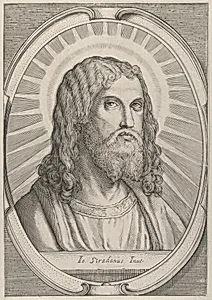
Jan van der Straet, known as Stradanus or Giovanni Stradano, was born in Bruges in 1523 into an artistic family. He received his earliest training in his father Jan van der Straet's painting workshop until the latter's death in 1535, followed by an apprenticeship with Bruges master Maximiliaen Francken from 1535 to 1537. Stradanus then moved to Antwerp, studying under Pieter Aertsen from 1537 to 1540 and becoming a master in the Guild of Saint Luke in 1545. This Northern foundation in genre and complex compositions propelled him southward; after brief stints in Lyon and Venice, he arrived in Florence around 1550, entering the service of Cosimo I de' Medici.
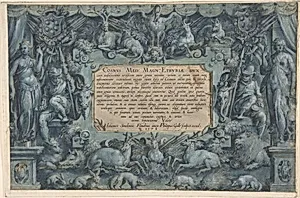
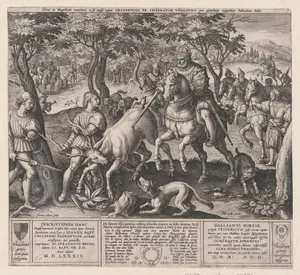
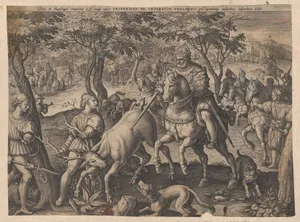
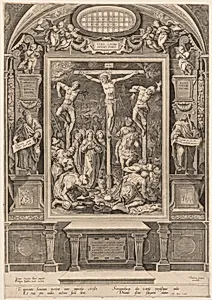
In Florence, Stradanus thrived as a versatile artist in the Mannerist tradition of Giorgio Vasari's workshop, blending Flemish naturalism with Italianate elegance—elaborate poses, chiaroscuro effects, and vivid colors. As Vasari's principal assistant, he contributed frescoes to the Palazzo Vecchio and designed tapestries for the Arazzeria Medicea, including the monumental *Hunting Scenes* series (1566–1577) depicting hunts of land, air, and sea animals. A founding member of the Accademia del Disegno in 1563, he painted altarpieces like *The Crucifixion* (1569) for Santissima Annunziata and panels for Francesco I's studiolo, such as *The Alchemist's Studio* (1570–1571). His sojourns in Rome (1550–1553, aiding Daniele da Volterra) and Naples (1576–1580, for John of Austria) enriched his oeuvre with Romanist influences.
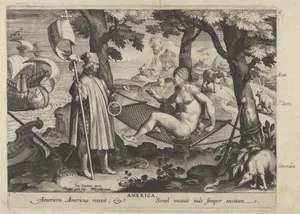
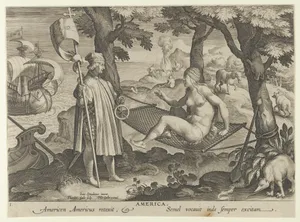
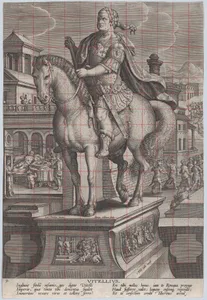
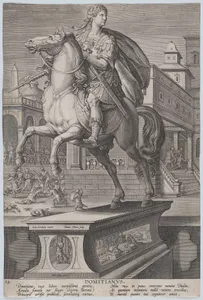
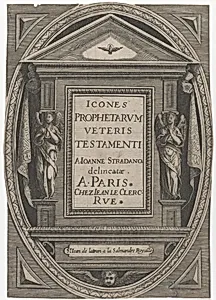
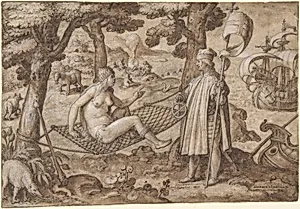
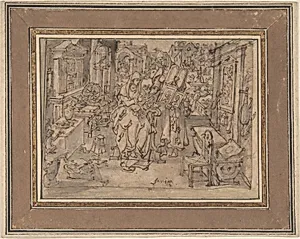
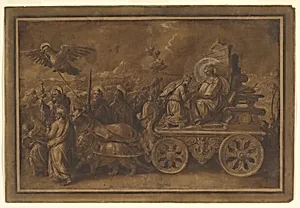
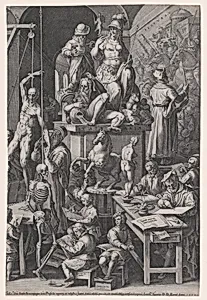
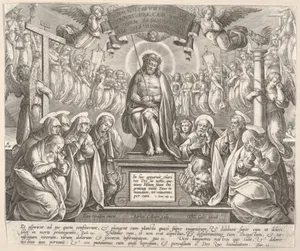
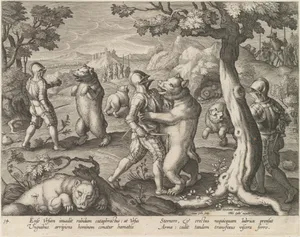
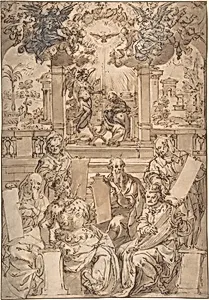
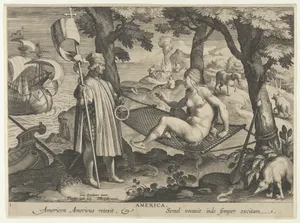
Stradanus's genius shone in print design, producing nearly 400 models engraved by Antwerp collaborators like Philips Galle. Iconic series include *Nova Reperta* (c. 1580–1600), celebrating inventions like printing and silk production; *Americae Retectio*, allegorizing New World discoveries; and *Venationes Ferarum, Avium, Piscium*, vivid hunting tableaux. He also illustrated Dante's *Divina Commedia* and Medici triumphs. Married to Lucrezia di Lorenzo Guardieri, he collaborated with son Scipione, an artist, on late frescoes like those at Villa Pazzi (1583).
Stradanus died in Florence in 1605, buried in Santissima Annunziata with a bust by Scipione proclaiming his Bruges roots. His legacy endures through widely disseminated prints that bridged Northern and Italian Renaissance, shaping European visual culture for centuries and embodying the era's exploratory spirit.
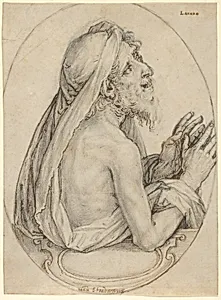
![The Workshop of an Engraver [Sculptura in Aes], plate 19 from Nova Reperta](https://images.artheonmuseum.org/met/dp/thumb/the-workshop-of-an-engraver-sculptura-in-aes-plate-19-from-nova-reperta-363060.webp)
![New Inventions of Modern Times [Nova Reperta], The Invention of Clockwork, plate 5](https://images.artheonmuseum.org/met/dp/thumb/new-inventions-of-modern-times-nova-reperta-the-invention-of-clockwork-plate-5-723469.webp)