Ctrl K
1852–1931
Jean-Louis Forain was born Louis Henri Forain on October 23, 1852, in Reims, France, to a family of modest means; his father painted ornamental signs. The family relocated to Paris when he was eight, where young Forain developed a passion for drawing inspired by the sculptures of Reims Cathedral and the masters at the Louvre, which he began copying at age fourteen. He received drawing lessons from Jacquesson de la Chevreuse and briefly studied at the École des Beaux-Arts in the atelier of Jean-Léon Gérôme starting in 1867. Sculptor Jean-Baptiste Carpeaux noticed his talent and employed him as an assistant for over a year, while caricaturist André Gill later provided painting instruction. These formative experiences honed Forain's skills in life sketching and satirical observation.
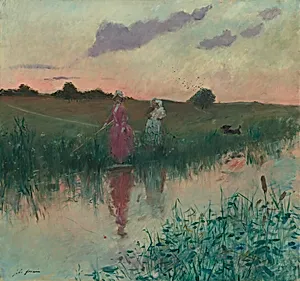
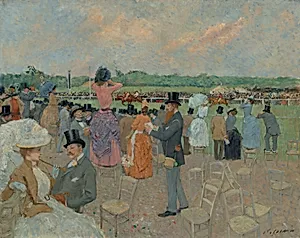
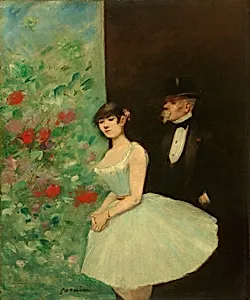
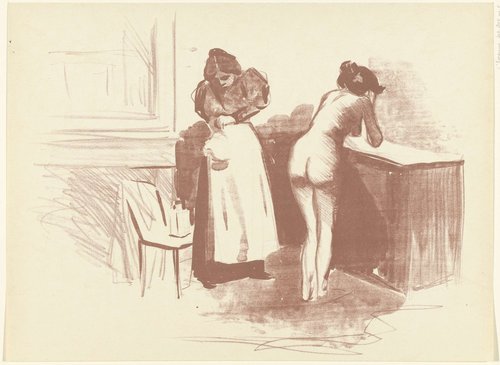
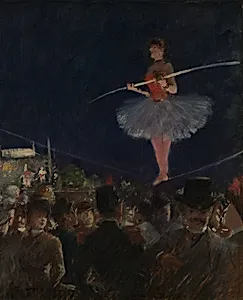
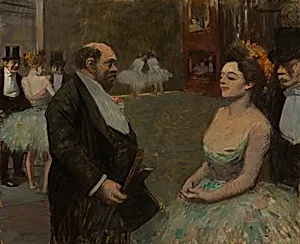
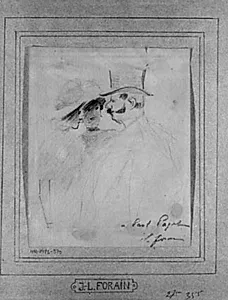
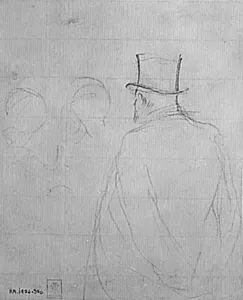
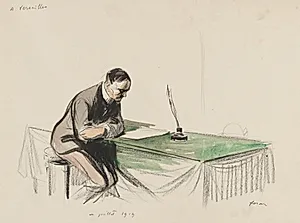
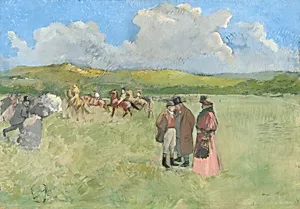
Forain's bohemian youth in Montmartre brought friendships with poets Arthur Rimbaud and Paul Verlaine, and immersion in the debates of Édouard Manet and Edgar Degas at the Café de la Nouvelle Athènes. As Degas's protégé, he joined the Impressionist circle, participating in four exhibitions (1879, 1880, 1881, 1886), where his vibrant watercolors and oils of Parisian modern life—racetracks, theaters, cafés, and ballet—earned praise for their satirical edge and swift execution. A master caricaturist of the Belle Époque, he contributed to journals like *Le Figaro* for over 30 years, *Le Courrier Français*, and *Psst...!*, succeeding Honoré Daumier in skewering social hypocrisy. Key works include *The Buffet* (1884, oil), *Le Veuf* (1885), *The Fisherman* (1884), *Dancer in Her Dressing Room* (c. 1890), and *The Place Clichy* (pastel, 1883–1884).
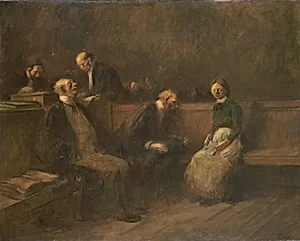
In 1891, Forain married painter Jeanne Bosc; their son, Jean-Loup, was born in 1895. A religious awakening around 1900 shifted his focus to courtroom scenes exposing judicial flaws, such as *Legal Assistance* (c. 1900–1912), and pious etchings like *The Good Samaritan* (1909). During World War I, at age 63, he enlisted in the camouflage section and produced patriotic illustrations. His later oeuvre lightened in palette, capturing 1920s nightlife in pieces like *Tango at the Cabaret* (1926). Elected to prestigious academies, including the Royal Academy in London shortly before his death on July 11, 1931, Forain remains celebrated for chronicling fin-de-siècle Paris with incisive realism, bridging Impressionism and biting social commentary.