Ctrl K
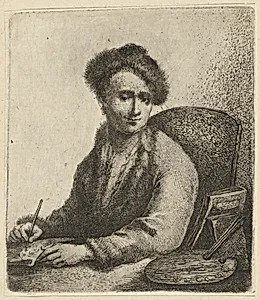
1729–1804
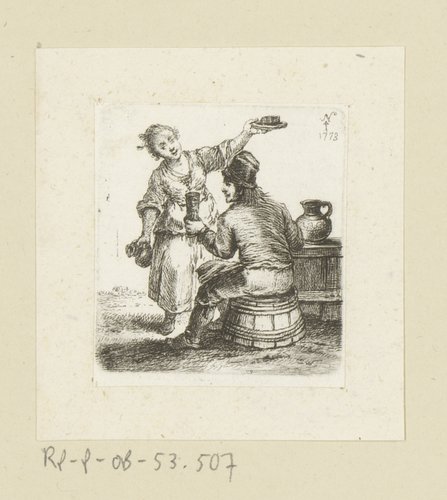
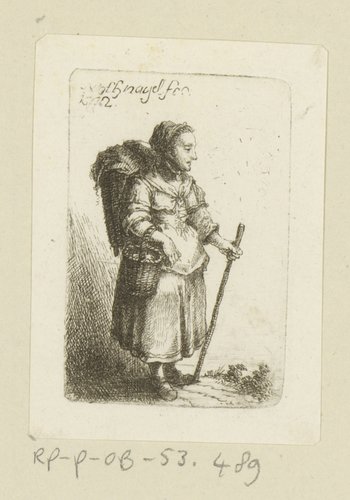
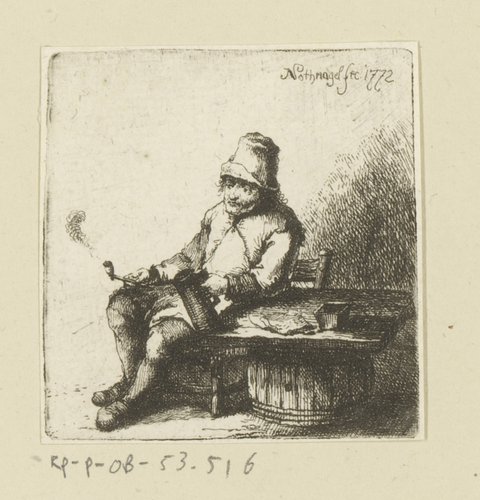
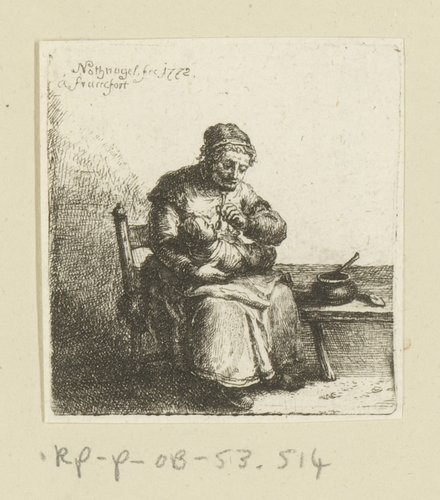
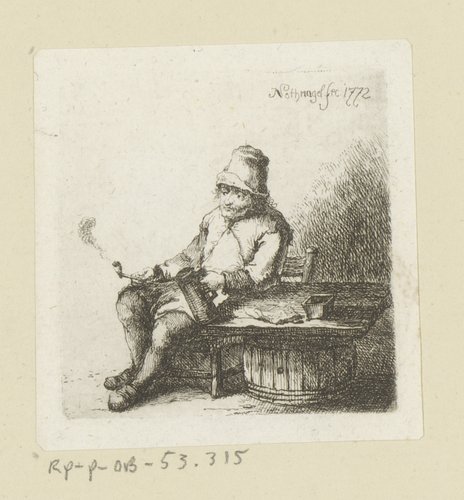
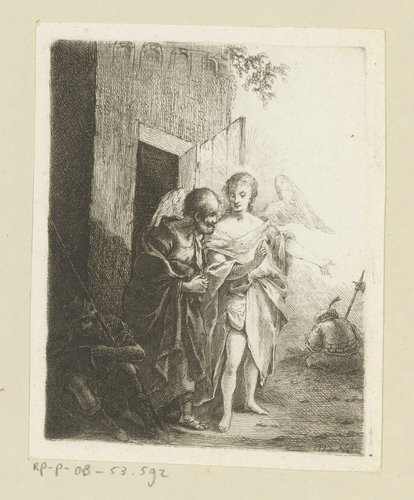
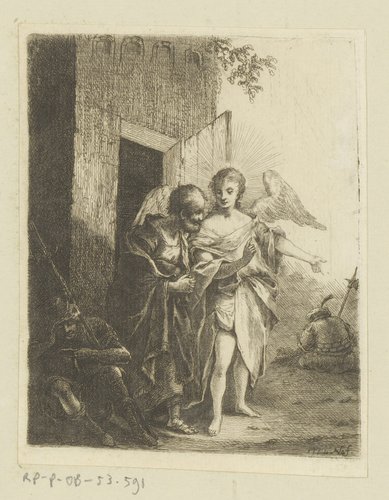
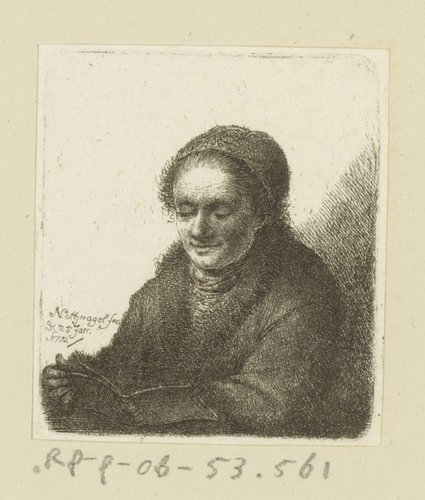
Johann Andreas Benjamin Nothnagel (1729–1804) was a German painter, etcher, and commercial artist who successfully bridged the worlds of fine art and commercial manufacturing while developing a distinctive etching style that emulated Rembrandt's expressive techniques. Born in March 1729 in Buch am Forst in Upper Franconia, Bavaria, Nothnagel's career exemplifies the 18th-century artist-entrepreneur who combined multiple roles: factory owner, painter, etcher, and commercial designer. His life spanned the Age of Enlightenment and witnessed the early stirrings of industrialization that would transform European society. Nothnagel's arrival in Frankfurt am Main in 1747 at age 18 marked the beginning of a multifaceted career that would last over half a century. Initially employed as a painter's assistant in a tapestry factory, he demonstrated such artistic sense and business acumen that he eventually married the owner's widow and expanded the enterprise into one of Frankfurt's most successful manufactures, employing fifty assistants at its height. This commercial success provided the economic foundation for his parallel career as a fine artist, particularly as an etcher whose works found great approval among collectors and connoisseurs. His etching work, influenced by Rembrandt's dramatic chiaroscuro and expressive line work, focused particularly on character heads and individual figures that captured psychological depth and human individuality. His reputation earned him commissions from prominent patrons including Count Thorane, and his work was noted by Johann Wolfgang von Goethe in his autobiography, securing Nothnagel's place in the cultural history of late 18th-century Germany. Additionally, Nothnagel became known for his sensitive portraits of Jewish rabbis and religious leaders, creating an important visual record of Frankfurt's Jewish community during a period when such documentation was rare. When he died in Frankfurt on December 22, 1804, he left behind a body of work that demonstrates the productive intersection of commercial enterprise and artistic creation.
Johann Andreas Benjamin Nothnagel was born in March 1729 in Buch am Forst, a small community in Upper Franconia, Bavaria. His father was a pastor, suggesting a respectable middle-class background with some education and cultural awareness. Growing up in a rural pastoral household, young Nothnagel would have received basic education and religious instruction, but his artistic talent and ambitions led him beyond the provincial life of his birthplace.
In 1747, at age 18, Nothnagel made the decisive move to Frankfurt am Main, one of the major commercial and cultural centers of the Holy Roman Empire. Frankfurt's importance as a Free Imperial City, site of major book fairs, center of banking and commerce, and place where Holy Roman Emperors were crowned, made it an attractive destination for ambitious young people seeking opportunities unavailable in small towns.
He found employment in the tapestry factory of Johann Nicolaus Lentzner, working as a painter's assistant. Tapestry production was a sophisticated manufacture requiring skilled designers and painters to create the cartoons (full-scale preparatory drawings) from which weavers worked. This position gave Nothnagel hands-on experience in commercial art production, workshop organization, and the business side of artistic enterprise.
Under Lentzner, Nothnagel learned not only the technical aspects of design for tapestry but also the management of workers, dealings with clients, and the economic realities of running a luxury goods manufacture. These skills would prove crucial for his future success.
When Johann Nicolaus Lentzner died, the 21-year-old Nothnagel married his widow in 1750, thereby assuming control of the tapestry factory. This marriage of convenience, common in the period as a means of business succession, proved to be the foundation of Nothnagel's economic success and social position.
Through what contemporary accounts described as his artistic sense and taste, Nothnagel gave the factory great expansion. He developed the business from a modest workshop into a substantial manufacture employing up to fifty assistants—a significant enterprise by 18th-century standards. This success reflected not only his artistic abilities but also his business acumen and understanding of the luxury goods market.
The factory received recognition when Emperor Leopold II granted it an imperial privilege—a form of monopoly protection or official recognition that enhanced its prestige and commercial advantages. Such privileges were highly valued as they provided competitive advantages and marked official approval of quality and importance.
Managing a large workshop while maintaining quality required organizational skills and artistic direction. Nothnagel had to train workers, maintain consistent standards, secure commissions, manage finances, and ensure timely delivery—all while developing designs that would appeal to wealthy patrons. His success in balancing these demands demonstrates remarkable capability.
During these prosperous decades, Nothnagel also pursued his own artistic development beyond commercial work. He studied etching techniques and began creating prints for his own satisfaction and for a growing circle of collectors. His interest in Rembrandt's work led him to study and emulate the Dutch master's etching techniques, particularly the expressive use of line and dramatic contrasts of light and shadow.
As Nothnagel's commercial success provided financial security, he devoted increasing attention to his artistic work, particularly etching. His etchings found great approval among collectors and connoisseurs, establishing his reputation beyond Frankfurt's commercial circles into the broader German art world.
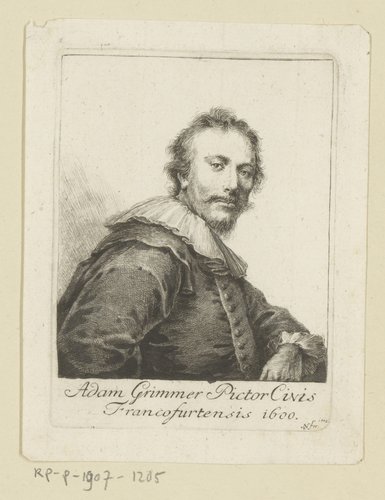
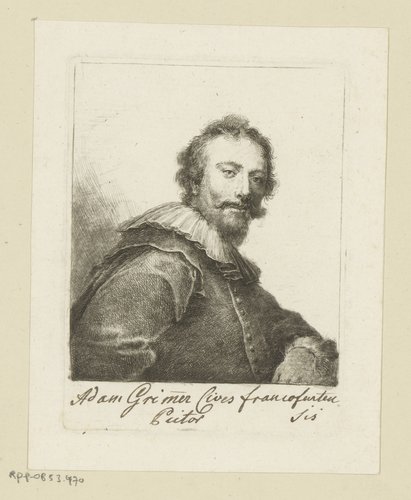
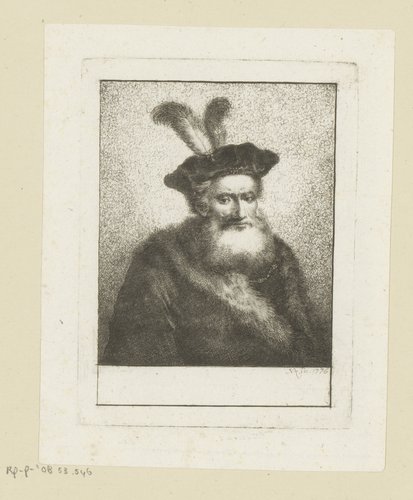
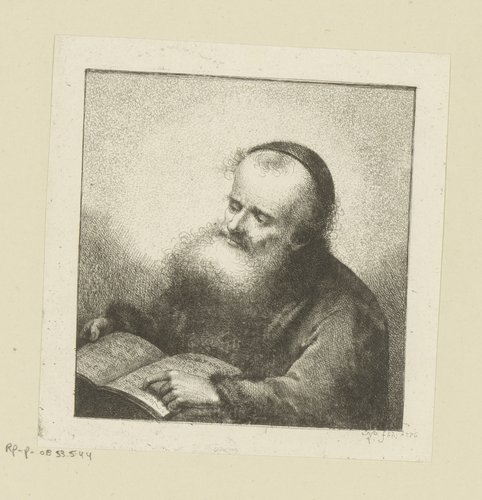
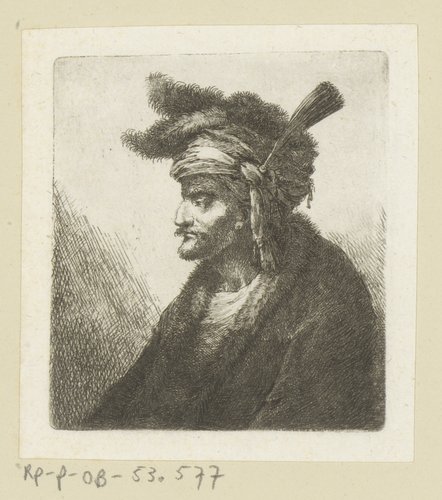
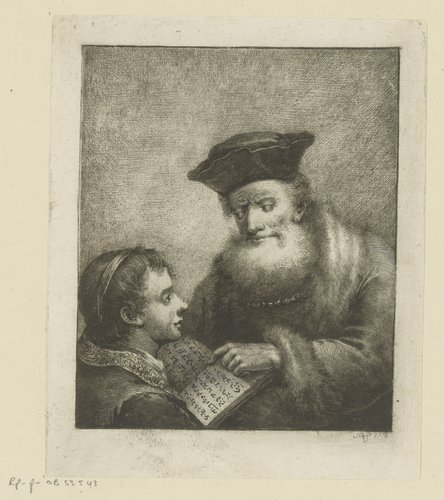
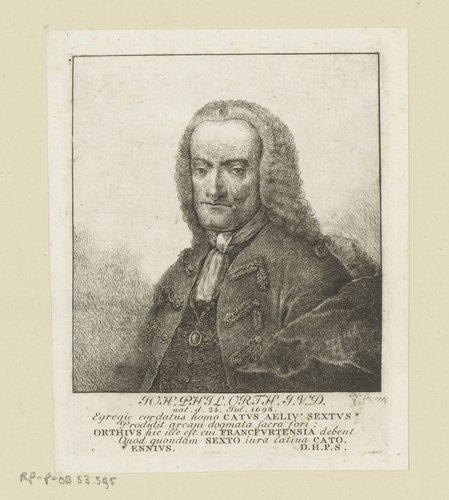
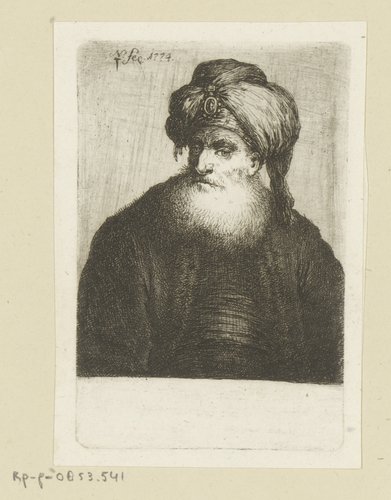
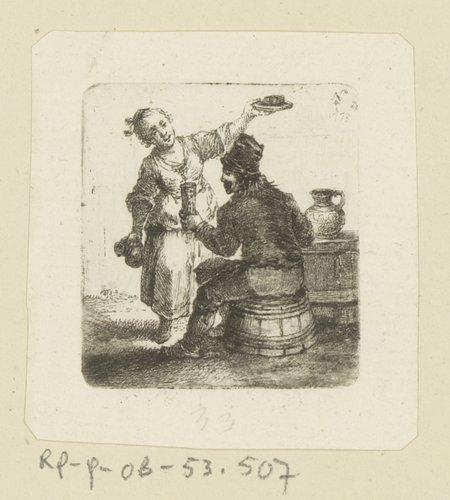
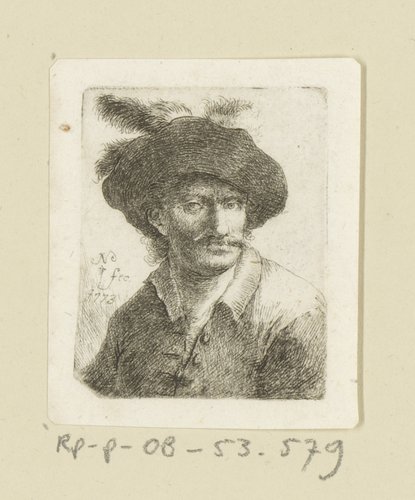
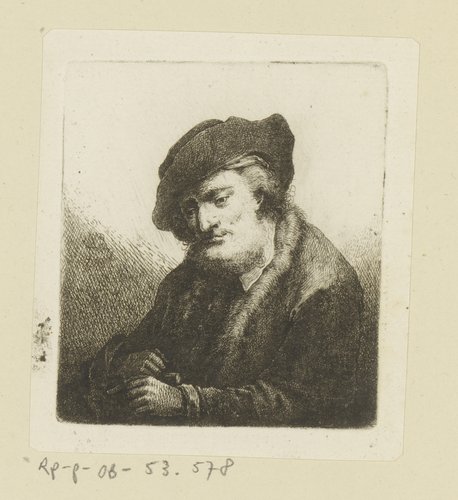
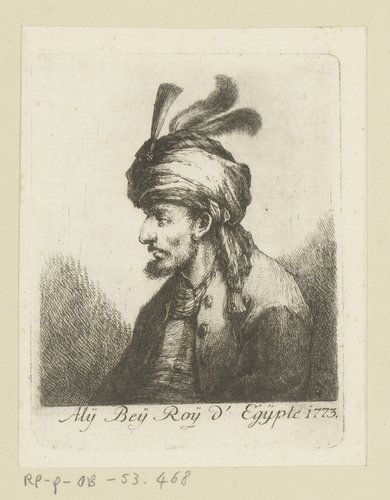
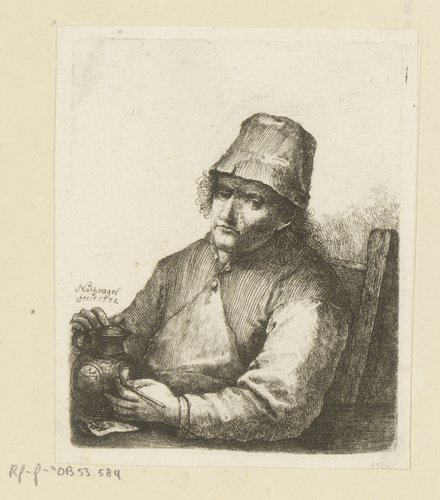
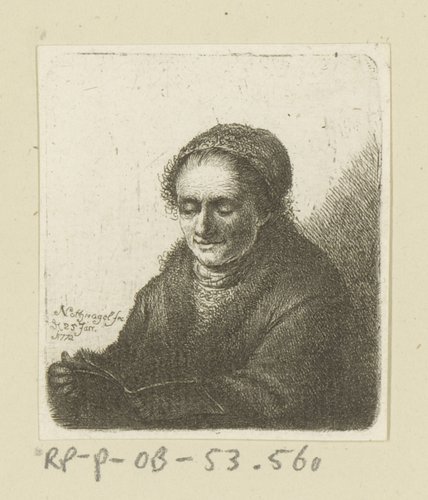
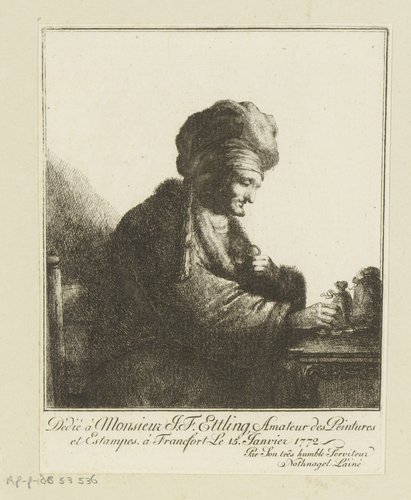
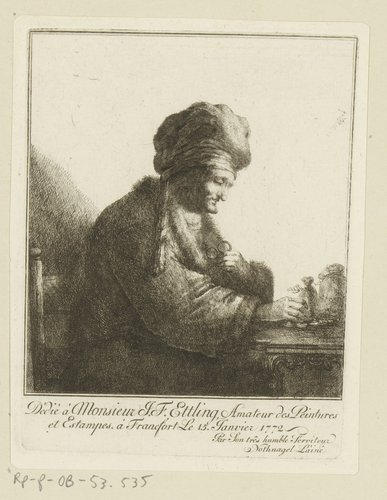
His etched works, in which he successfully emulated Rembrandt's techniques, focused particularly on individual heads and fragments—character studies that captured psychological depth and human individuality. These prints demonstrated his mastery of the etching needle, creating varied line work that suggested form, texture, and mood while maintaining the spontaneous, expressive quality that characterized Rembrandt's prints.
Among his notable subjects were portraits of Jewish rabbis and religious leaders. Frankfurt had one of the largest and most important Jewish communities in the Holy Roman Empire, concentrated in the Judengasse (Jewish Lane). Nothnagel's sensitive portraits of rabbis and Jewish scholars created important visual documentation of this community's religious leadership at a time when such images were uncommon. These works show respectful treatment of subjects who were often marginalized in Christian European society.
His work attracted the attention of prominent patrons. Johann Wolfgang von Goethe, in his autobiography 'Dichtung und Wahrheit' (Poetry and Truth), mentioned that Nothnagel did not neglect his actual artistic activity and worked for Count Thorane. This reference by Germany's greatest literary figure secured Nothnagel's place in cultural history and indicates the level of his reputation among the educated elite.
Throughout these later years, Nothnagel balanced his roles as factory owner, commercial designer, and fine artist. His commercial work funded his artistic pursuits, while his artistic reputation enhanced the prestige of his manufacture—a productive symbiosis of commerce and art characteristic of successful 18th-century artist-entrepreneurs.
Johann Andreas Benjamin Nothnagel died in Frankfurt on December 22, 1804, at age 75. He had lived through the end of the Holy Roman Empire (which would be formally dissolved in 1806) and witnessed the profound changes brought by the French Revolution and Napoleonic era. His career demonstrated how artistic talent combined with business acumen could create both commercial success and artistic legacy.
Artheon Research Team
Last updated: 2025-11-09
Biography length: ~1,297 words