
Ctrl K
1772–1831
**Josiah Taylor (1761–1834)** was a prominent British bookseller, publisher, printer, and occasional engraver based in London, best known for his specialization in architectural publications. Born in 1761 as the son of the engraver Isaac Taylor the elder (1730–1807), he entered the family trade early and initially partnered with his father under the name I & J Taylor. He later operated independently as Josiah Taylor from premises including 56 Holborn and, most notably, the Architectural Library at 59 High Holborn.
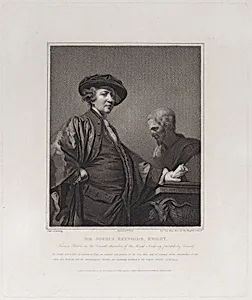
Taylor’s publishing focused on practical and theoretical works on architecture, including plans, elevations, ornaments, and perspectives for builders, carpenters, and architects. He issued catalogues of modern architectural books and produced numerous engravings after designs by leading figures such as Sir Christopher Wren, as well as reproductive prints after paintings and sculptures by artists including Sir Joshua Reynolds, Thomas Gainsborough, John Flaxman, and J.M.W. Turner. His output often appeared in collaboration with other publishers like Longman and Co., and he occasionally engraved plates himself, as evidenced by inscriptions crediting “Joh. Taylor sculp.” His brothers Isaac and Charles Taylor were also engravers, continuing the family’s artistic lineage.
Among his notable contributions were extensive series of architectural illustrations, such as those documenting classical structures like the Amphitheatre at Pola and temples in the style of James “Athenian” Stuart and Nicholas Revett, alongside portraits and genre scenes after Reynolds and others. These publications helped disseminate architectural knowledge and fine art reproductions during the late Georgian and Regency periods.
Taylor’s legacy lies in his role sustaining and expanding a specialized publishing house that supported both the architectural profession and the wider appreciation of British art through high-quality prints. The firm closed upon his death in 1834, but his catalogues and editions remain valuable references for historians of architecture and printmaking. His work bridged commercial publishing with artistic reproduction, leaving a tangible record of early 19th-century visual culture.