
Ctrl K
1766–1830
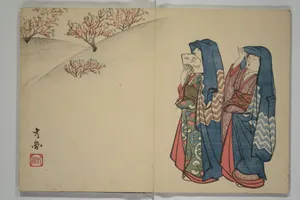
Keian Tenrai, Nakai Rankō, Watanabe Nangaku, and Tetsuzan Sōdon represent a remarkable collaboration in the Album of the Phoenix Bird (Ranpō jō, 鸞鳳帖), a woodblock-printed orihon album produced in 1806 during the Bunka era. This exquisite work, featuring ink, color, and metallic pigments on paper, blends painting and calligraphy to evoke the mythical phoenix, symbolizing harmony and auspiciousness in literati culture. Keian Tenrai served as editor, compiling poetic content, while the others contributed illustrations and inscriptions—likely with Tetsuzan Sōdon's calligraphy reproduced from his original scripts. Published by Kikuya Tahei in Kyoto, the album exemplifies the vibrant crossover between painting, poetry, and printmaking in late Edo-period Japan.
Nakai Rankō (1766–1830), an Osaka native, trained under Shitomi Kangetsu (Shimon Sekizuki, 1747–1797), mastering ukiyo-e before self-studying the bold, expressive styles of Chinese masters Muqi and Li Longmian. His elegant Nan-ga (Southern school) manner, infused with Yosa Buson’s lyricism and Shijō realism, featured concise brushwork and expansive white space in landscapes and figures, as seen in works like Song Roku Kunshi-zu (1797, with Kangetsu) and illustrations for Harima Meisho Junran Zue (1804). Watanabe Nangaku (1767–1813), from Kyoto, studied under Maruyama Ōkyo, becoming one of the Ōmon Jutetsu (Ten Philosophers of the Ōkyo Gate) in the Maruyama-Shijō school. He excelled in graceful depictions of beauties, birds, and flowers, later incorporating Korin-esque decoration, and spread this realistic, nature-inspired style eastward during his Edo sojourns. Notable works include Group of Cranes (1796) and Yang Guifei (undated, Freer Gallery).
Tetsuzan Sōdon (1532–1617), a prominent Zen monk and abbot, provided calligraphy that bridged Momoyama-era traditions with later Edo revivalism, as in his inscriptions for Kano Takanobu’s Hotei (1616). Little is documented of Keian Tenrai beyond this album, suggesting a literati role akin to poet-compiler. Together, their contributions advanced the fusion of orthodox Chinese literati painting (Nan-ga), Maruyama realism, and Zen calligraphy, influencing surimono prints and collaborative albums that celebrated poetic themes amid urban sophistication. Their legacy endures in museum collections, preserving Edo Japan’s playful yet profound artistic dialogues.