
Ctrl K
1141–1209
Maulana Azhar (d. 1475) stands as a pivotal figure in the golden age of Persian miniature painting during the Timurid dynasty. Trained under the master calligrapher Jafar Tabrizi, Azhar honed his skills in the intricate Nastaʿlīq script, a flowing cursive style that became synonymous with Timurid elegance. He entered the imperial atelier at Herat under the patronage of Shah Rukh (r. 1405–1447), where he contributed to illuminated manuscripts that blended calligraphy, illumination, and figural painting. This rigorous apprenticeship immersed him in the Timurid school tradition, characterized by refined naturalism, vibrant colors, and a synthesis of Persian, Chinese, and Islamic motifs.
Azhar's artistic style epitomized the Herat school's mastery of narrative illustration, where delicate ink lines and opaque watercolors brought epic poetry to life. Working within the Persian miniature tradition, his compositions featured dynamic figures in architectural settings, lush landscapes, and subtle emotional expressions. As both calligrapher and painter, he elevated the visual harmony of manuscripts, employing gold accents and intricate borders to frame poetic verses. His output reflects the Timurid cultural renaissance, influenced by the court's cosmopolitan ethos, which drew artists from across Central Asia.
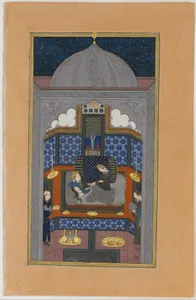
Among his surviving major works are folios from a lavish Khamsa (Quintet) by the poet Nizami Ganjavi, produced around 1430. Notably, "The Eavesdropper" (Folio 47r from the Haft Paikar, or Seven Portraits) in the Metropolitan Museum of Art depicts a nocturnal intrigue with masterful shading and psychological tension, showcasing Bahram Gur's pavilion scene. Another folio from the same manuscript highlights his ability to capture architectural splendor and human drama. These pieces, part of Shah Rukh's commissions, exemplify Azhar's role in visualizing Nizami's romantic epics.
Azhar's legacy endures in the evolution of Persianate painting, bridging Timurid innovation to later Safavid and Mughal ateliers. His contributions to Nizami's Khamsa manuscripts influenced generations of illuminators, preserving the poet's tales through visually arresting narratives. Today, his works in collections like the Met Museum underscore the Timurid era's artistic pinnacle, where poetry and painting converged to create timeless cultural treasures.
(Word count: 348)
No artworks found for this artist