Ctrl K
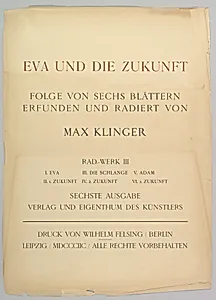
**Max Klinger** (1857–1920) was a German artist renowned for his work across painting, sculpture, prints, and graphics, as well as his theoretical writings on the role of printmaking in relation to painting. Born on February 18, 1857, in Leipzig to a wealthy family, he became a central figure in late 19th-century Symbolism and helped shape Jugendstil, the German variant of Art Nouveau. He is also closely associated with Wilhelm Felsing, the Berlin printer who produced many of his important etching editions.
Klinger received his artistic training at the Academy of Fine Arts in Karlsruhe starting in 1874, studying under the social realist painter Karl Gussow. When Gussow moved to Berlin, Klinger followed him there to complete his studies at the Royal Academy of Fine Arts, graduating in 1877. He drew inspiration from earlier masters of printmaking such as Dürer, Rembrandt, Goya, and Félicien Rops, while sharing an affinity with the Swiss Symbolist Arnold Böcklin. His early success came with daring pen-and-ink series exhibited in Berlin in 1878, including *Series upon the Theme of Christ* and the celebrated *Paraphrase on the Finding of a Glove* (published as etchings in 1881), which established his reputation for exploring obsessive, dreamlike narratives.
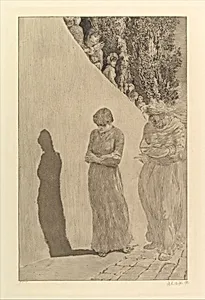
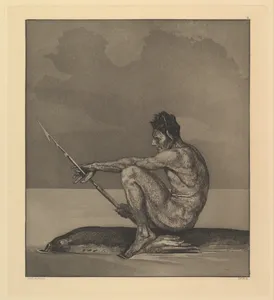
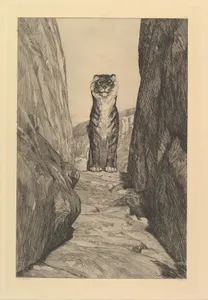
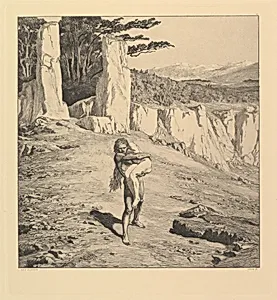
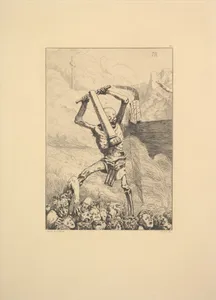
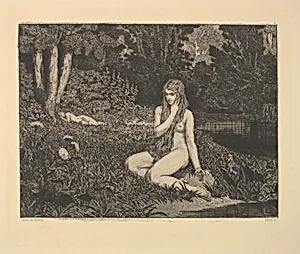
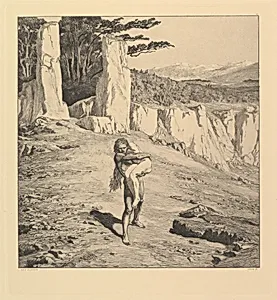
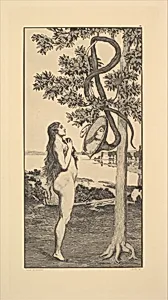
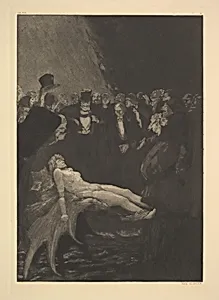
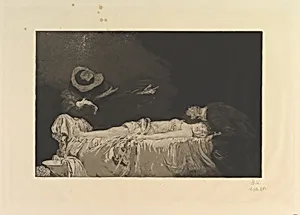
Klinger worked in the Symbolist tradition, blending fantasy, psychological depth, and social commentary in cycles of etchings that often carried morbid or erotic undertones. Major works include the controversial painting *The Judgment of Paris* (1887), *Pietà* (1890), and *Christ in Olympus* (1896). His monumental polychrome sculpture *Beethoven* (1902), created for the Vienna Secession exhibition, stands as one of his most ambitious achievements. He also produced significant series such as *A Love* and *On Death*, many printed by Wilhelm Felsing.
Klinger’s visionary art exerted a profound influence on later movements, notably inspiring Giorgio de Chirico and anticipating aspects of Expressionism and Surrealism. He spent his final years in Großjena near Naumburg, where he died on July 5, 1920. Today he is remembered as one of the most inventive graphic artists of his era, whose prints and sculptures continue to captivate audiences with their imaginative intensity.