Milton Avery, born on March 7, 1885, in Altmar, New York, to a working-class family—his father a tanner—grew up in modest circumstances. After his family's move to the Hartford area of Connecticut in 1898, he took on various manual jobs, including as a mechanic, clerk, and construction worker, to support himself and relatives following family tragedies. His artistic path began around 1905 at the Connecticut League of Art Students, where a lettering class led to life drawing under director Charles Noel Flagg. He continued at the School of the Art Society of Hartford in 1918, winning top honors in portrait and life drawing the following year, and later attended sketch classes at the Art Students League in New York from 1926 to 1938.
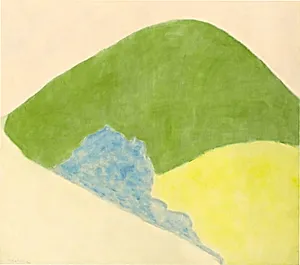
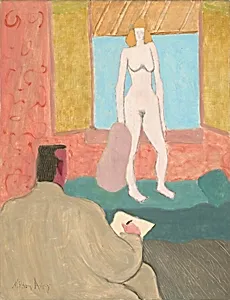
In 1925, Avery relocated to New York City, marrying artist and illustrator Sally Michel in 1926; her steady income enabled him to paint full-time. Their daughter, March Avery, born in 1932, also became a painter, forming a tight-knit artistic family. Avery's style evolved into a distinctive American modernism, often called the "American Matisse" for its luminous color harmonies, flattened forms, and simplified motifs drawn from everyday scenes—landscapes, beaches, his wife and daughter, and urban life. Independent of trends like Regionalism or Abstract Expressionism, he bridged Impressionism's light effects with Fauvist boldness and Matisse's decorative flatness, prioritizing chromatic subtlety over illusionistic depth.
Key works showcase this mastery: *Steeplechase* (1929) captures Coney Island's vibrant chaos with abstracted figures and moody blues; *Cleaning Fish, Gaspé* (1940) and *Girl Writing* (1941) reveal lyrical domesticity; *Red Rock Falls* (1947) abstracts nature into interlocking color puzzles; and late masterpieces like *Black Sea* (1959) and *Morning Sky* (1962) distill Provincetown seascapes to serene, Rothko-esque fields of taupe, pink, and indigo. His first solo museum show came at the Phillips Collection in 1944, followed by a Whitney retrospective in 1960.
Avery's legacy endures as a pivotal colorist who mentored a generation of Abstract Expressionists—Mark Rothko, Adolph Gottlieb, and Barnett Newman frequented his home, crediting his influence on their color and form. Despite obscurity during his lifetime, his unswerving vision paved the way for Color Field painting, earning reevaluation in major surveys and affirming his place in American art history.

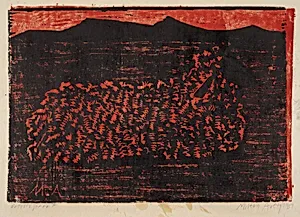
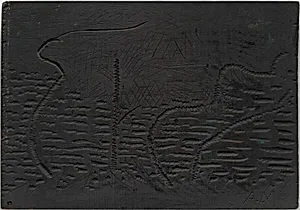
![Birds and Sea [verso]](https://images.artheonmuseum.org/nga/thumb/birds-and-sea-verso-nga-74421.webp)
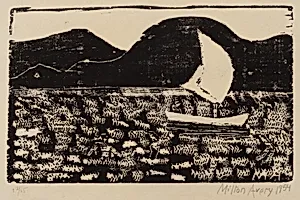
![Sailboat [recto]](https://images.artheonmuseum.org/nga/thumb/sailboat-recto-nga-74426.webp)
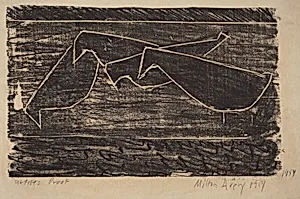
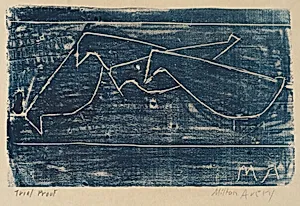
![Beach Birds [verso]](https://images.artheonmuseum.org/nga/thumb/beach-birds-verso-nga-74427.webp)
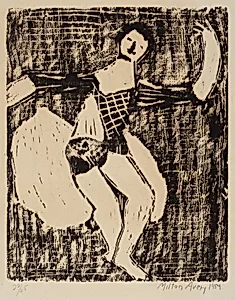
![Dancer [recto]](https://images.artheonmuseum.org/nga/thumb/dancer-recto-nga-74428.webp)
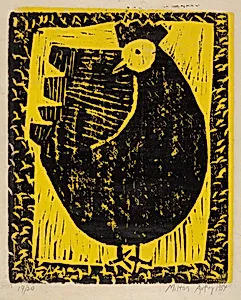
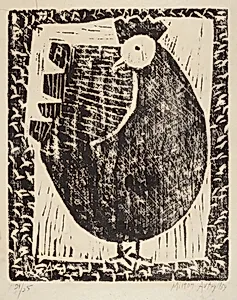
![Hen [verso]](https://images.artheonmuseum.org/nga/thumb/hen-verso-nga-74429.webp)