
Ctrl K
1213–1291
**Mir Ali Heravi (also known as Mir ʿAli al-Husaini or Mir ʿAli Kāteb Heravi)** was a leading 16th-century Persian calligrapher renowned for his mastery of the Nastaʿlīq script. Born in Herat around the late 15th century (circa 1476), he worked across major cultural centers including Herat, Mashhad, and Bukhara until his death in 1544–45.
He studied under the celebrated calligrapher Sultan ʿAli Mashhadi and quickly distinguished himself as one of his most brilliant pupils, even claiming superiority over his teacher. Heravi served as a royal scribe (Kateb-e Soltani) and taught the art of calligraphy, helping refine and disseminate Nastaʿlīq, the elegant cursive script that became the dominant style for Persian poetry and literature.
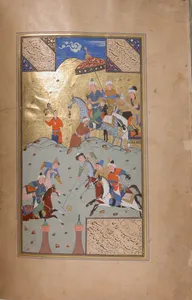
Among his major works are illuminated manuscripts such as the *Bustan* (Orchard) of Saʿdi, dated 1522–23 and now in the Metropolitan Museum of Art, and a copy of Jami’s *Yusuf and Zulaykha*. These pieces showcase his fluid, harmonious lettering combined with exquisite illumination in ink, opaque watercolor, and gold.
Heravi’s legacy endures through his influence on subsequent generations of calligraphers and the preservation of his manuscripts in major collections worldwide. His contributions helped elevate Nastaʿlīq from a regional script to a pinnacle of Persian artistic expression during the Safavid era.
No artworks found for this artist