
Ctrl K
**James Arthur Cleveland (1811–1868)** was an American landscape, portrait, and miniature painter whose career spanned the Northeast and Midwest in the mid-19th century. Born in Salem, Massachusetts, to Captain William Cleveland, he began his artistic pursuits in his native region before relocating westward and then returning east.
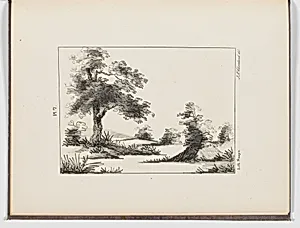
Cleveland’s most notable published work is the 1839 instructional volume *Elements of Landscape Drawing*, which he both wrote and illustrated; it was issued by the Cincinnati firm N. G. Burgess & Co. That same year he contributed ten plates to John Delafield’s *Inquiry into the Origins of the Antiquities of America*, published in New York. These projects established his reputation as a skilled draftsman capable of both educational illustration and scholarly reproduction.
After leaving Salem around 1837, Cleveland appears to have spent time in Ohio, where he married and had a son circa 1840. He later worked as a landscape and miniature painter in Rochester, New York (1844–45), maintained a presence in New York City from 1847 to 1852 and again in 1858, and resided in Tarrytown, New York, from 1854 to 1857. His peripatetic professional life reflects the mobility of many American artists of the period who sought patronage across growing urban centers.
Although little is recorded about formal training or specific mentors, Cleveland’s output demonstrates proficiency in both miniature portraiture and broader landscape composition. His legacy endures primarily through the surviving examples of his published illustrations and the single known work held in a major public collection, offering insight into the practical and instructional side of 19th-century American art-making.