Ctrl K
1740–1812
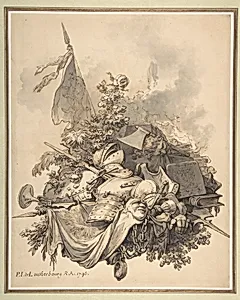
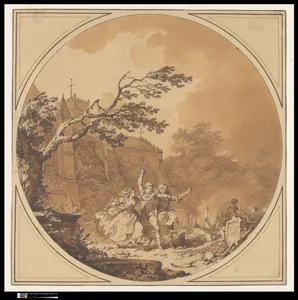
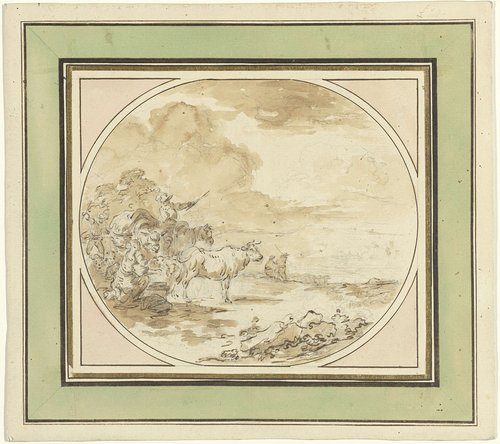
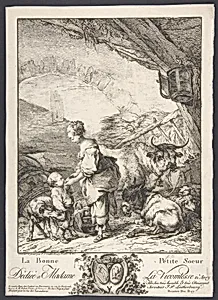
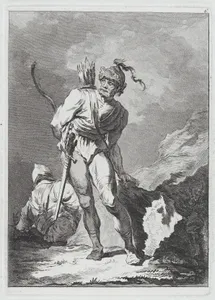
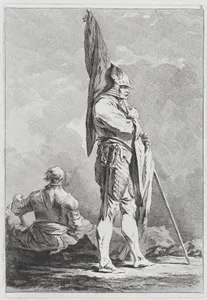
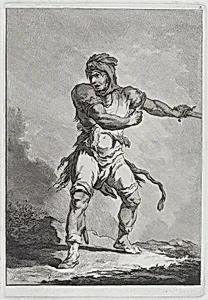
Philippe Jacques de Loutherbourg, born in Strasbourg in 1740 to a Swiss miniaturist and engraver, initially pursued studies at the University of Strasbourg for the Lutheran ministry before turning decisively to art. In 1755, he moved to Paris, where he studied under the history painter Charles-André van Loo and the battle specialist Francesco Giuseppe Casanova, later training with engraver Jean-Georges Wille. His precocious talent shone at the Salon of 1763 with *Landscape with Figures and Animals*, earning praise from Denis Diderot, followed by successes like *Morning After the Rain* (1765) and election to the French Academy in 1767 despite his youth. Loutherbourg's early landscapes, infused with fresh colors and romantic pastoral scenes, marked him as a rising star in Parisian circles.
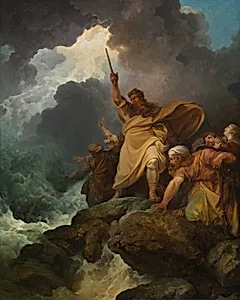
Relocating to London in 1771—anglicizing his name to Philip James—he revolutionized British theatre as chief scene designer for David Garrick at Drury Lane, earning a substantial salary until 1781. His innovative use of lighting, transparencies, and mechanical effects culminated in the Eidophusikon (1781), a pioneering miniature theatre simulating natural phenomena like storms and sunsets with moving pictures and Argand lamps. Elected to the Royal Academy in 1781, he blended theatrical drama into paintings emphasizing the Picturesque and Sublime, departing from staid Italianate traditions toward dramatic Welsh and English vistas.
Loutherbourg's oeuvre spans vivid landscapes like *Coalbrookdale by Night* (1801), capturing Industrial Revolution ironworks; sublime scenes such as *An Avalanche in the Alps* (1803); and monumental naval triumphs commemorating British victories, including *Lord Howe's Action, or the Glorious First of June* (exh. 1795), *The Battle of the Nile* (1800), and *The Great Fire of London* (1797). His style, rooted in van Loo and Casanova's traditions but enriched by stagecraft, featured chiaroscuro mastery, harmonious coloring, and dynamic light effects.
In later years, after a controversial stint in faith-healing with his wife, Loutherbourg illustrated Bibles and produced aquatint series like *Picturesque English Scenery* (1801–1805), influencing panoramic art and Romantic landscapists. He died in Chiswick in 1812, leaving a legacy in major UK collections like Tate Britain and the National Maritime Museum, where his works celebrate nature's fury, human triumph, and mechanical ingenuity.