Ctrl K
**Pierre-Jean David**, known as **David d'Angers** (1788–1856), was a leading French sculptor and medalist of the nineteenth century. Born Pierre-Jean David in Angers on March 12, 1788, he adopted the name David d'Angers upon entering the studio of the renowned painter Jacques-Louis David in 1809. This choice honored his birthplace while distinguishing him from his famous teacher.
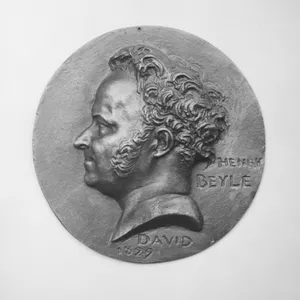
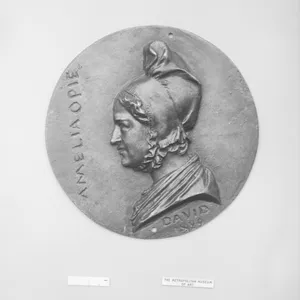
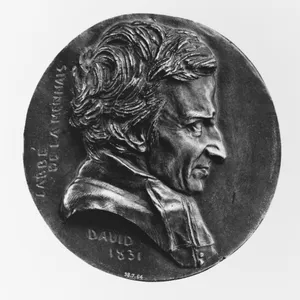
He trained in the neoclassical tradition under Jacques-Louis David before establishing himself in Paris. David d'Angers became celebrated for his portrait medallions, busts, and monumental sculptures, producing more than fifty full-size statues, around 150 busts, and over five hundred medallions depicting prominent literary, political, and artistic figures of his era. His work often reflected his ardent republican ideals and bridged neoclassicism with emerging romantic sensibilities.
Among his notable achievements is the *Wounded Philopoemen* (now in the Louvre), which gained early acclaim, and a striking monument exhibited at the 1817 Paris Salon. He also created numerous public monuments in Paris and elsewhere, earning praise from Victor Hugo as the “Michelangelo of Paris.”
David d'Angers left a lasting legacy through his prolific output and his influence on the transition in French sculpture during a politically turbulent period. A dedicated freemason and committed republican, his portraits captured the spirit of his time. Today, his works are preserved in major collections, including a dedicated gallery in his native Angers, ensuring his contributions to neoclassical and early romantic sculpture remain accessible and admired.