Ctrl K
Pietro Bernini (1562–1629), born in Sesto Fiorentino near Florence, emerged as a skilled late Mannerist sculptor whose technical prowess defined his career, though he is best remembered today as the father of the Baroque genius Gian Lorenzo Bernini. Trained under the eminent Giambologna, a leading figure in Florentine Mannerism, Pietro absorbed the master's dynamic figural style and knowledge of complex compositions, which he later passed to his son. He collaborated early on with Giovanni Caccini, another Giambologna pupil, honing his craft amid Tuscany's vibrant workshops before embarking on a peripatetic path through Florence and Naples.
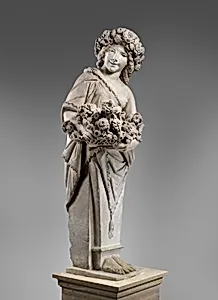
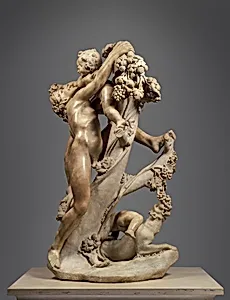
In Naples, Pietro contributed to the Fountain of Neptune (1600–1601) and sculpted the poignant relief *Saint Martin Dividing His Cloak* for the Certosa di San Martino, showcasing his adept handling of narrative drama in marble. His fortunes rose dramatically in 1605 when Cardinal Scipione Borghese summoned the family to Rome under Pope Paul V's patronage. There, Pietro executed prestigious ecclesiastical commissions, including the masterful *Assumption of the Virgin* relief (1606–1610) and elements of Clement VIII's tomb (1611–1613) in the Pauline Chapel of Santa Maria Maggiore, as well as *St. John the Baptist* (1612–1615) for the Barberini Chapel in Sant'Andrea della Valle. Secular pieces for Borghese, like *Flora* (1616) and *Faun Teased by Cupids*, reveal his archaic Mannerist flavor—precise anatomy and graceful poses echoing Giambologna, yet sometimes uneven in invention.
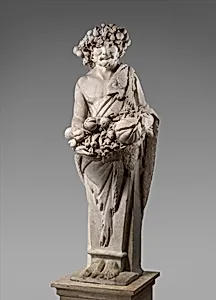
Pietro's legacy intertwines inextricably with his progeny: alongside Gian Lorenzo and sculptor-architect Luigi, he fostered a dynasty of artists, mentoring his eldest son from childhood and collaborating on works like *Boy with a Dragon* (1617) and *Autumn in the Guise of Priapus* (1616). By the 1620s, overshadowed by Gian Lorenzo's rising star, Pietro assisted his son, culminating in the *Fontana della Barcaccia* (1627) at Rome's Spanish Steps—a whimsical fountain symbolizing the Tiber's floods. Contemporary critic Giovanni Baglione praised his "phenomenal technical ability" but lamented his lack of "greater compositional ability," a verdict that underscores Pietro's role as a masterful craftsman in the Mannerist tradition, bridging Renaissance refinement and Baroque exuberance through his family's enduring influence on Roman sculpture.