
Ctrl K
1785–1851
**Rev. John Bachman (1790–1874)** was an American Lutheran minister, social activist, and naturalist best known for his close collaboration with artist and ornithologist John James Audubon on the landmark publication *The Viviparous Quadrupeds of North America*. Born in Rhinebeck, New York, Bachman developed an early passion for natural history, studying the flora, birds, and mammals of his region. He later settled in Charleston, South Carolina, where he served as pastor of St. John’s Lutheran Church and became a prominent figure in both religious and scientific circles.
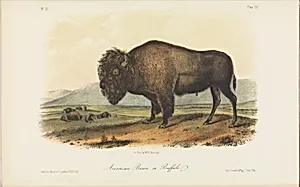
Although not a visual artist himself, Bachman contributed essential scientific expertise to Audubon’s projects. He supplied detailed observations, specimens, and textual descriptions that complemented Audubon’s drawings. Their partnership on the *Quadrupeds* (published 1845–1854) paired Audubon’s vivid illustrations—lithographed by John T. Bowen and printed by H. Ludwig—with Bachman’s authoritative natural history accounts, creating one of the most comprehensive studies of North American mammals of its era. Bachman’s role extended Audubon’s earlier success with *The Birds of America*, bridging artistic representation and rigorous scientific documentation.
Bachman’s legacy lies in his dual commitment to faith and science. He advocated for education and social causes while advancing American natural history through meticulous fieldwork and writing. His collaboration with Audubon helped establish a model for interdisciplinary naturalist-artist partnerships that influenced subsequent generations of scientists and illustrators. Today, the plates and volumes from their joint work remain celebrated treasures in museum collections, preserving both artistic beauty and scientific insight into 19th-century American wildlife.