Ctrl K
**Robert Seymour (1798–1836)** was a prolific British illustrator, caricaturist, and etcher whose humorous and satirical works captured the spirit of early 19th-century London life. Born in Somerset as the second son of Henry Seymour and Elizabeth Bishop, he moved to London after his father’s death. There, he was apprenticed as a pattern-drawer to a Mr. Vaughan of Duke Street, Smithfield. Influenced by the painter Joseph Severn RA during visits to his uncle in Hoxton, Seymour pursued a career as a professional artist.)
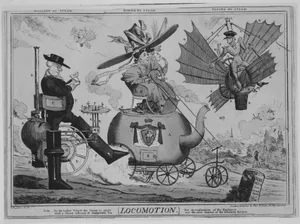
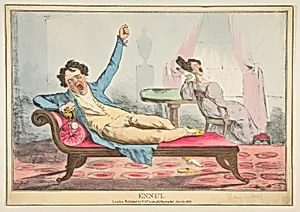
At age 24, in 1822, he achieved recognition when his ambitious painting of a scene from Torquato Tasso’s *Jerusalem Delivered*—featuring over 100 figures—was exhibited at the Royal Academy. He received commissions to illustrate works by Shakespeare, Milton, Cervantes, and Wordsworth, and produced portraits, miniatures, and landscapes. After initial setbacks with further Royal Academy submissions, Seymour turned to book illustration and mastered copper engraving and, later, steel-plate etching. From 1827, publisher Thomas McLean provided steady work, enabling Seymour to specialize in caricatures and humorous subjects. He contributed regularly to McLean’s *Looking Glass* magazine and created the popular series *Sketches by Seymour* (1834–36), which satirized inept Cockney sportsmen.)
Seymour’s most famous association came with Charles Dickens’s *The Posthumous Papers of the Pickwick Club* (commonly known as *The Pickwick Papers*). He originated the concept of a series of sporting mishaps and provided the initial illustrations, including the character of Samuel Pickwick, whom he had sketched as early as 1832. The first installments appeared in 1836, but tensions arose over creative control and the direction of the story. Seymour died by suicide on 20 April 1836 at his home in Islington, at around age 37 or 38, shortly after disputes with Dickens.)
Seymour’s legacy endures as one of the era’s most productive graphic humorists, often compared to William Hogarth and George Cruikshank. He produced thousands of prints and illustrations that blended political satire, social commentary, and light-hearted comedy. Though his role in shaping *Pickwick* remains debated, his distinctive style helped launch the illustrated serial novel format and influenced Victorian visual culture. His works are held in collections including the Victoria and Albert Museum and appear in art historical discussions of 19th-century British caricature.
All 2 artworks loaded