
Ctrl K
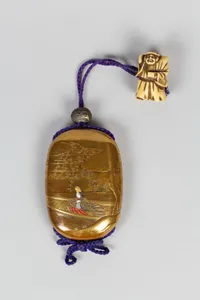
**Shibayama Shokasai** was a Japanese lacquer artist active in the 19th century during the late Edo period, working within the prestigious Kajikawa School tradition in Edo (modern Tokyo). The Kajikawa family had established a renowned lineage of lacquerers more than two centuries earlier, specializing in refined portable objects such as inrō—tiered medicine cases—and netsuke toggles prized by the upper classes. Shokasai’s contributions reflect this school’s emphasis on delicate craftsmanship, often combining intricate lacquer techniques with inlaid decorations.
Shokasai frequently collaborated with artists of the Shibayama lineage, who were celebrated for their distinctive high-relief inlay work using materials like shell, ivory, coral, and tortoiseshell. In these partnerships, Shokasai typically handled the lacquer ground while Shibayama artisans added the elaborate inlays, resulting in richly textured surfaces that captured narrative scenes or natural motifs with remarkable precision. His go (art name) appears on multiple surviving inrō, underscoring his role in this hybrid style that bridged traditional Kajikawa lacquer methods with Shibayama innovation.
One of his most notable surviving works is the four-case inrō in the Metropolitan Museum of Art, featuring a court lady in a boat with a drum on the obverse and geese taking flight on the reverse. Executed in lacquer with gold and kinji grounds, the piece exemplifies the refined narrative and naturalistic imagery favored in 19th-century Japanese lacquer art.
Shokasai’s legacy lies in his contribution to the enduring appeal of Japanese inrō and lacquerware, objects that transitioned from functional accessories to highly collectible works of art. His pieces continue to illustrate the technical sophistication and aesthetic elegance of the Kajikawa and Shibayama traditions, preserving a vital chapter in the history of Japanese decorative arts for modern audiences.
All 1 artworks loaded